Understanding life cycles Easy Science Worksheets for Ages 4-8
4 filtered results
-
From - To
Discover the wonders of nature with our "Understanding Life Cycles" easy science worksheets, specially designed for kids aged 4-8. Kids Academy offers engaging and educational printables that help young minds grasp the various stages of animal and plant life cycles. Filled with colorful illustrations and simple activities, these worksheets make learning fun and interactive. Whether it’s the metamorphosis of a butterfly or the growth of a plant, your child will understand essential scientific concepts while developing critical thinking skills. Explore our collection today and ignite your child's curiosity for the world around them!
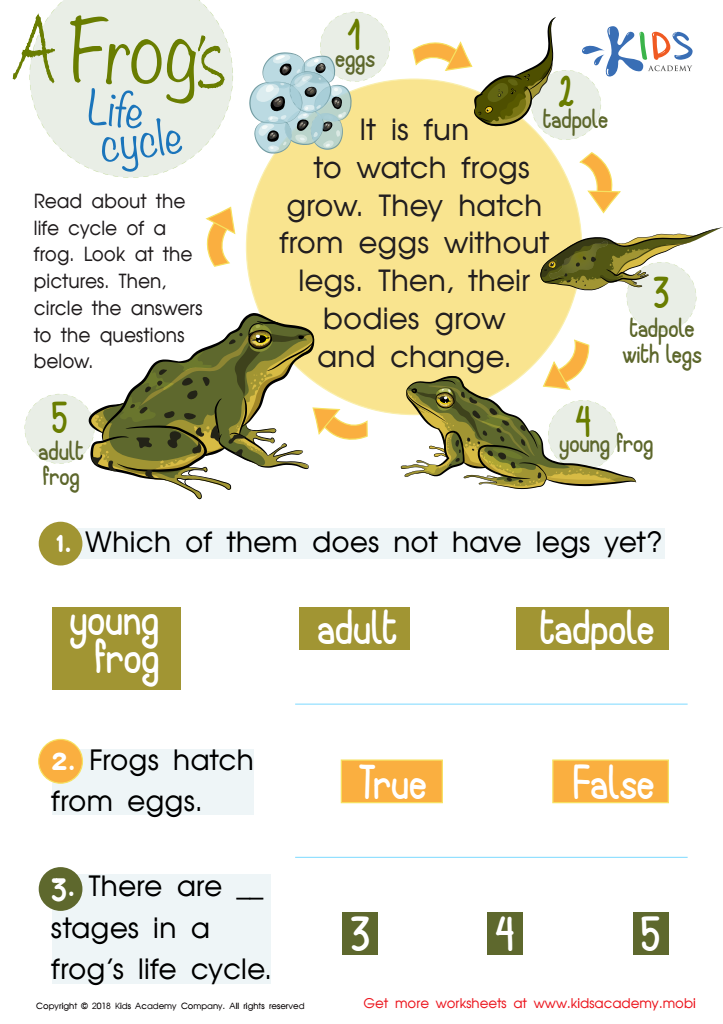
A Frog’s Life Cycle Worksheet
 Assign to My Students
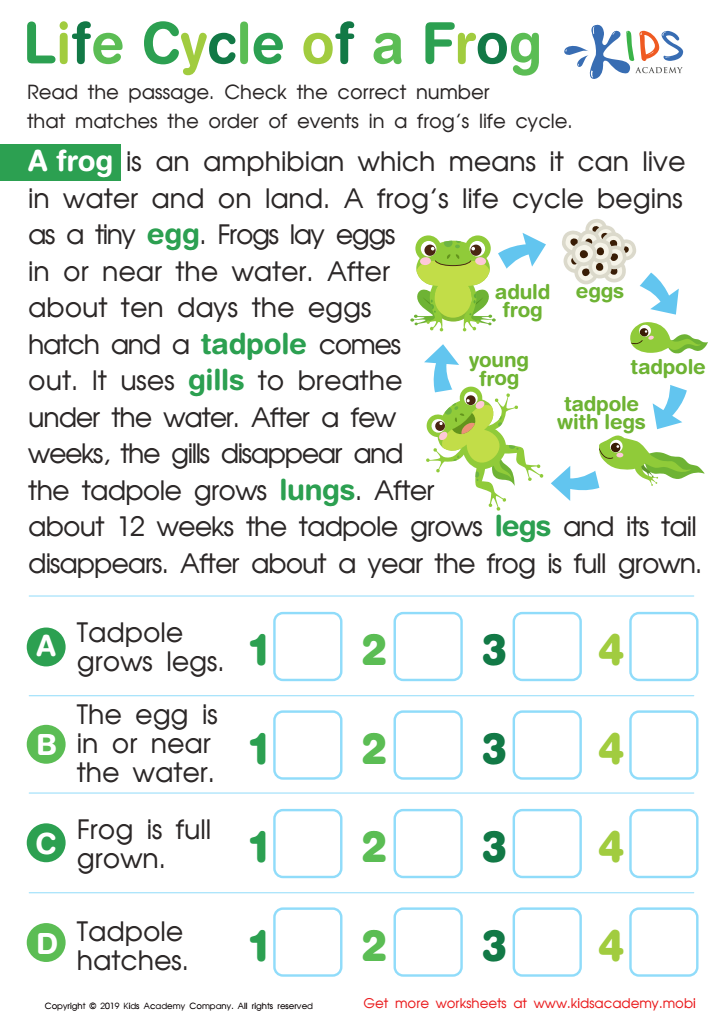
Life Cycle of a Frog Worksheet
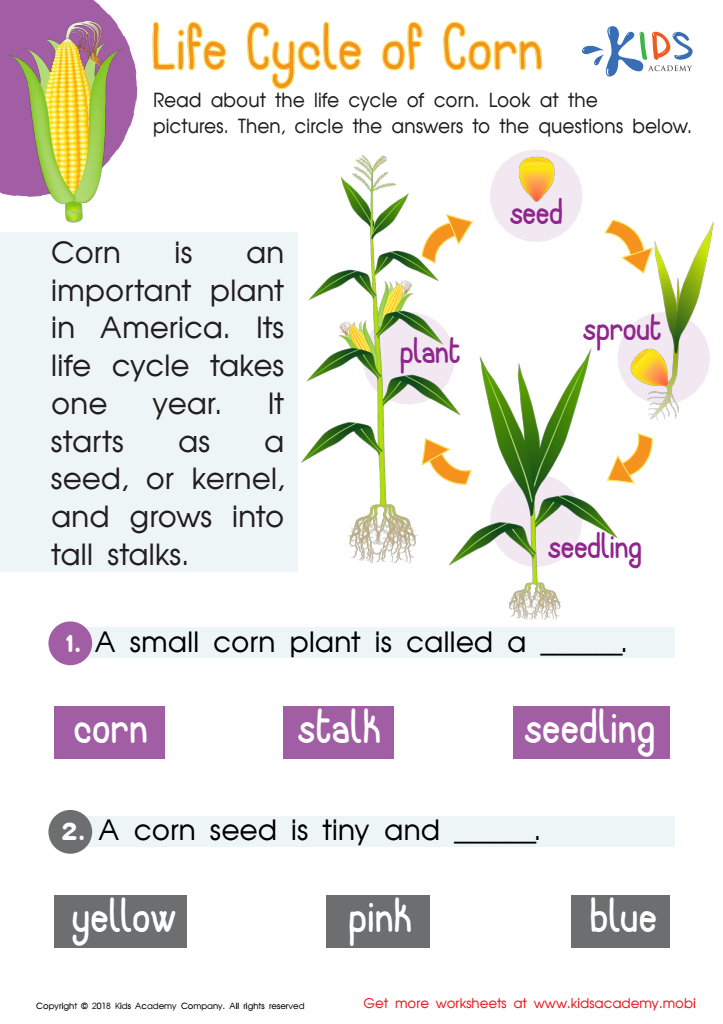
Life Cycle of Corn Worksheet
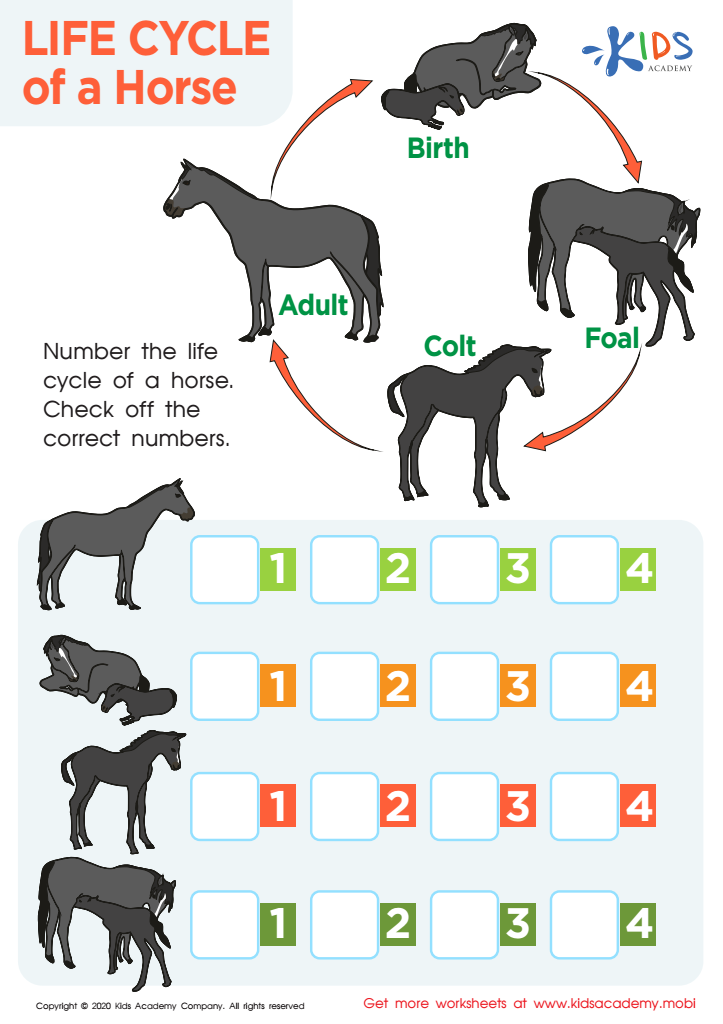
Life Cycle of a Horse Worksheet








Understanding life cycles is a fundamental part of early science education for children ages 4-8, and it's something that parents and teachers should care about for several reasons.
Firstly, teaching life cycles helps children make sense of the natural world. It explains how plants, animals, and even humans grow and change over time, which fosters curiosity and respect for living things. This foundational knowledge can spark an interest in biology and environmental science.
Secondly, learning about life cycles supports cognitive development. Children practice critical thinking and observation skills as they follow stages of a butterfly’s metamorphosis, for example, or a plant's growth cycle. They learn to ask questions, make predictions, and understand cause-and-effect relationships, which are core components of scientific thinking.
Moreover, understanding life cycles can teach important values like patience and empathy. Recognizing that living things go through various stages helps children appreciate the time it takes for growth and change, promoting a sense of respect for nature and life.
Lastly, discussing life cycles aligns with many educational standards, making it an integral part of a well-rounded early education. It prepares students for more complex scientific concepts they will encounter in later grades.
In summary, understanding life cycles offers educational, developmental, and emotional benefits for young children, making it an essential topic for parents and teachers to support.