Vocabulary expansion Easy Writing Worksheets for Ages 4-8
7 filtered results
Difficulty Level
Grade
Age
-
From - To
Subject
Activity
Standards
Unlock your child's potential with our "Vocabulary Expansion Easy Writing Worksheets for Ages 4-8"! Designed to enhance language skills, these worksheets are perfect for early learners eager to build their vocabulary. Each engaging activity promotes word recognition, contextual understanding, and creative expression. Whether it's through fun fill-in-the-blank exercises or imaginative word illustrations, kids will enjoy expanding their lexicon while developing essential writing skills. These user-friendly resources are ideal for home or classroom use, making learning both interactive and enjoyable. Watch your young learners thrive as they embark on their vocabulary adventure today! Explore our collection now!
Favorites
With answer key
Interactive
 Assign to My Students
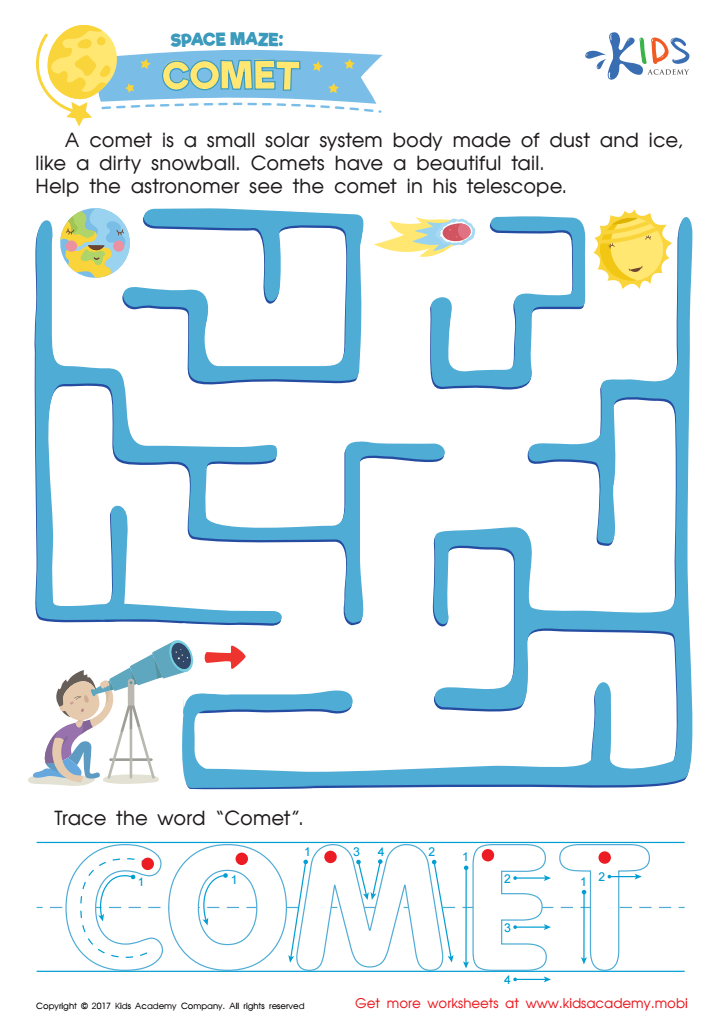
Space Maze: Comet Worksheet
Worksheet
Opposites Worksheet
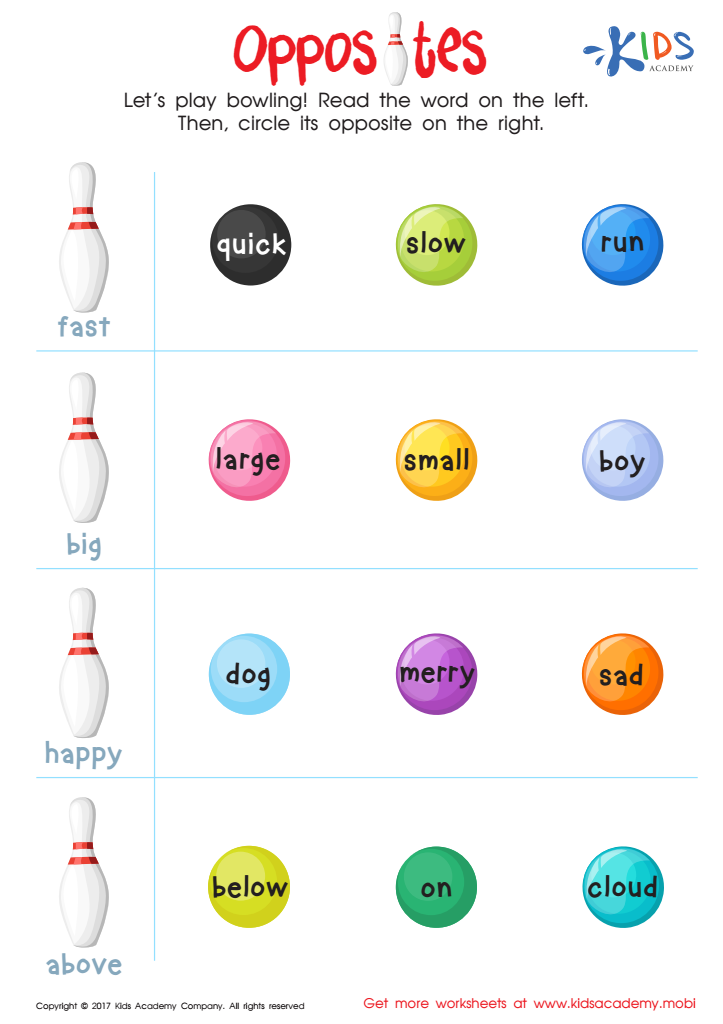
Have your students identify and circle the opposites of the words on the left. As a fun bowling-themed exercise, read the words and ask your kids if they know the opposites. Look through the options on the right and see if the answer is there; then, circle the correct answers.
Opposites Worksheet
Worksheet
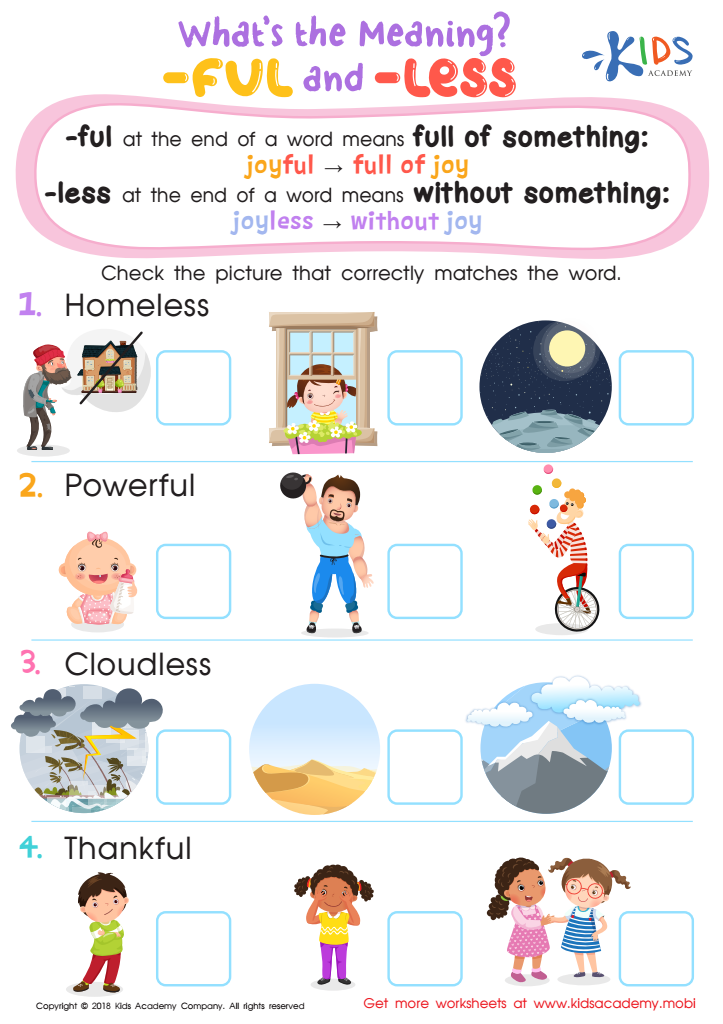
What's the Meaning? Worksheet
Look with your youngster through this colorful worksheet and match the pictures to the words at the top. These words have different meanings due to either a prefix or suffix being added, such as "ful" or "less".
What's the Meaning? Worksheet
Worksheet
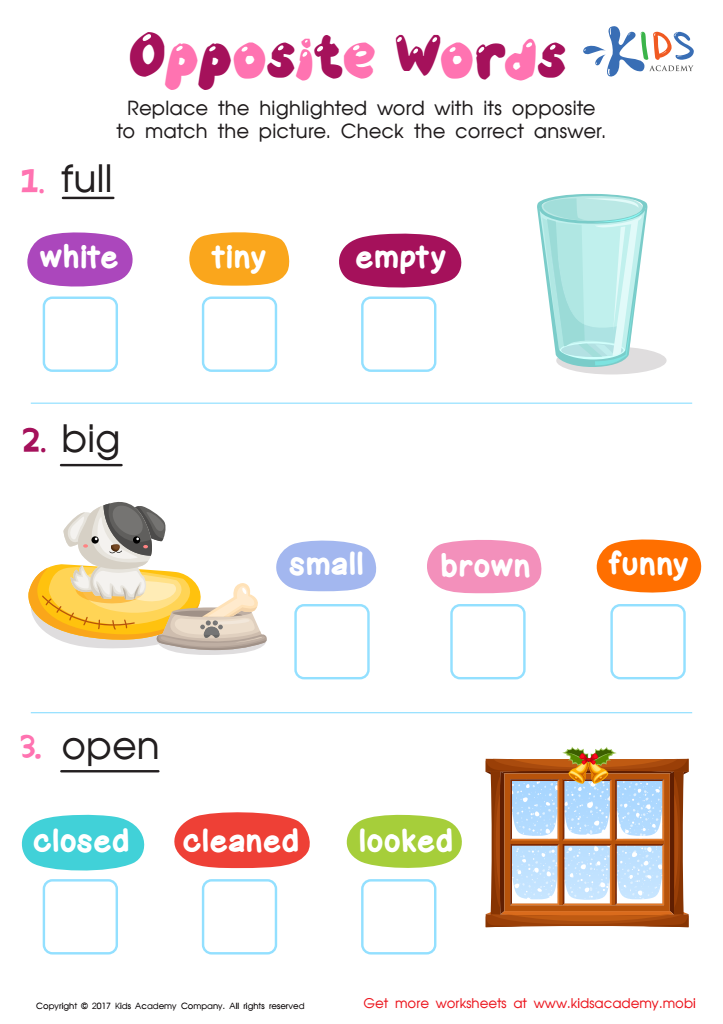
Opposite Words Worksheet
Help your child learn words and opposites. Look through a worksheet with them. Ask if they can read the underlined words. Then, ask which highlighted word is the opposite of the underlined word. The answer should match the picture.
Opposite Words Worksheet
Worksheet
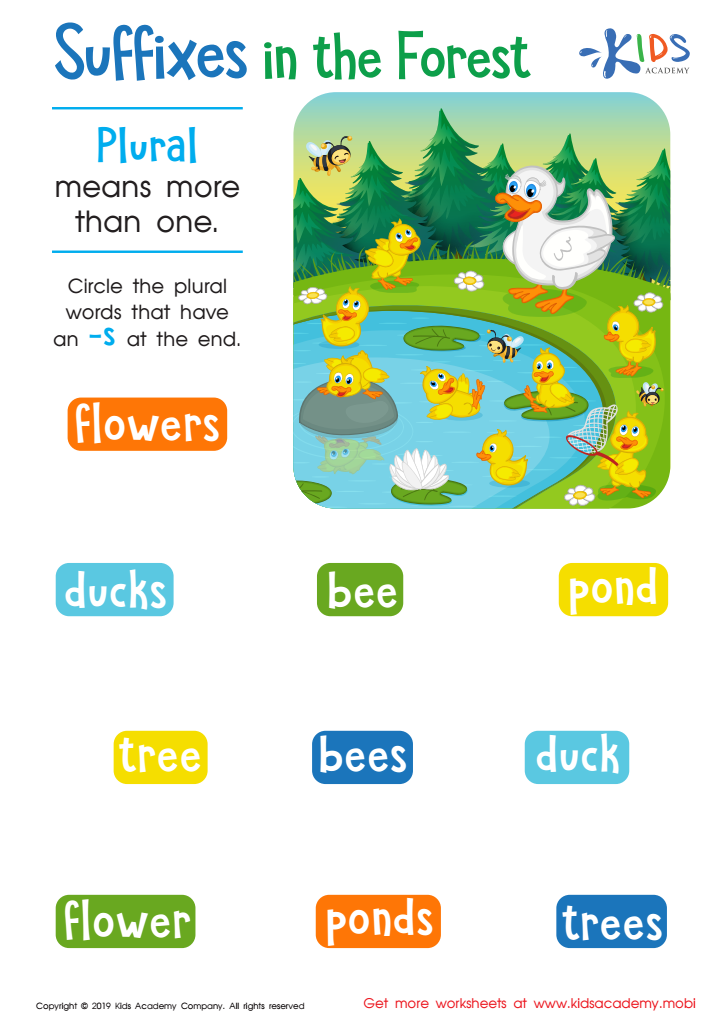
Suffixes in the Forest Worksheet
Suffixes are letters added to the end of words to form new words. These can be used to denote one who does something (e.g. reader) or more than one (e.g. adding -s). This worksheet helps kids practice pluralizing words they know by circling the plural words ending with -s.
Suffixes in the Forest Worksheet
Worksheet
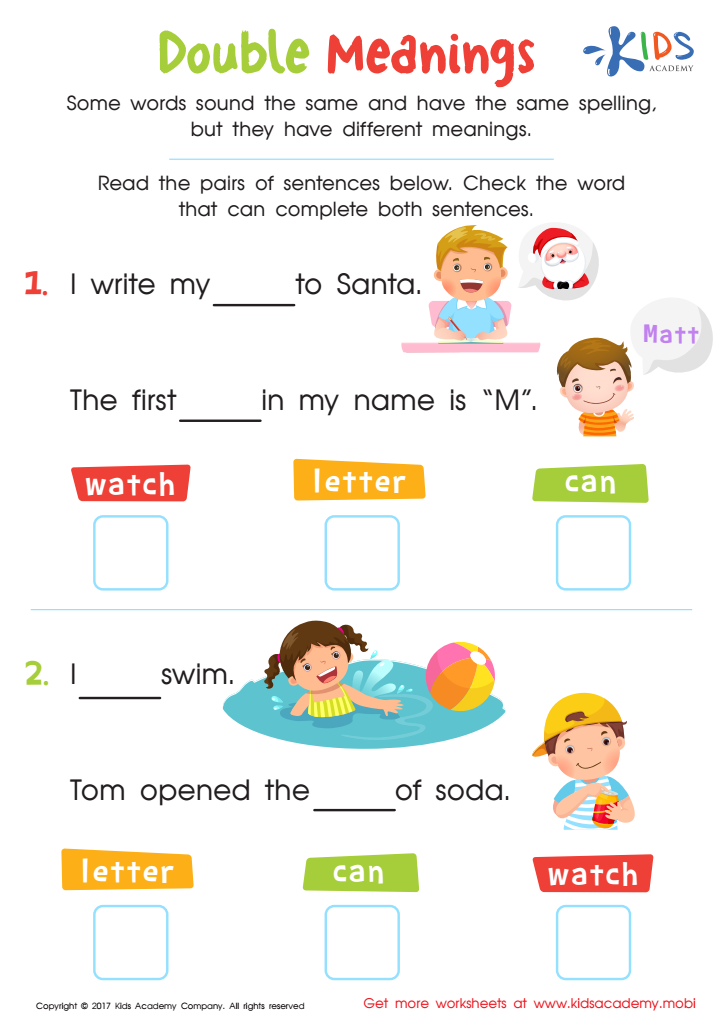
Double Meanings Worksheet
Homographs are words that look and sound the same, but have different meanings. This worksheet uses pictures to help young authors learn to use them correctly. Context and exposure to the words' meanings help them understand the difference.
Total: 80 words
Double Meanings Worksheet
Worksheet
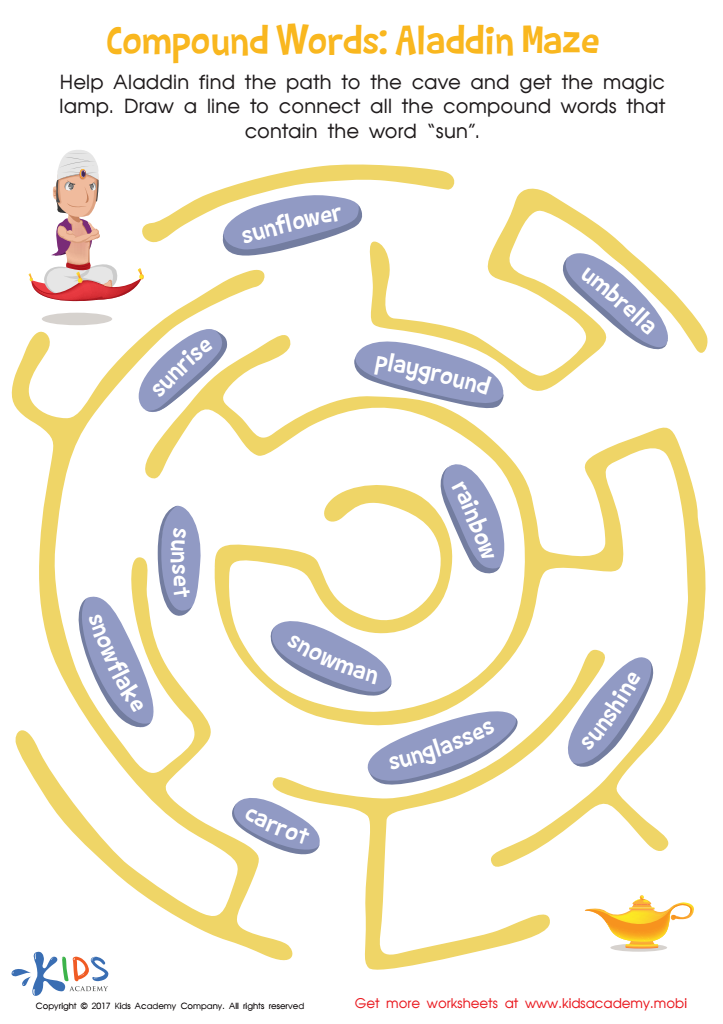
Compound Aladdin Maze Word Structure Worksheet
It's hard to keep track of all compound words! Help your child find sun-words with this fun worksheet featuring Aladdin! Your child will enjoy helping Aladdin find his way by finding the right words. It's a great way to learn compound words.
Compound Aladdin Maze Word Structure Worksheet
Worksheet
Join Kids Academy for Free
Who is primarily going to use this learning content?






Vocabulary expansion is crucial for children aged 4-8, as it lays the foundation for their overall language development and communication skills. During these early years, children are rapidly acquiring language and learning to express themselves. Having a rich vocabulary enhances their ability to convey thoughts, feelings, and ideas effectively, which boosts their confidence in social interactions and academic settings.
Parents and teachers play a vital role in vocabulary expansion. Engaging children in conversations and introducing new words in meaningful contexts helps them to understand and use these words appropriately. Encouraging reading at home and in classrooms exposes children to a variety of words and phrases, further enriching their linguistic experience.
Practicing vocabulary expansion is not just about memorization; it invites curiosity and exploration. Integrating fun activities like word games, storytelling, or rhymes fosters an enjoyable learning environment, making language acquisition feel less like a chore. Additionally, a strong vocabulary can significantly support a child's literacy skills, reading comprehension, and academic success in later years.
In essence, caring about vocabulary expansion equips children with essential tools for effective communication, academic achievement, and lifelong learning, making it a priority for both parents and teachers to support.