Comparing heights Easy Worksheets for Ages 4-9
3 filtered results
-
From - To
Discover a fun and engaging way for children aged 4-9 to learn about comparing heights with our easy-to-use worksheets. At Kids Academy, we provide a variety of printable worksheets designed to help young learners develop critical thinking and observational skills by comparing different heights of objects and characters. Our worksheets are crafted to be visually appealing and simple to understand, ensuring that kids enjoy their learning experience. Perfect for educators and parents, these resources support foundational math skills in an enjoyable manner. Download now and watch as your child confidently masters the concept of height comparison!
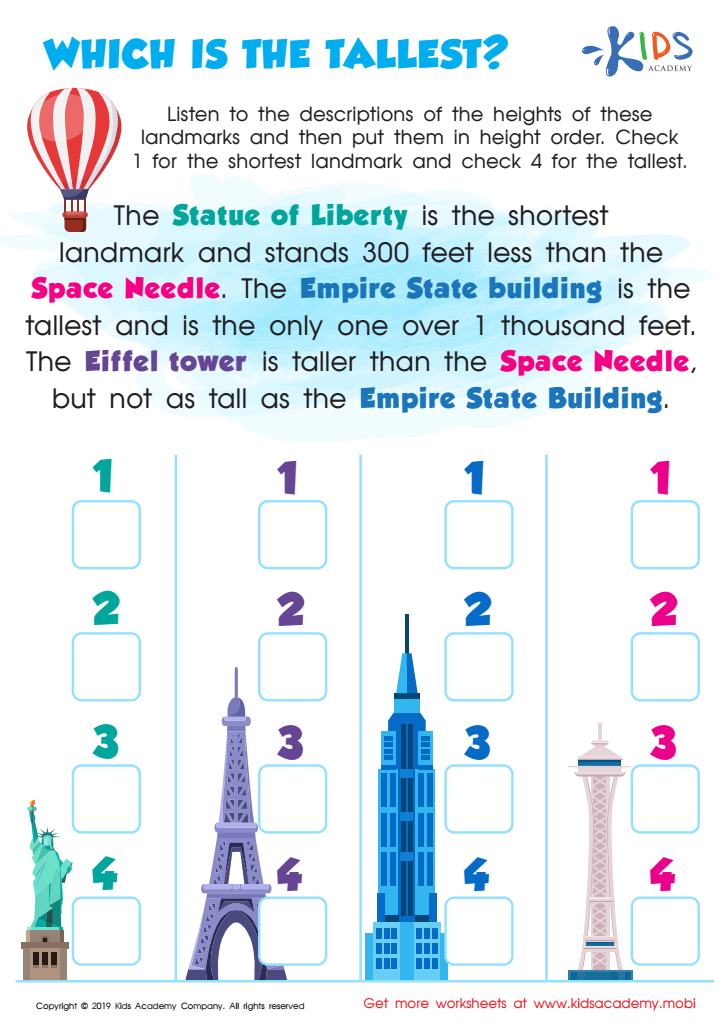
Which is the Tallest? Worksheet
 Assign to My Students
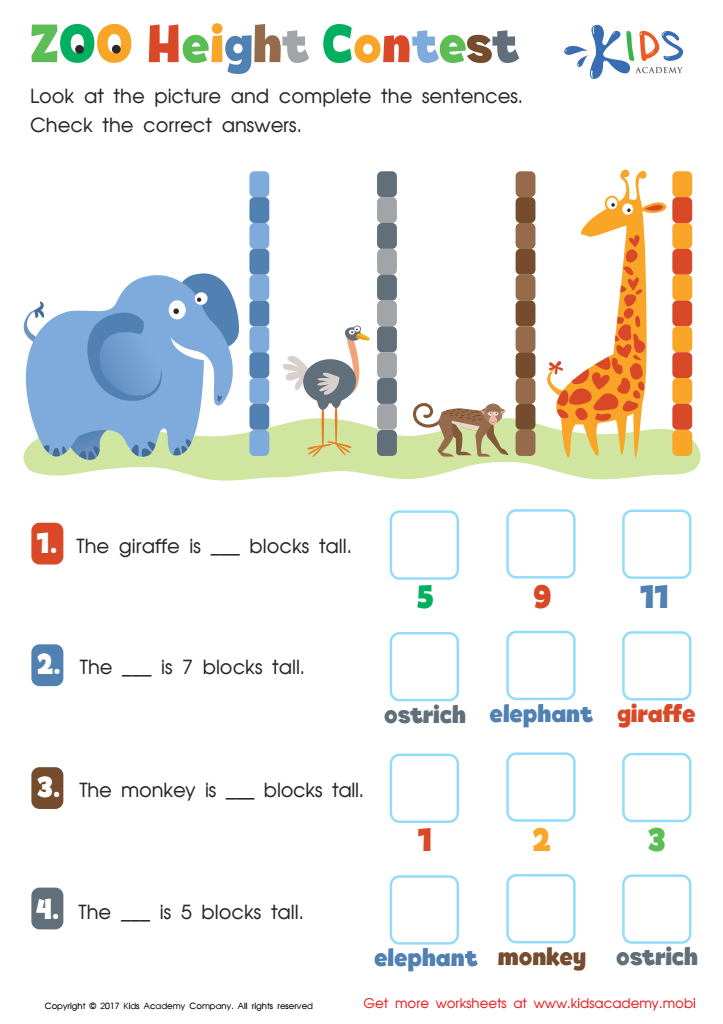
Zoo Height Contest Worksheet
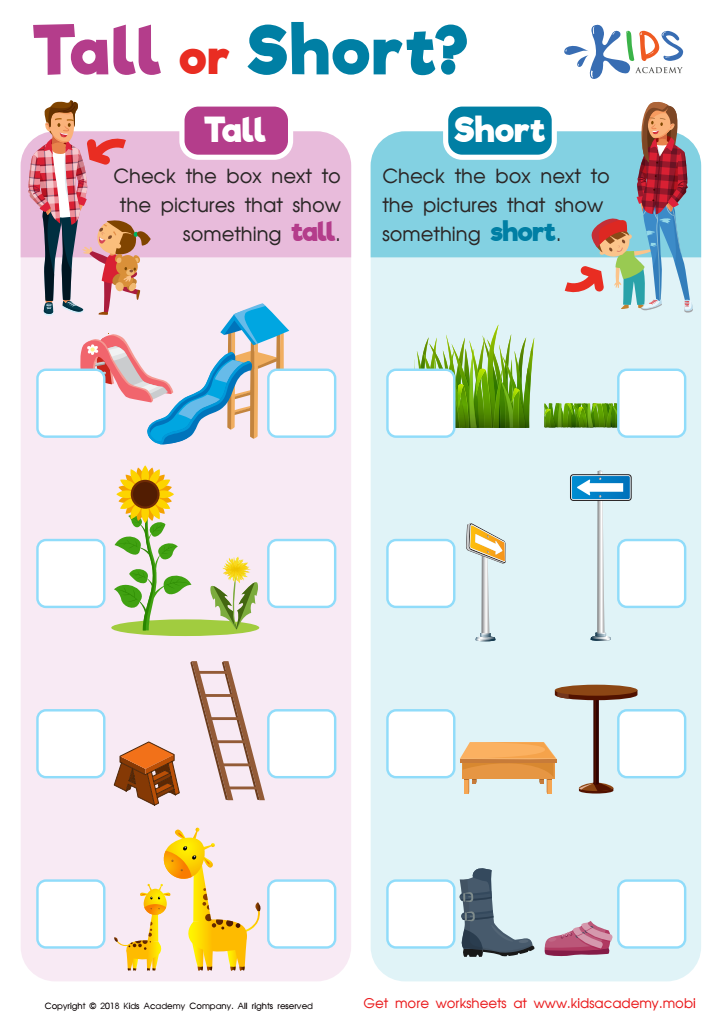
Tall or Short? Worksheet





Comparing heights is a foundational activity that can significantly benefit children aged 4-9, and parents and teachers should prioritize it for several reasons. Firstly, engaging in height comparison helps develop early math skills, such as measurement, estimation, and comparison, which are essential building blocks for more advanced mathematical concepts. When children compare heights, they practice using vocabulary like "taller," "shorter," and "the same height," thereby enhancing their language skills and expanding their descriptive lexicon.
Additionally, this activity fosters social skills and emotional intelligence. By working collaboratively on comparing heights, children learn to share, take turns, and respect other people's differences. Encouraging discussions about varying heights can also help inculcate a sense of acceptance and appreciation of diversity, enabling youngsters to understand and value uniqueness in an inclusive environment.
Furthermore, height comparison exercises bolster observational skills and critical thinking. Children learn to pay attention to details and make decisions based on visual cues, preparing them for problem-solving scenarios. Overall, these activities not only make learning engaging and hands-on but also lay the groundwork for holistic development, encompassing cognitive, social, and emotional growth. These early experiences contribute to a well-rounded educational foundation, setting the stage for future academic and personal success.








