Identifying objects Easy Worksheets for Ages 4-9
3 filtered results
-
From - To
Unlock your child’s potential with our "Identifying Objects Easy Worksheets" designed specifically for ages 4-9! These engaging worksheets help young learners enhance their observation and categorization skills while having fun. Each activity focuses on recognizing and naming everyday objects, fostering vocabulary, and building critical thinking abilities. Providing a perfect blend of education and entertainment, our worksheets are ideal for parents and teachers looking to support early childhood development. Explore various themes and challenges that inspire curiosity and creativity in your child. Download today for an exciting educational journey that makes learning enjoyable and effective!
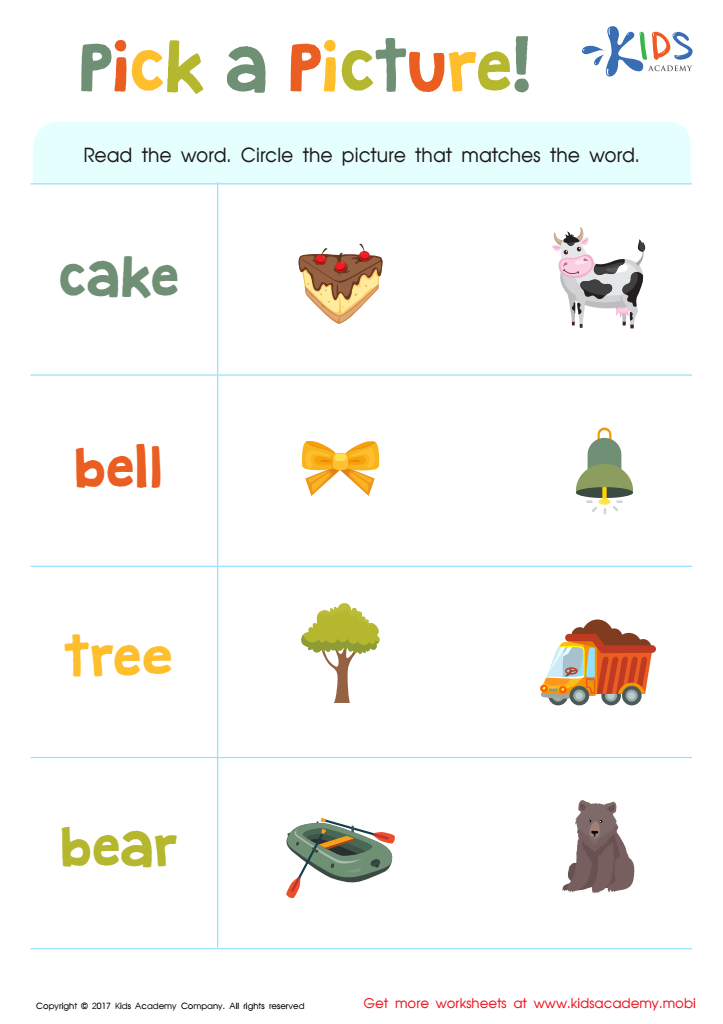
Pick a Picture Word Recognition Worksheet
 Assign to My Students
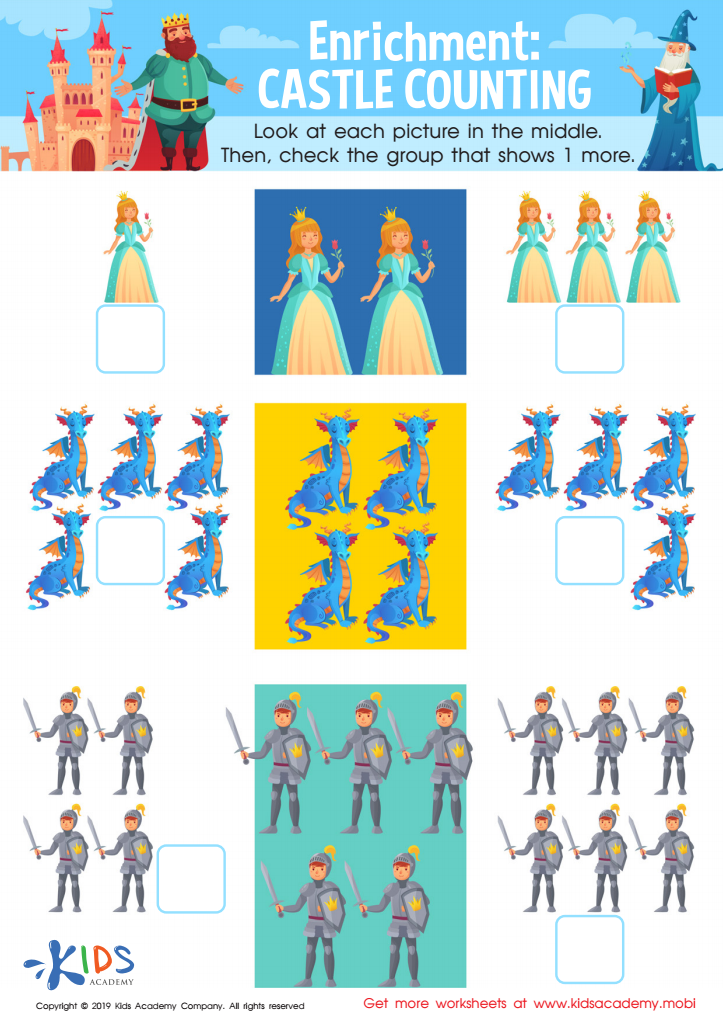
Enrichment: Castle Counting Worksheet
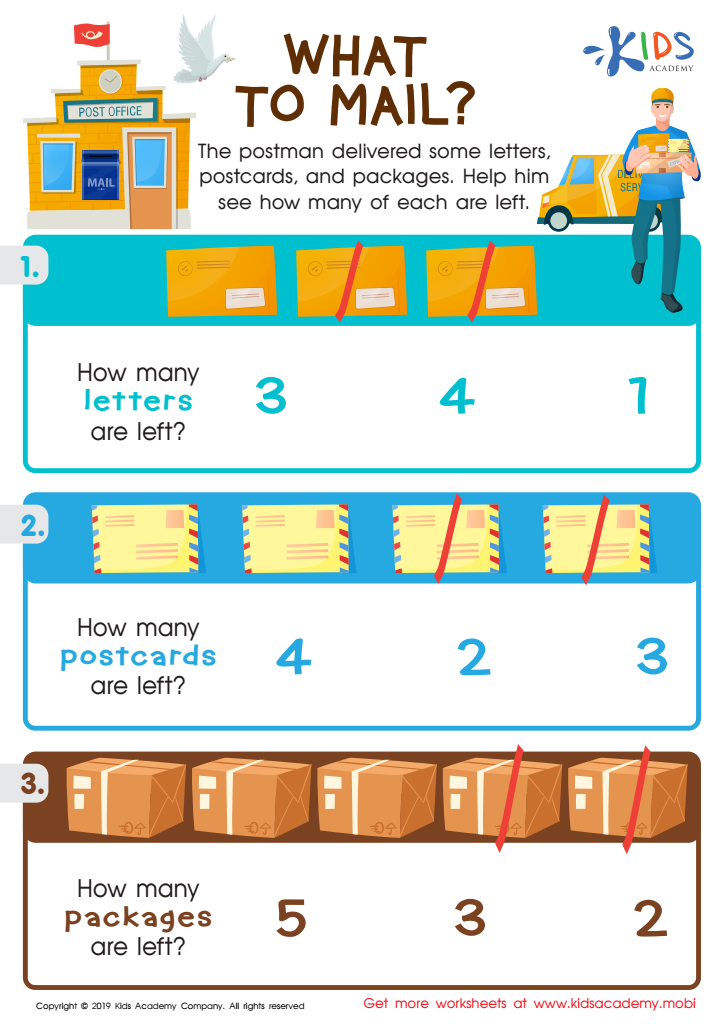
What to Mail? Worksheet








Identifying objects is a crucial developmental skill for children aged 4-9. This phase of early learning is foundational, as it helps children make sense of the world around them. Parents and teachers should prioritize this skill because it fosters cognitive development, language acquisition, and social interaction.
Firstly, understanding and naming objects enhance vocabulary, enabling children to express their thoughts and needs more effectively. When children can identify objects, they also build their classification and categorization skills, essential for future academic learning. This skill lays the groundwork for subjects such as science and mathematics, where identification and understanding of properties are essential.
Moreover, recognizing objects promotes critical thinking; children learn to observe, analyze, and draw connections. In social settings, this skill aids in communication and collaborative play, essential for building relationships with peers.
Engaging in activities that promote object identification, such as games or interactive storytelling, can make learning enjoyable and impactful. Supporting this fundamental skill not only equips children for their educational journey but also boosts their confidence and independence as they interact effectively with their environment. Through attentive guidance, parents and teachers can significantly influence children's cognitive growth and lifelong learning habits.








