
Understanding sequencing Easy Worksheets for Ages 4-9
3 filtered results
Difficulty Level
Grade
Age
-
From - To
Subject
Activity
Standards
"Understanding Sequencing Easy Worksheets for Ages 4-9" offers captivating activities designed to develop critical thinking and comprehension in young learners. Perfect for both classroom use and at-home practice, these worksheets engage children through fun tasks like arranging stories, events, and numbers in logical order. Tailored for early readers and young mathematicians, they enhance skills such as pattern recognition, logical thinking, and organizational abilities. Simplified yet effective, the worksheets ensure children grasp the foundations of sequencing, an essential precursor to more advanced academic skills. Empower your child's learning journey with our easy-to-understand, beautifully illustrated sequencing worksheets.
Favorites
With answer key
Interactive
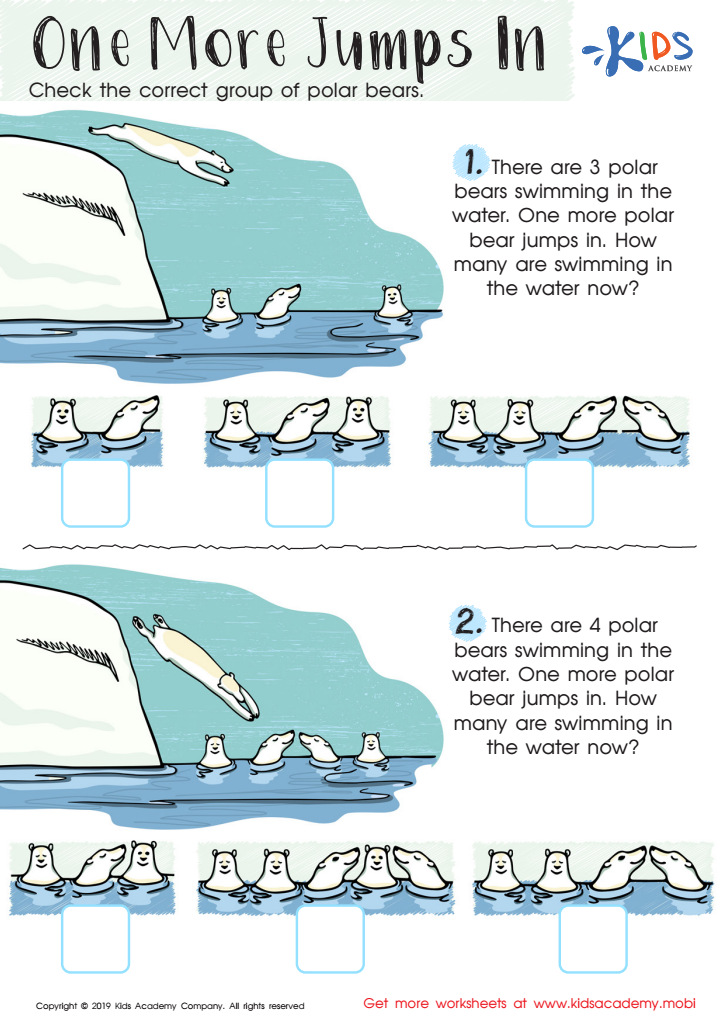
One More Jumps In Worksheet
Polar bears live in the Arctic which is always cold and snowy. Show your kids pictures of polar bears swimming in the water. Read the text and help them count correctly to answer the questions in the first and second sections.
 Assign to My Students
One More Jumps In Worksheet
Worksheet
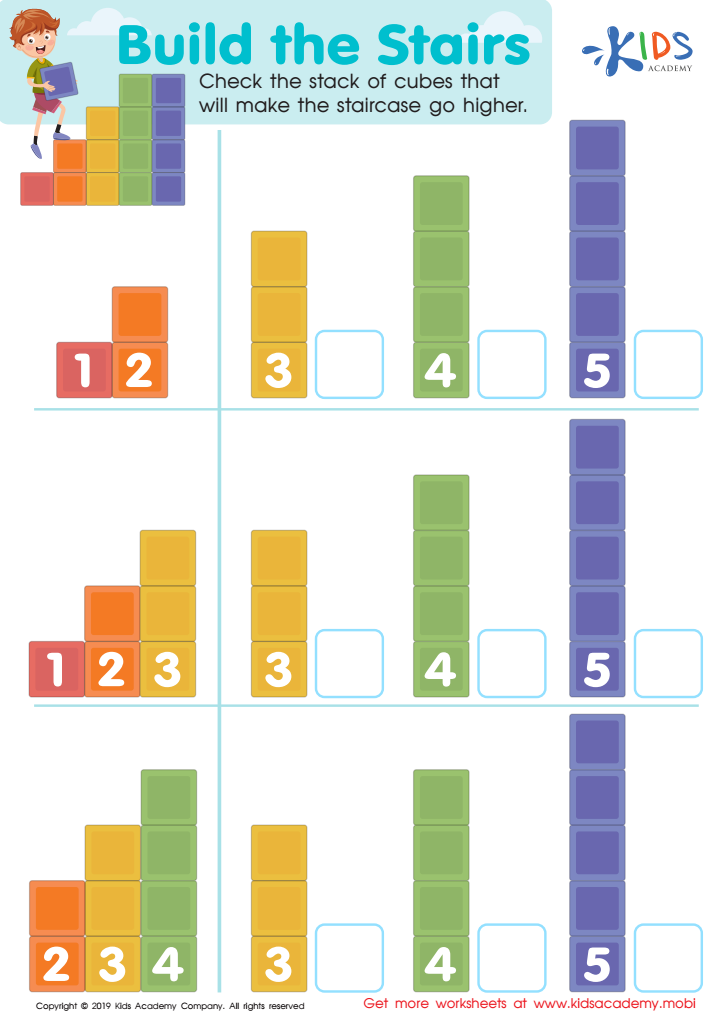
Build the Stairs Worksheet
Does your kid need help counting numbers? Make it fun with a staircase math worksheet! This printable PDF uses stairs to help your preschooler practice counting. Let them build the staircase by picking the next highest number as they go up! It's an interactive way to teach counting and sure to please your little one.
Build the Stairs Worksheet
Worksheet
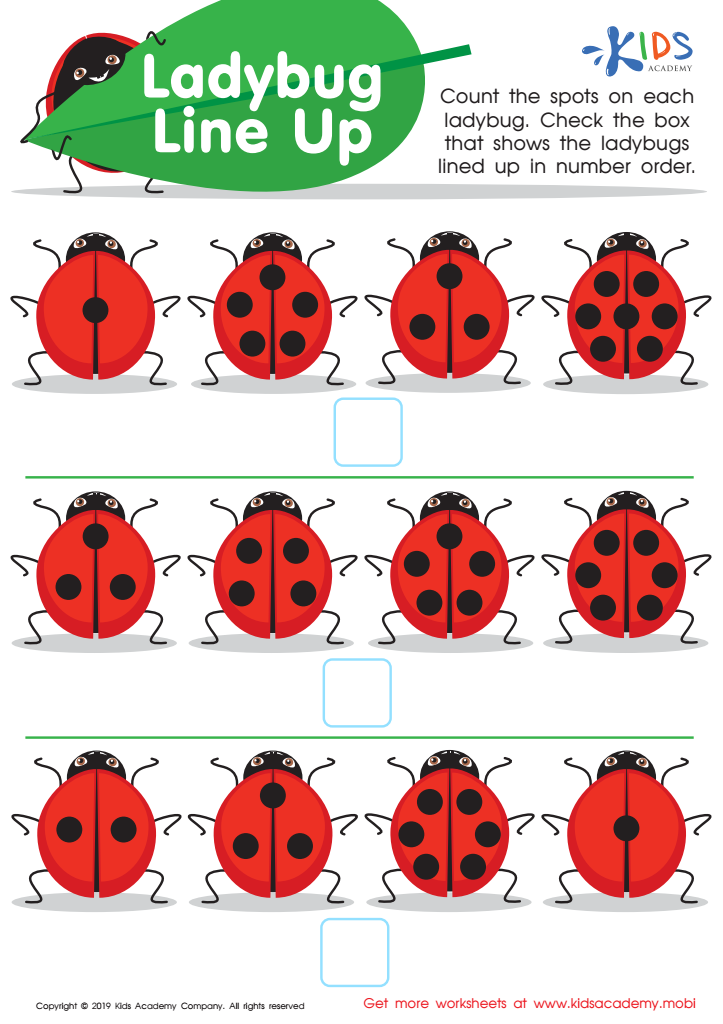
Ladybug Line Up Worksheet
Count the spots on the back of each ladybug in the three groups. Help kids check the box under each group that shows the ladybugs in proper number order. Ladybugs are an adorable insect with unique spots. This worksheet encourages counting and ordering.
Ladybug Line Up Worksheet
Worksheet
Join Kids Academy for Free
Who is primarily going to use this learning content?








Understanding sequencing is fundamental for children aged 4-9 because it lays the groundwork for critical cognitive and literacy skills. Sequencing, the ability to understand and organize events in a specific, logical order, is essential in reading comprehension, storytelling, and daily activities. At an early age, children's brains are highly receptive and rapidly developing, making this the optimal period for instilling such foundational skills.
For parents and teachers, emphasizing sequencing helps children make sense of the world. For example, in reading, understanding the beginning, middle, and end of a story enhances comprehension and retention. This skill extends to other areas, such as math, where steps must be performed in a specific order to solve problems, and science experiments, where following procedures is crucial.
Additionally, sequencing aids in developing executive functions like planning and organizing tasks, which are essential for academic success and daily life activities. Children who grasp sequencing well can better follow daily routines, understand time management, and execute multi-step instructions, beneficial in both home and school settings.
Moreover, strong sequencing skills bolster social communication. Children can tell coherent stories, follow conversations, and understand cause-and-effect relationships. Therefore, investing time in teaching and reinforcing sequencing not only enhances academic skills but also helps children become more competent and confident in their everyday interactions.








