Basic Addition Skills Easy Addition & Subtraction Worksheets for Ages 4-9
6 filtered results
-
From - To
Enhance your child's math proficiency with our "Basic Addition Skills" worksheets designed for ages 4 to 9. Our collection features engaging and easy-to-understand addition and subtraction exercises that help young learners develop foundational math skills in a fun way. These printable worksheets encourage interactive learning and boost confidence as kids tackle simple equations. Whether at home or in the classroom, our resources cater to different learning paces and styles, ensuring every child grasps essential concepts. Start your child’s math journey today and make learning enjoyable with our colorful and captivating worksheets! Perfect for reinforcing skills and promoting academic success.
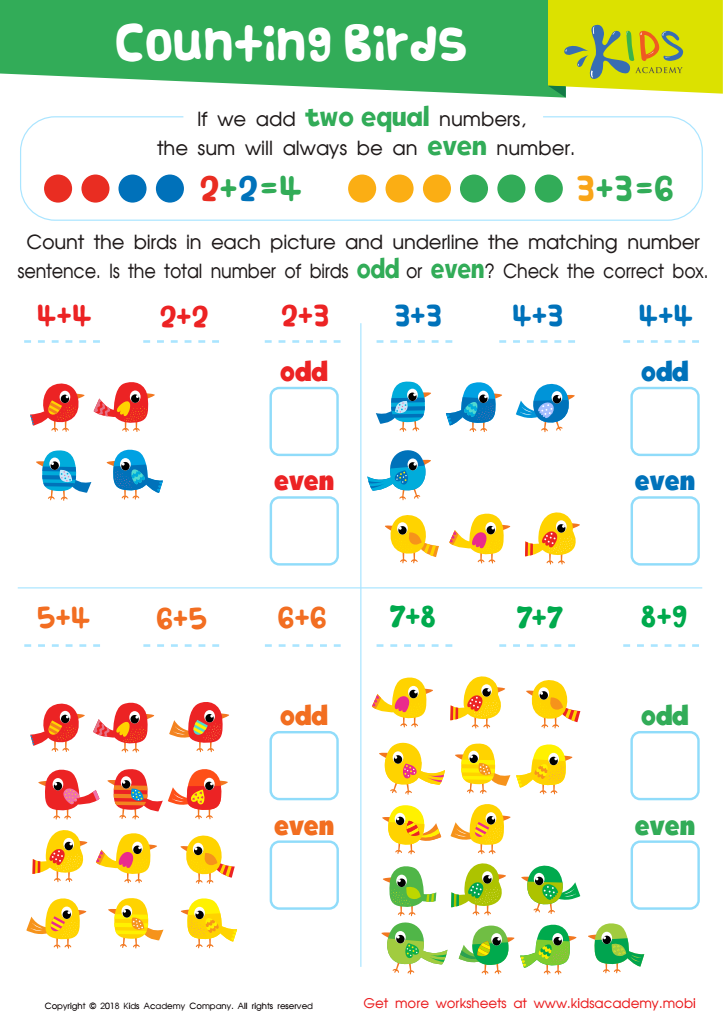
Counting Birds Worksheet
 Assign to My Students
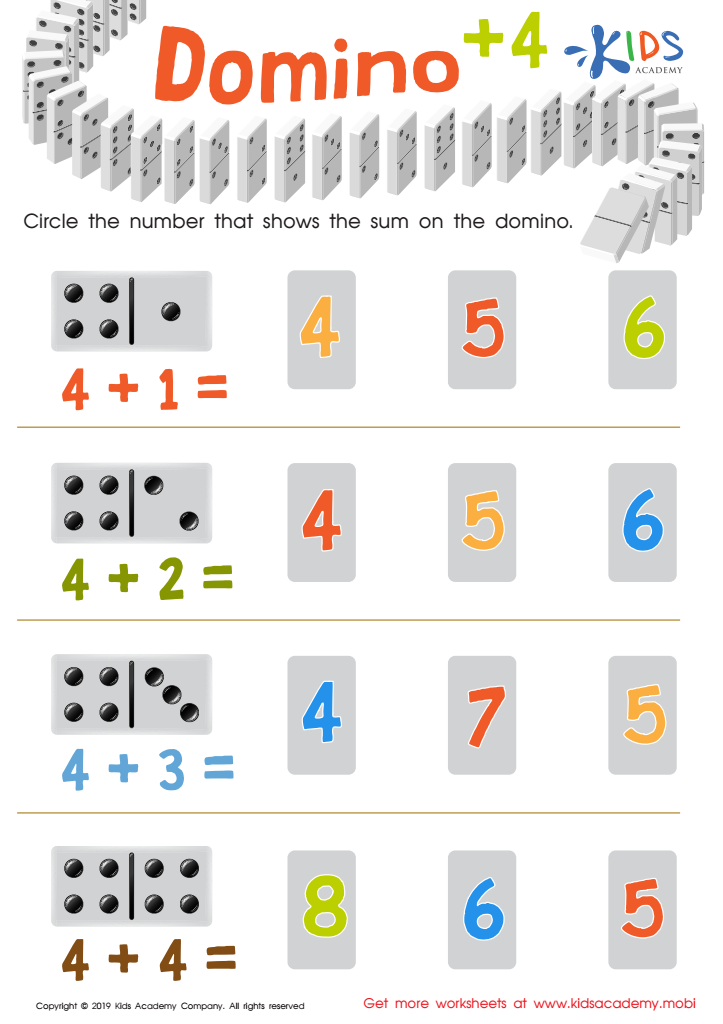
Domino +4 Worksheet
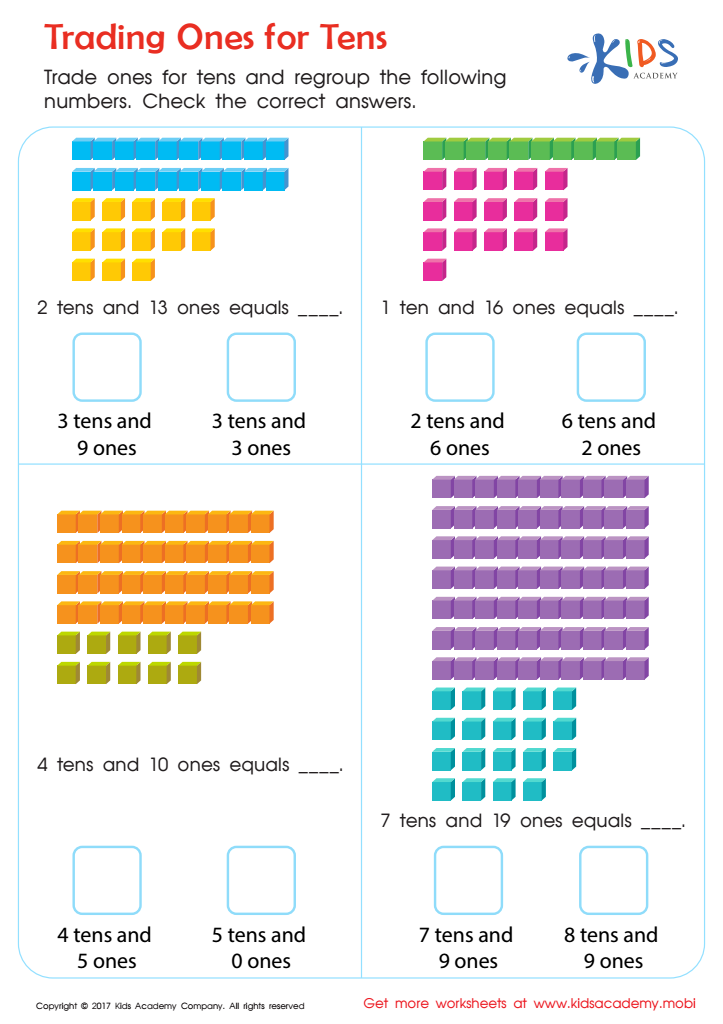
Trading Ones for Tens Worksheet
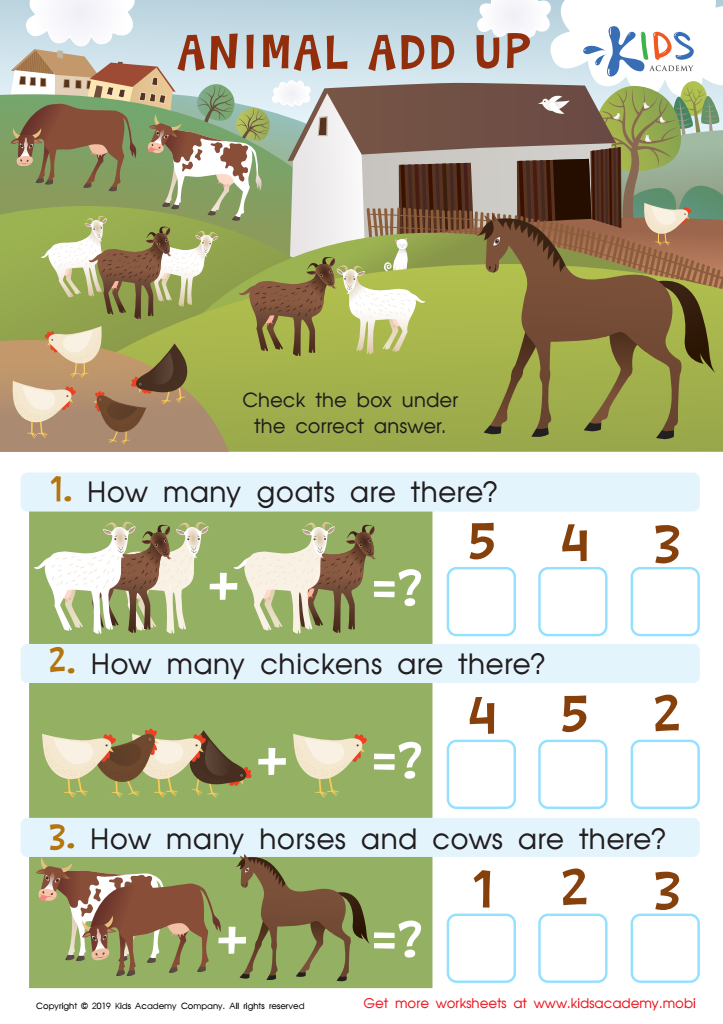
Animal Add Up Worksheet
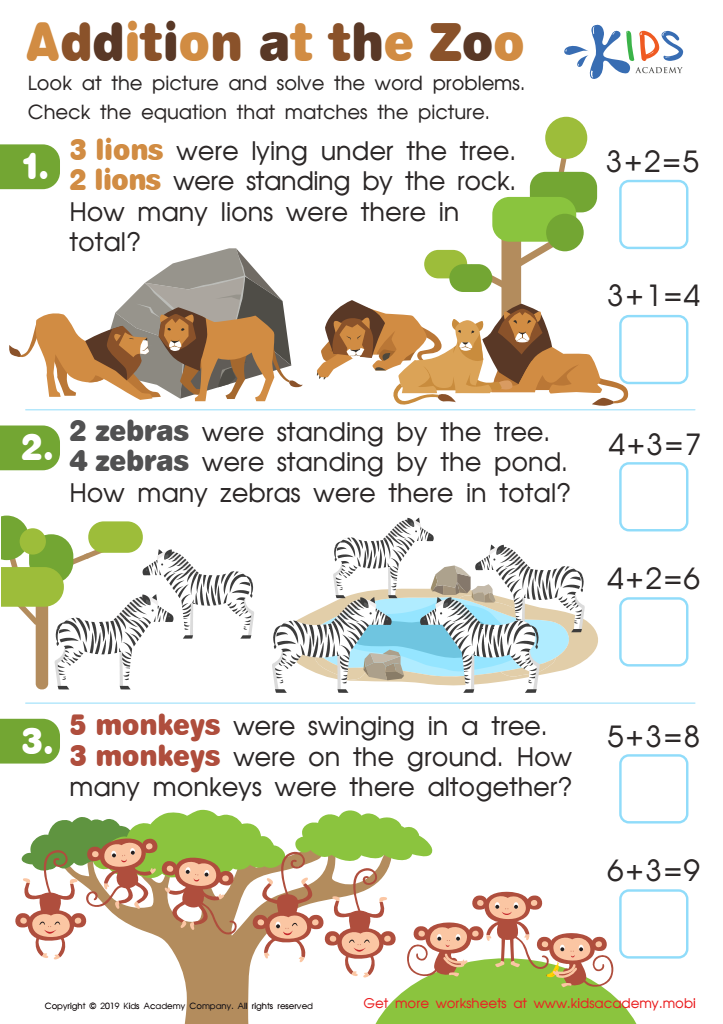
Addition at the Zoo Worksheet
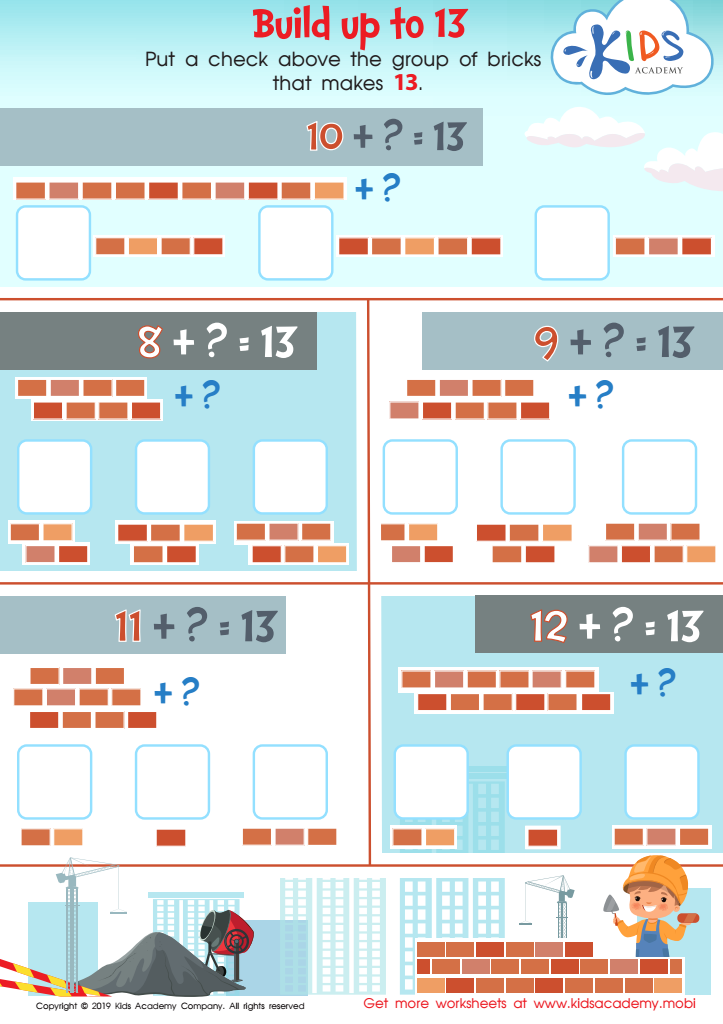
Build up to 13 Worksheet








Basic addition and subtraction skills are foundational for children's overall academic success and cognitive development. For ages 4 to 9, mastering these concepts not only lays the groundwork for future math learning but also enhances problem-solving abilities and critical thinking skills. Parents and teachers play a crucial role in fostering these skills.
First, early proficiency in basic arithmetic promotes confidence and a positive attitude toward learning math. Children who grasp addition and subtraction early are more likely to enjoy math, reducing anxiety as they progress to more complex concepts.
Moreover, these skills are essential in everyday life—whether dealing with money, measuring quantities for cooking, or estimating time. By understanding these processes, kids can apply their knowledge practically, reinforcing their learning in real-world contexts.
Furthermore, today's educational curriculums emphasize STEM (Science, Technology, Engineering, and Mathematics) learning, where strong mathematics skills are vital. Developing a strong foundation in basic addition and subtraction can help students excel in these subjects and open doors for advanced learning opportunities.
In summary, cultivating basic addition and subtraction skills prepares children for lifelong learning, nurtures independence, and equips them with essential tools for everyday decision-making. Both parents and teachers play an important role in this crucial developmental stage.








