Basic Arithmetic Easy Addition & Subtraction Worksheets for Ages 4-9
3 filtered results
-
From - To
Discover the perfect resource for young learners with "Basic Arithmetic Easy Addition & Subtraction Worksheets for Ages 4-9"! These engaging and educational worksheets from Kids Academy are designed to help children build a strong foundation in basic arithmetic. Ideal for kids aged 4 to 9, they offer a range of fun and interactive exercises that simplify addition and subtraction. Encourage your child's mathematical development and confidence with our easy-to-use, printable worksheets. Whether for classroom use or at-home practice, these worksheets make learning math enjoyable and effective! Start your child's math journey today with Kids Academy!
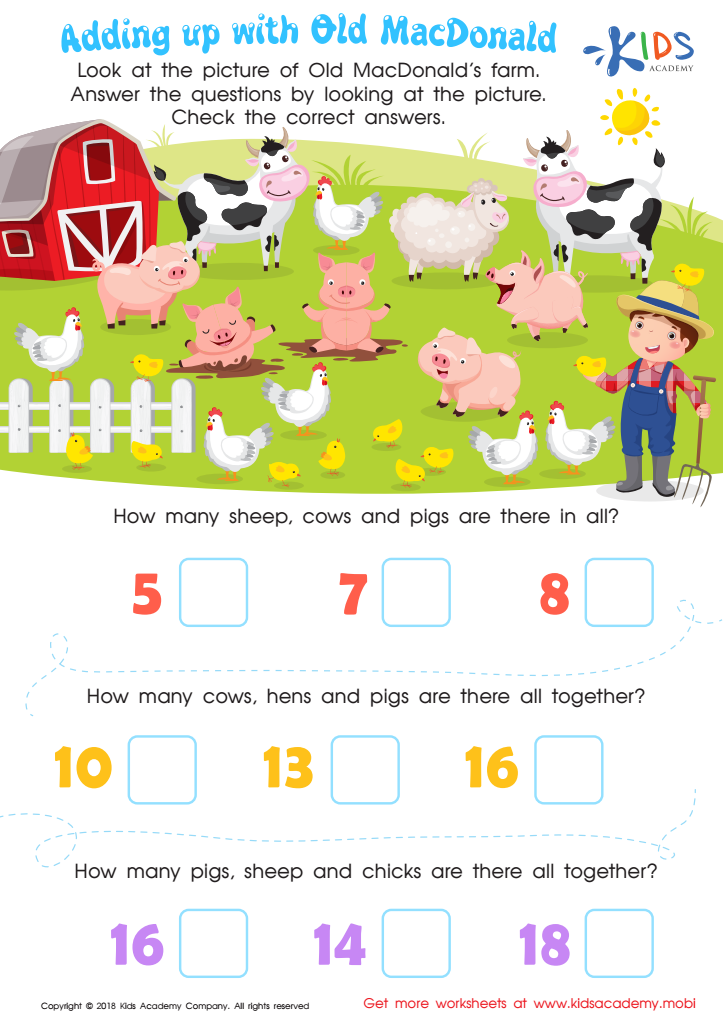
Adding Up with Old MacDonald Worksheet
 Assign to My Students
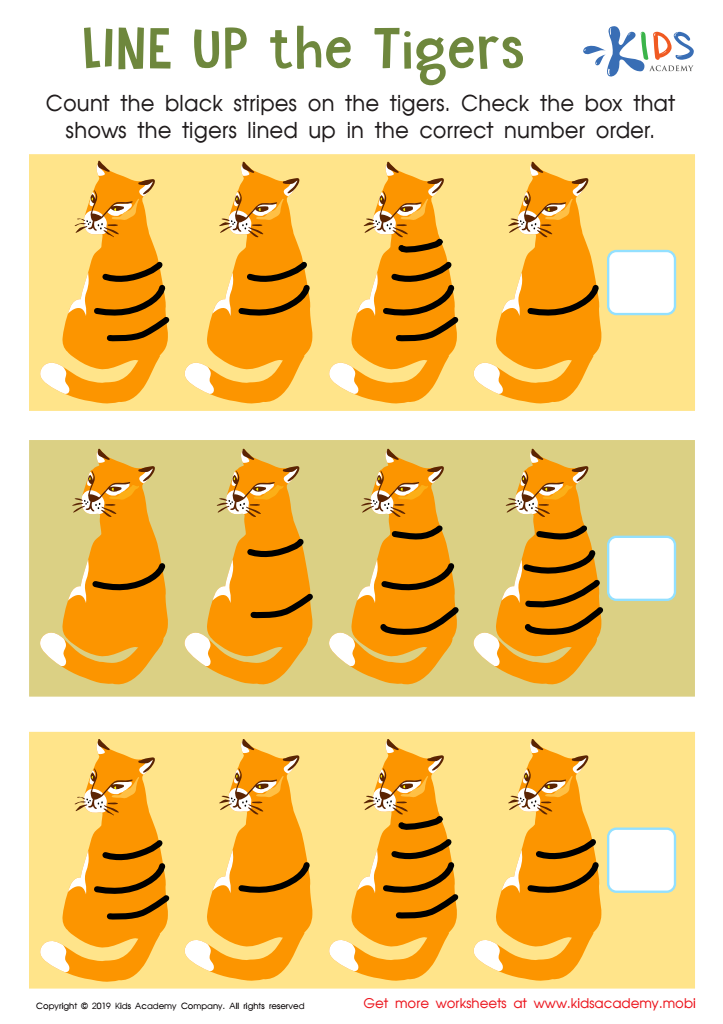
Line up the Tigers Worksheet
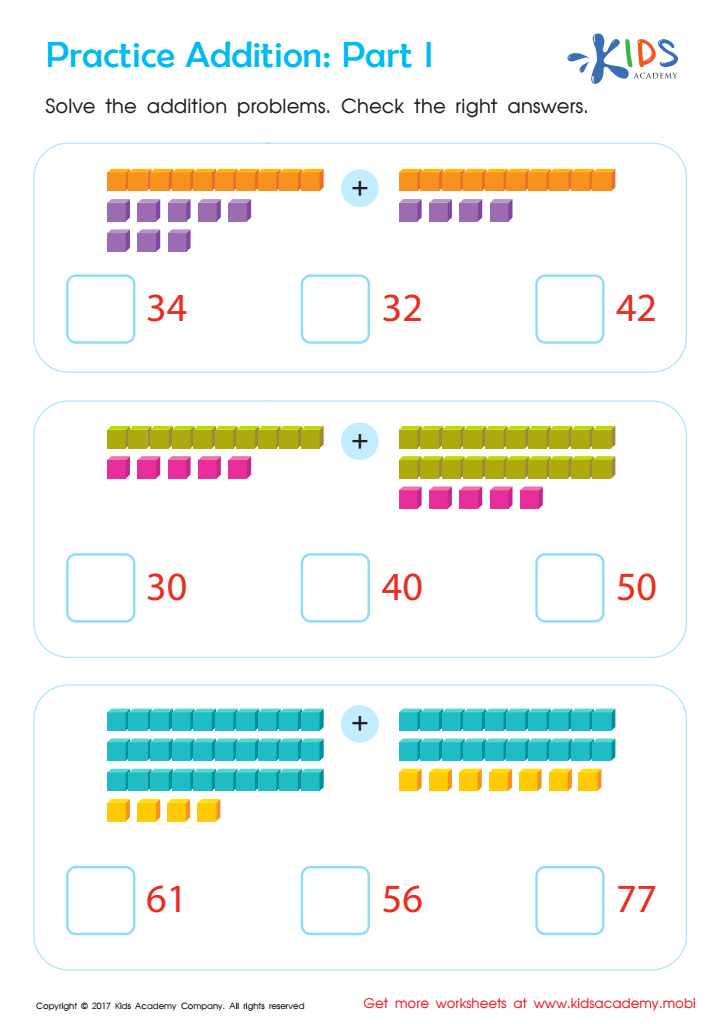
Practice Addition: Part 1 Worksheet








Parents and teachers should prioritize basic arithmetic—specifically, easy addition and subtraction—for children ages 4-9 because this foundational mathematical skill is essential for cognitive growth and academic success. At this critical stage, simple arithmetic helps to enhance number sense, which is the ability to understand and work with numbers, an essential skill for everyday life. Mastering addition and subtraction by early grade levels sets the stage for more complex mathematical concepts like multiplication, division, and eventually algebra and geometry.
Engaging young children in basic arithmetic activities stimulates curiosity, encourages problem-solving skills, and boosts their confidence in handling mathematical tasks. Establishing a strong arithmetic foundation early also supports logical reasoning, critical thinking, and improves memory skills, which are beneficial across all subjects.
Moreover, kids develop at different paces. Consistent practice and positive reinforcement in basic math can bridge learning gaps and cater to diverse learning needs, ensuring no child falls behind. Early success in math not only brings immediate praise and self-esteem but also helps dispel math anxiety, setting a positive tone for future learning experiences.
Parental and teacher involvement in teaching addition and subtraction underscores their role as active partners in a child's education, fostering a collaborative environment that supports the child's overall development. Investing in these skills today lays the groundwork for lifelong learning and problem-solving abilities.








