Basic subtraction Easy Addition & Subtraction Worksheets for Ages 4-9
3 filtered results
-
From - To
Are you searching for engaging worksheets to aid your child's understanding of subtraction and addition? Our "Basic Subtraction Easy Addition & Subtraction Worksheets for Ages 4-9" offer an excellent resource to strengthen foundational math skills. Tailored for young learners, these printable worksheets provide a range of fun and interactive exercises, guiding children through basic subtraction and simple addition. With colorful designs and approachable lessons, kids will enjoy practicing their math skills while building confidence. Ideal for home or classroom use, these worksheets ensure a balanced blend of education and enjoyment. Empower your child’s learning experience today!
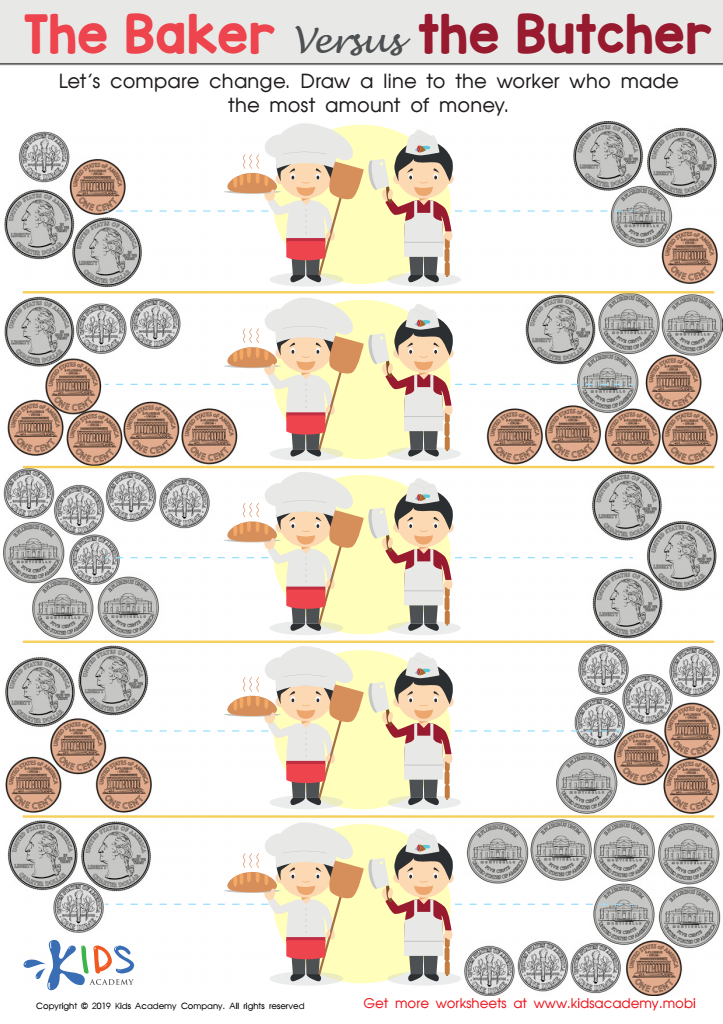
The Baker versus the Butcher Worksheet
 Assign to My Students
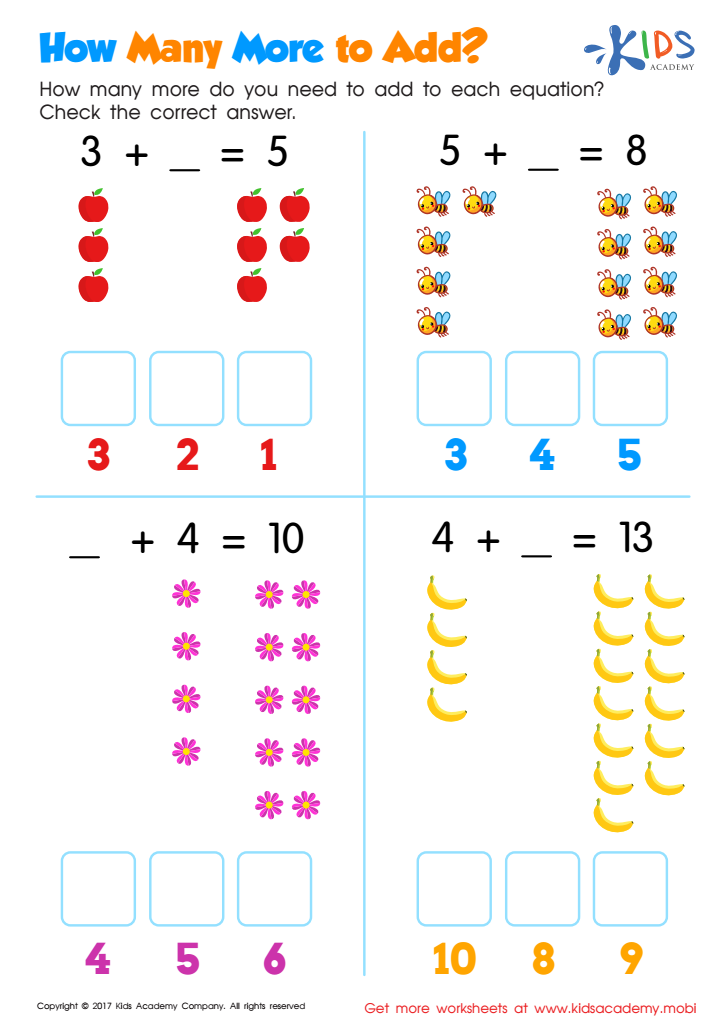
How Many More to Add Worksheet
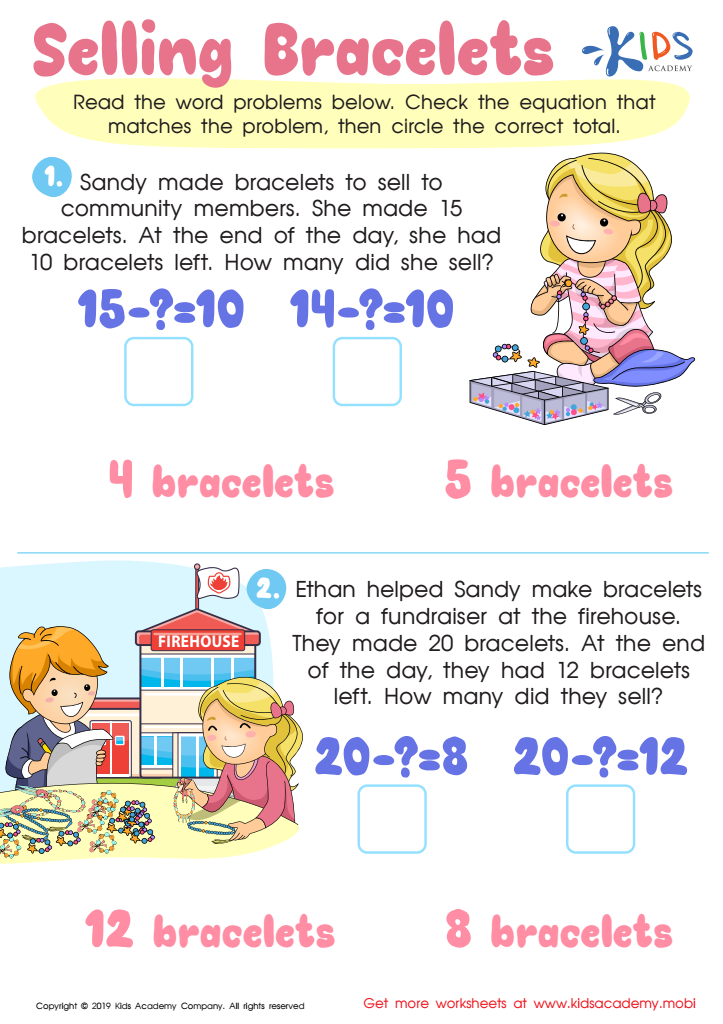
Selling the Bracelets Worksheet








Parents and teachers should prioritize basic subtraction and simple addition and subtraction for children ages 4-9 as these skills form the foundation of mathematical understanding. Mastery of basic arithmetic is crucial because it supports the development of problem-solving abilities, analytical thinking, and logical reasoning. Early proficiency in these areas fosters confidence and enjoyment in math, setting the stage for more complex concepts in later grades.
Understanding basic subtraction and addition helps children perform everyday activities such as counting money, telling time, and measuring items in cooking or crafting. It also enhances cognitive development by exercising memory, concentration, and the ability to recognize patterns. Integrating these skills early on promotes smooth transitions into advanced topics like multiplication, division, algebra, and geometry.
Moreover, engaging young learners with interactive and hands-on methods — utilizing tools like number lines, counting objects, or interactive games — supports learning retention and practical application. Early engagement not only builds a solid academic foundation but also aids in identifying and addressing any learning difficulties early, personalizing education to ensure no child is left behind. Overall, focusing on these essential math skills significantly contributes to a child's overall educational success and real-world functional competence.








