Visual Learning Easy Addition & Subtraction Worksheets for Ages 4-9
5 filtered results
-
From - To
Discover our engaging "Visual Learning Easy Addition & Subtraction Worksheets" tailored specifically for children aged 4-9! These worksheets are designed to make math fun and approachable, utilizing visual aids that help young learners grasp basic addition and subtraction concepts easily. Each sheet includes colorful illustrations and interactive elements, fostering an enjoyable learning environment. Perfect for homeschooling or classroom settings, our resources support various learning styles, ensuring every child can thrive. Explore our collection today and empower your students to build a solid foundation in math with these visually stimulating worksheets that enhance comprehension and encourage independent practice!
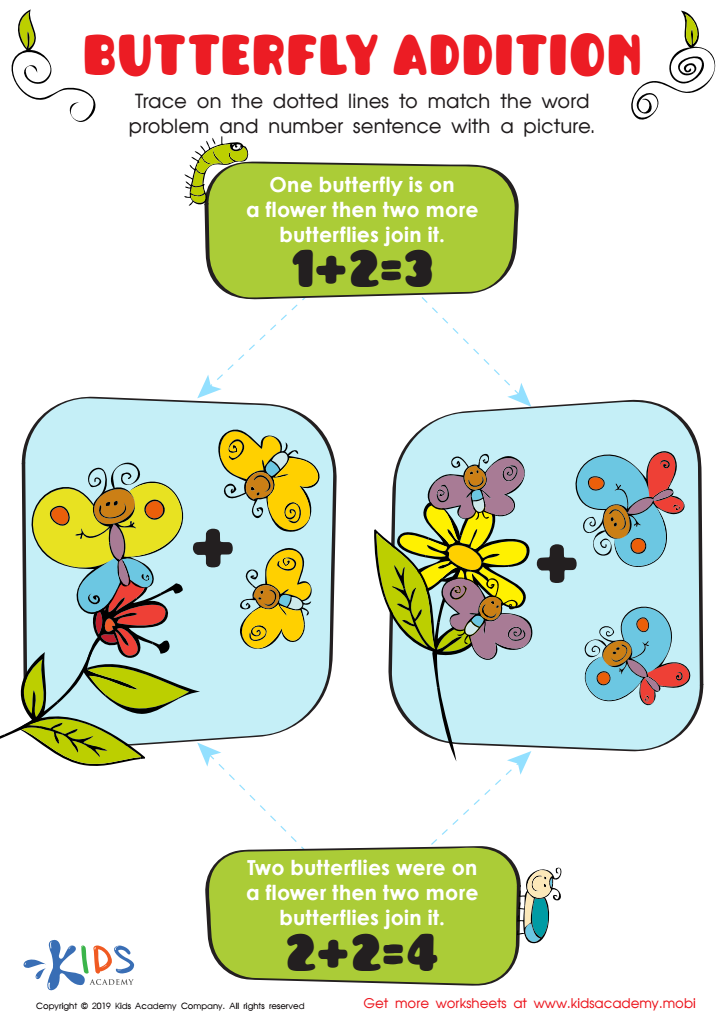
Butterfly Addition Worksheet
 Assign to My Students
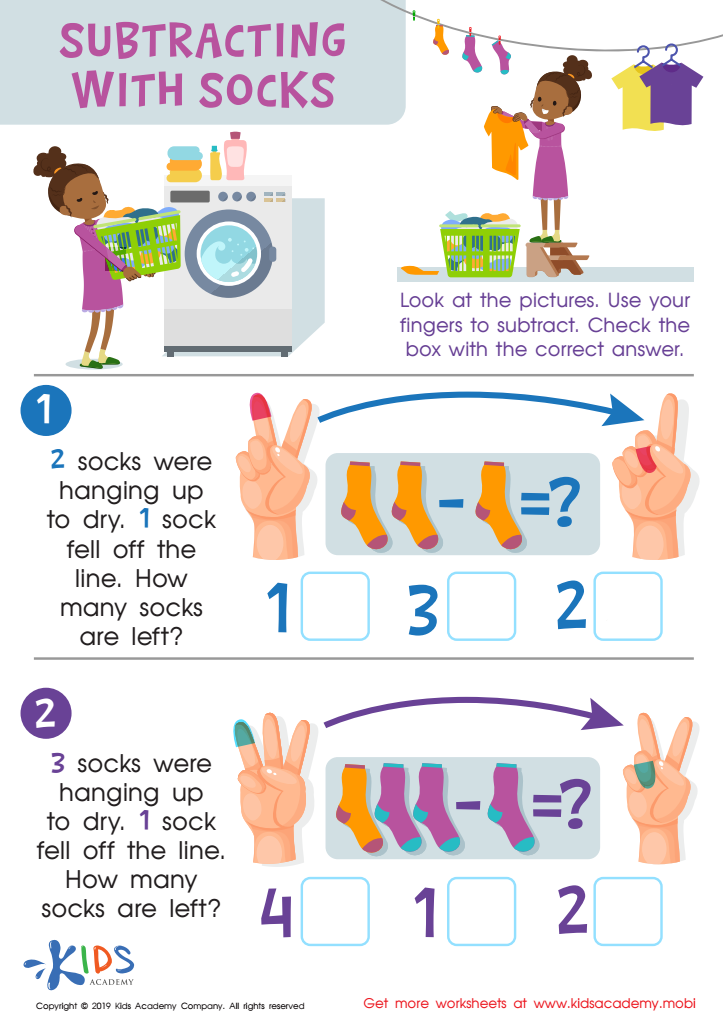
Subtracting Socks Worksheet
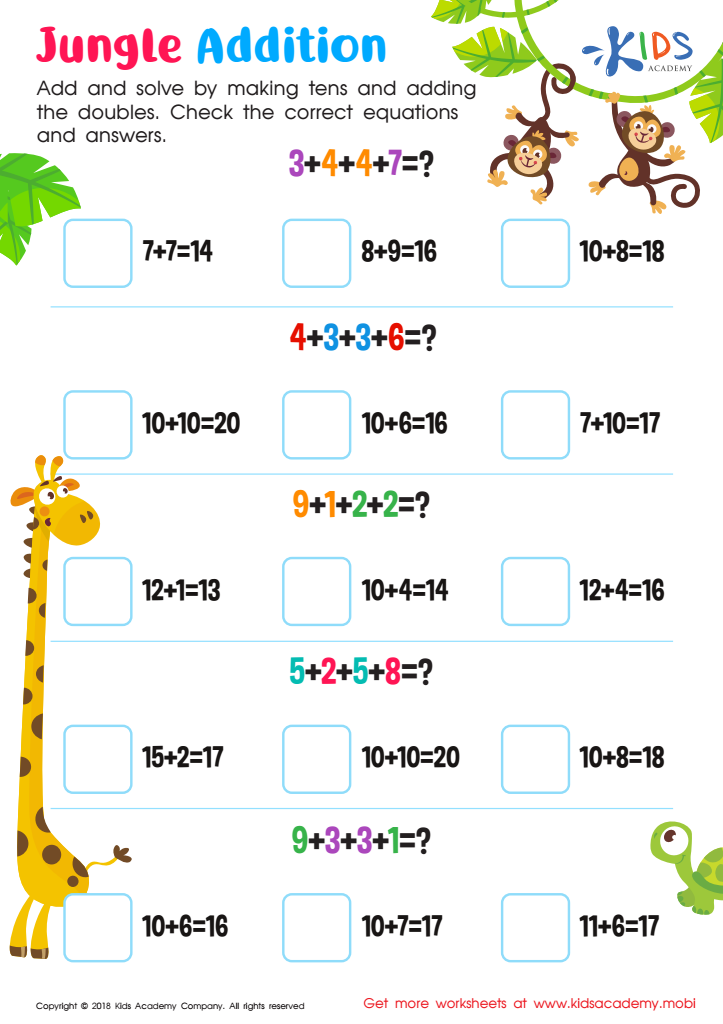
Jungle Addition Worksheet
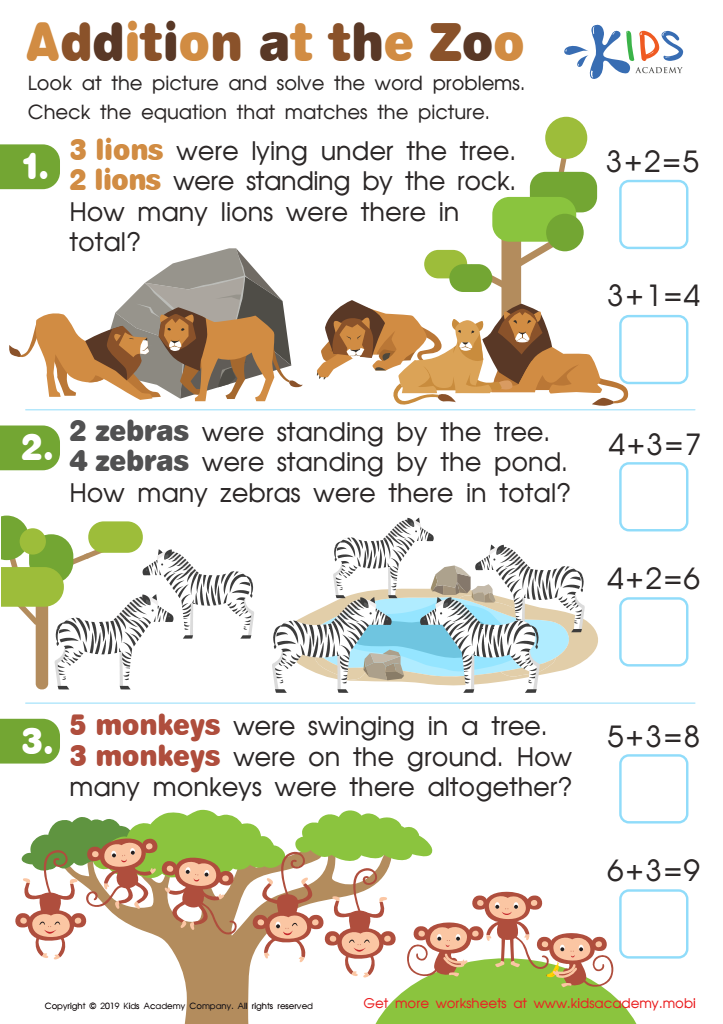
Addition at the Zoo Worksheet
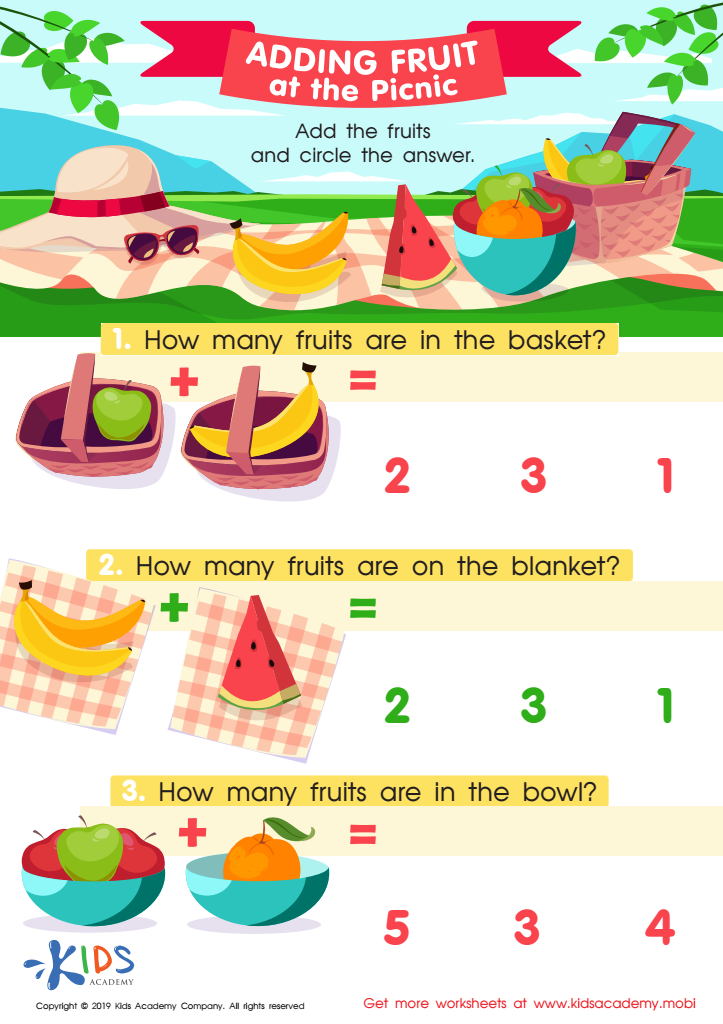
Adding Fruit at the Picnic Worksheet








Parents and teachers should prioritize programs like Visual Learning Easy Addition & Subtraction for Ages 4-9 because they offer a unique and effective approach to math instruction. Young children, especially those in this age group, often benefit from visual aids that help them grasp complex concepts more easily. Visual learning capitalizes on children’s natural curiosity and ability to understand shapes, colors, and images, thereby making addition and subtraction more relatable and engaging.
Using colorful visuals and interactive methods captures children's attention and keeps them motivated to learn. This approach can enhance memory retention, as children can visualize processes rather than relying solely on memorization. Furthermore, visual learning encourages critical thinking and problem-solving skills by allowing children to see the relationships between numbers and operations.
Moreover, incorporating visual learning strategies helps cater to diverse learning styles, ensuring that every child has the opportunity to thrive in their mathematical understanding. By engaging with tools designed for visual learning, parents and teachers can create a solid foundation in math that promotes confidence and a positive attitude toward learning. Fostering these skills now will empower children for future academic success and lifelong mathematical proficiency.








