Understanding times tables Easy Basic Times Tables up to 12 Worksheets for Ages 4-9
3 filtered results
-
From - To
Welcome to our "Understanding Times Tables" resource page! Designed for children ages 4-9, our easy-to-follow worksheets help make mastering basic times tables up to 12 enjoyable and engaging. With colorful, interactive activities, young learners can grasp multiplication concepts at their own pace. Our worksheets focus on developing foundational skills through fun exercises, games, and visuals that boost confidence and retention. Whether for classroom use or at-home learning, these resources provide parents and educators with the tools to support children's math journey. Explore our engaging worksheets and watch young minds flourish as they gain a solid understanding of times tables!
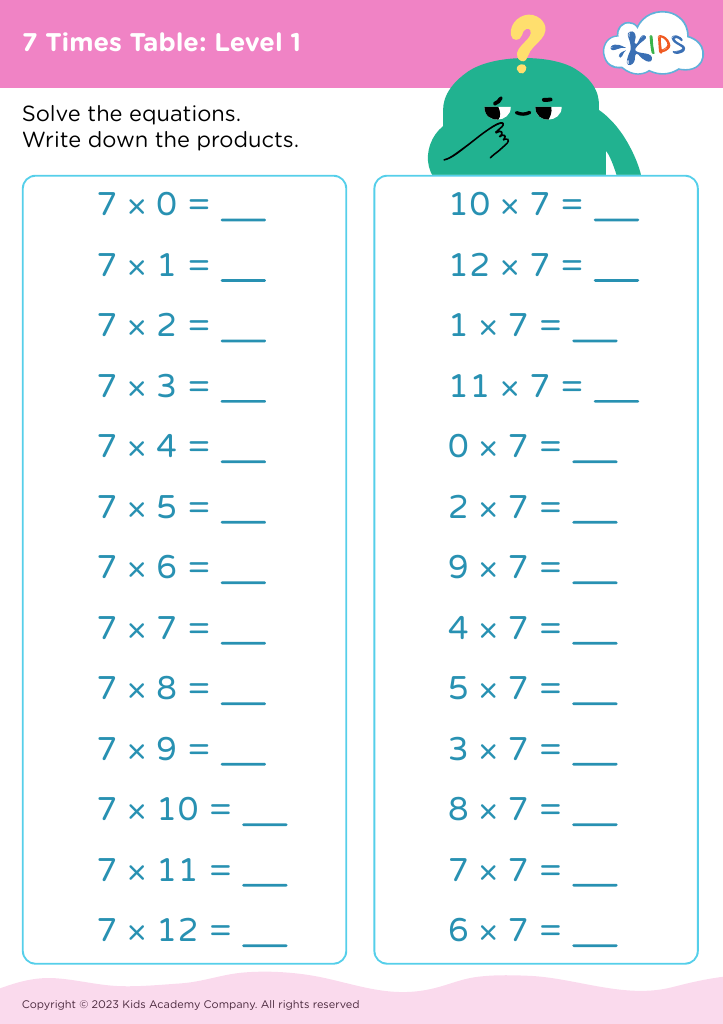
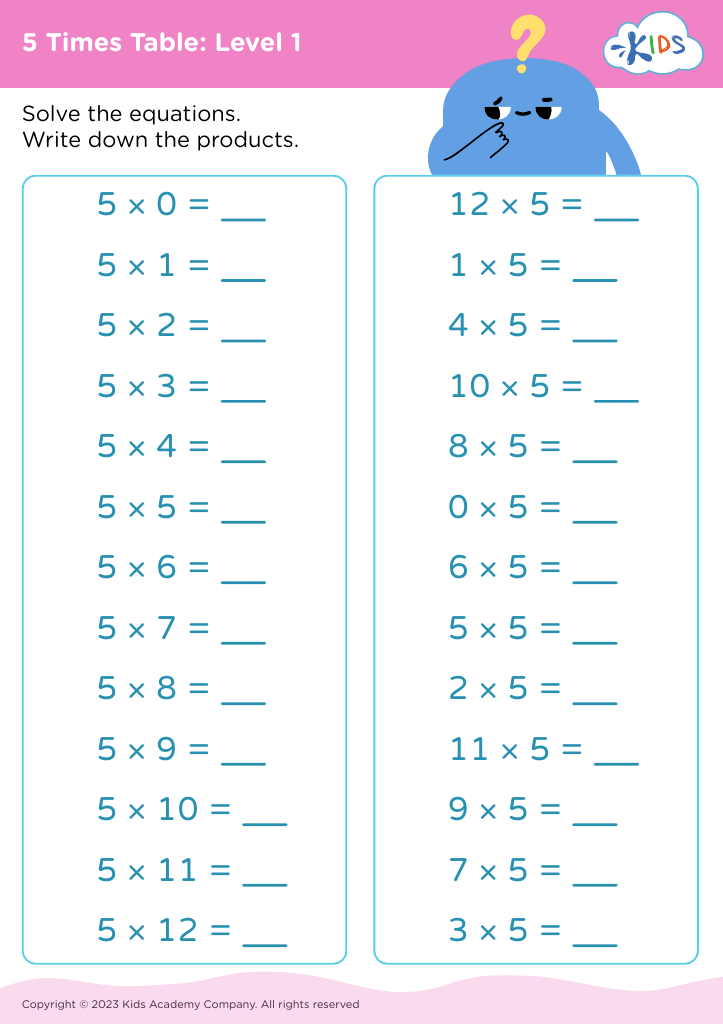
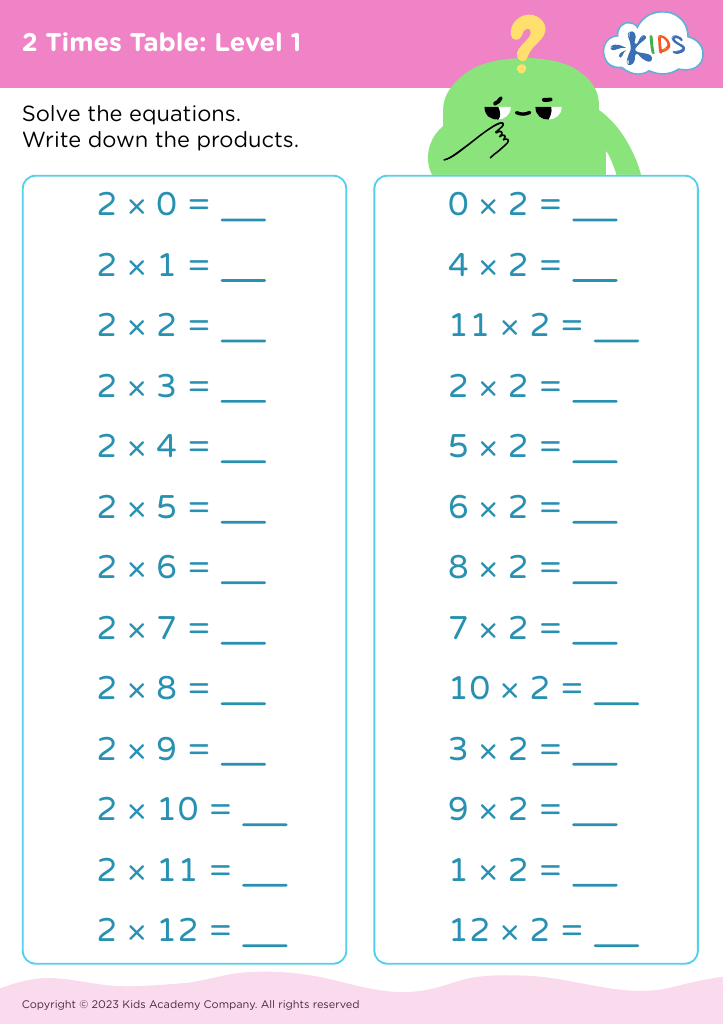


Understanding times tables is essential for children aged 4-9 as it lays the foundational skills for their future math learning. Learning basic times tables up to 12 enhances their ability to tackle more complex mathematical concepts. For instance, multiplication is a building block for division, fractions, and even algebra, making it crucial for kids to grasp these fundamental principles early on.
Parents and teachers should care because fluency in times tables boosts confidence in students. When children master multiplication, they feel more capable in their math skills, leading to greater participation and enthusiasm in classroom activities. Moreover, these skills are transferable across various subjects, as math is interconnected with science, economics, and everyday problem-solving situations.
With the integration of technology and educational games, learning times tables can be enjoyable and engaging, thus fostering a positive attitude toward mathematics. Additionally, these skills prepare children for standardized tests and future academic challenges. Overall, ensuring that young learners understand times tables cultivates resilience and lays the groundwork for successful lifelong learning in math and beyond. Consequently, nurturing this skill set is beneficial not only for immediate academic performance but also for shaping well-rounded, confident learners.








