Critical thinking skills Easy Math Worksheets for Ages 4-9
3 filtered results
-
From - To
Enhance your child’s problem-solving abilities with our "Critical Thinking Skills Easy Math Worksheets" designed for ages 4-9. These engaging worksheets combine fun and education, helping young learners develop essential critical thinking skills through interactive math exercises. Each worksheet offers age-appropriate challenges that stimulate logical reasoning and creativity, making it easy for children to grasp concepts while building a strong math foundation. Suitable for both classroom and home use, our worksheets encourage independent thinking and self-confidence in young mathematicians. Explore our comprehensive collection and watch your child thrive in their mathematical journey today!
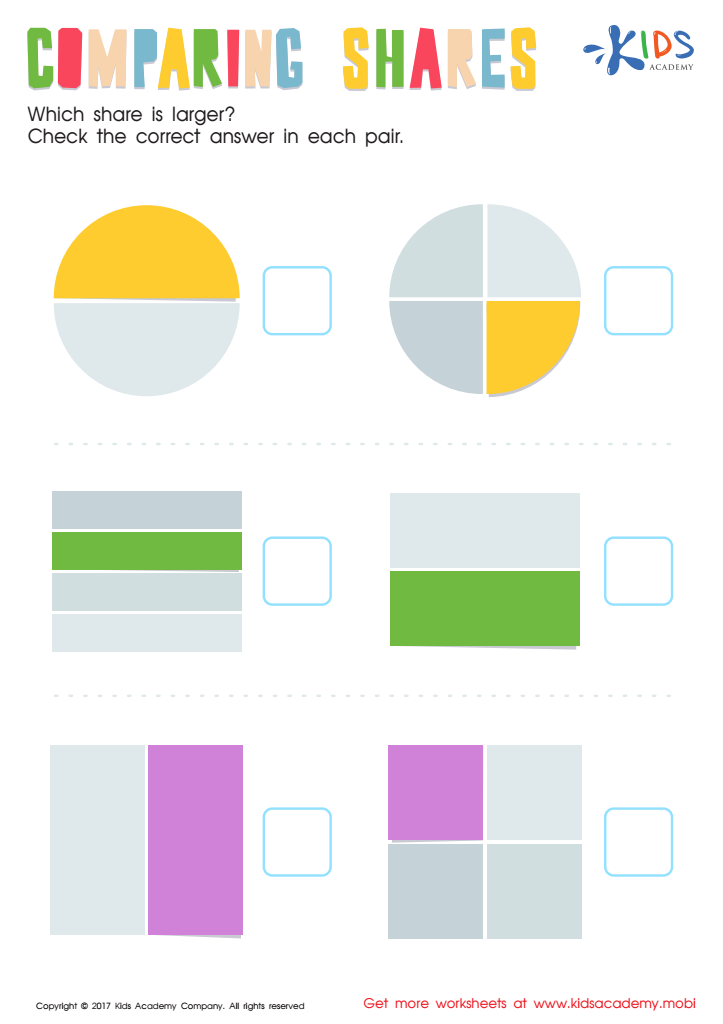
Comparing Shares Worksheet
 Assign to My Students
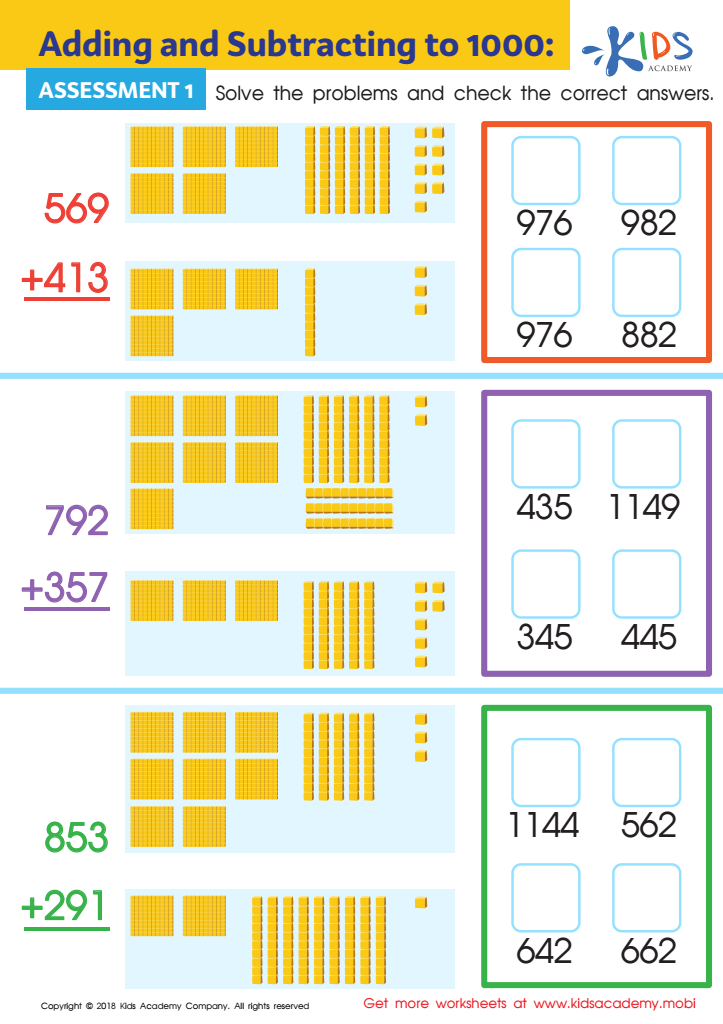
Adding and Subtracting to 1 Worksheet: Assessment 1
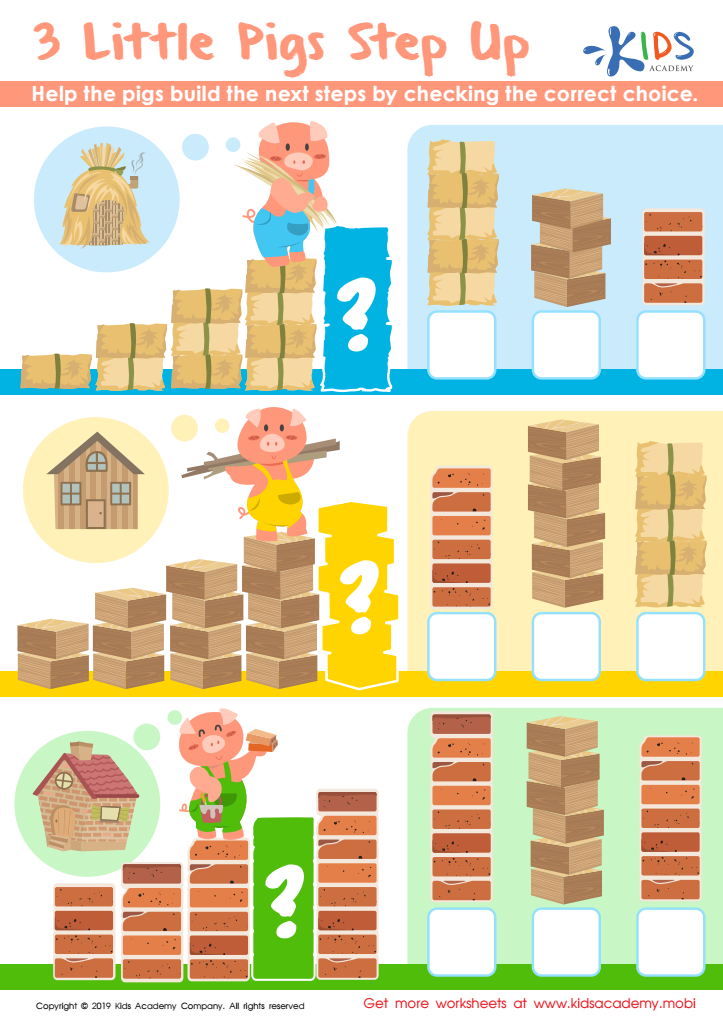
3 Little Pigs Step Up Worksheet



.jpg)


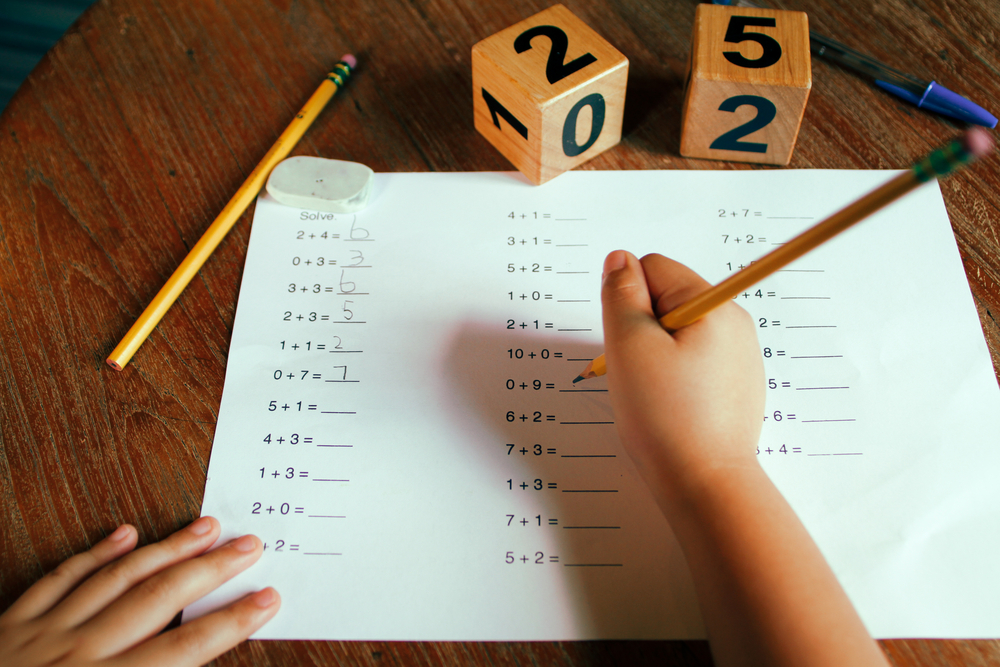

Parents and teachers should care about critical thinking skills in early math education for children ages 4 to 9 because these skills form the foundation for lifelong learning and problem-solving. This developmental stage is crucial, as children are naturally curious and eager to explore patterns, relationships, and logical reasoning. By introducing critical thinking alongside math concepts, educators can help children develop their ability to analyze situations, make connections, and reason through problems.
Easy math concepts, when taught critically, empower children to not only understand numbers but also to engage deeply with mathematical ideas. This encourages exploration, experimentation, and thoughtful dialogue about math rather than rote memorization. Moreover, developing these skills at a young age fosters confidence, enabling children to tackle more complex math problems in the future.
Additionally, in an increasingly complex world filled with data and technology, critical thinking skills are essential for making informed decisions and navigating challenges effectively. When parents and teachers prioritize developing these skills through fun and engaging mathematical activities, they prepare children not only for academic success but also for life skills that extend beyond the classroom. Ultimately, this approach equips young learners with the tools they need to become thoughtful, independent thinkers.








