Identifying shapes Easy Math Worksheets for Ages 4-9
3 filtered results
-
From - To
Discover our "Identifying Shapes Easy Math Worksheets" designed specifically for kids aged 4-9! These engaging worksheets help young learners recognize and name basic shapes through fun and interactive activities. Perfect for early grade students, our worksheets make learning enjoyable with colorful exercises that reinforce geometric concepts. Strengthen your child’s spatial awareness and foundational math skills with our expertly crafted printable sheets. Whether at home or in the classroom, these worksheets are an excellent resource to support your child's educational journey. Bring out the mathematician in your little one with our easy and accessible shape identification exercises!
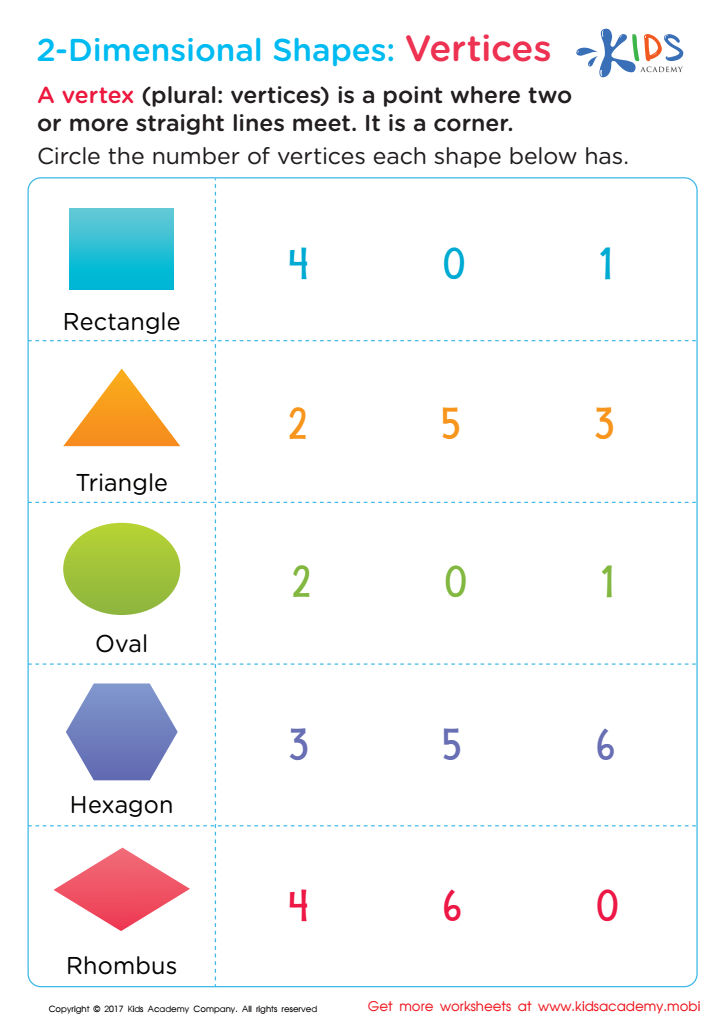
Two–Dimensional Shapes: Vertices Printable
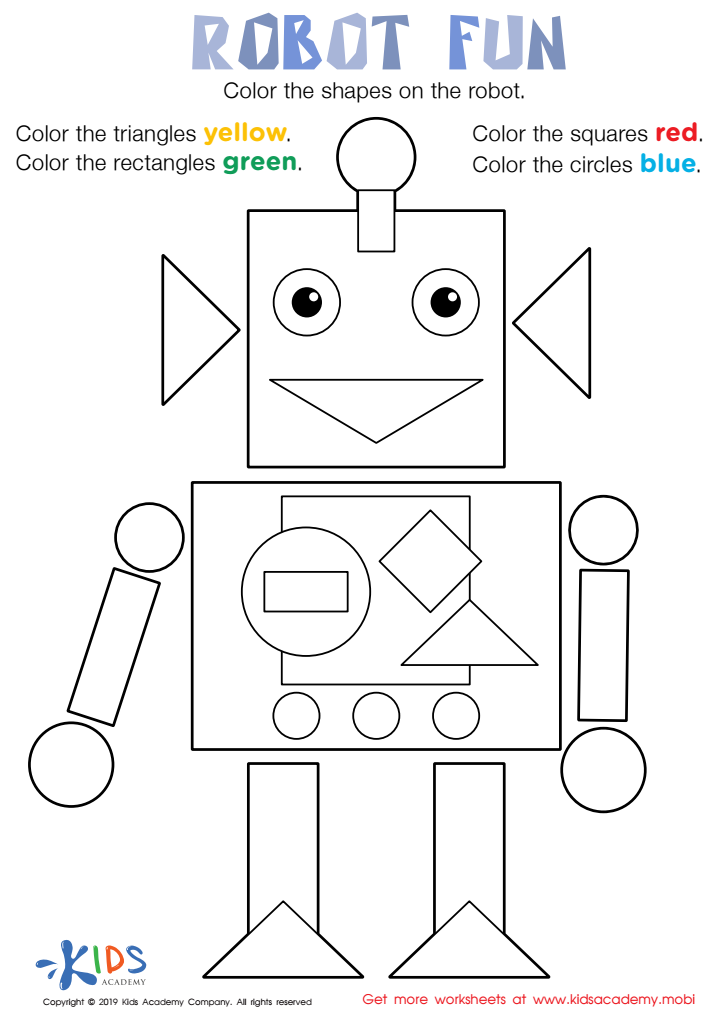
Robot Fun Worksheet
 Assign to My Students
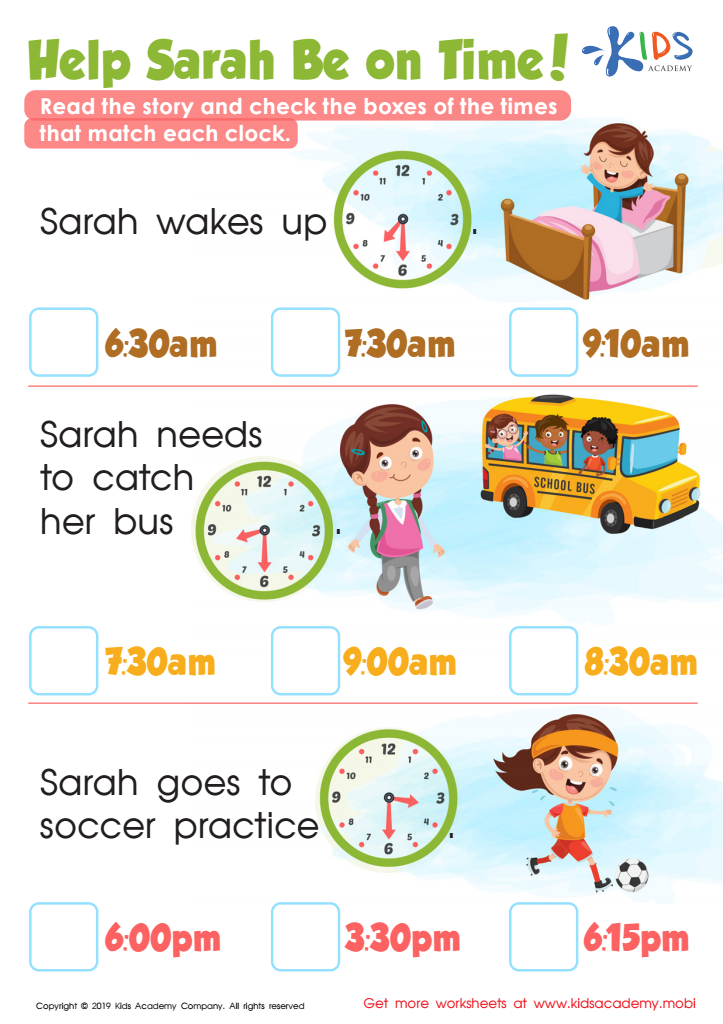
Help Sarah Be on Time! Worksheet






Parents and teachers should care about identifying shapes for children ages 4-9 because it lays the foundation for essential cognitive and motor skills that are crucial for overall academic success. At this age, children’s brains are rapidly developing, and understanding basic shapes like circles, squares, and triangles helps them make sense of the world around them. Recognizing shapes enhances spatial awareness, which is vital for tasks like reading, writing, and solving puzzles. For example, understanding that the letter "A" is composed of three lines arranged in a particular way helps with learning letters and words.
Furthermore, shapes are a fundamental part of geometry, a branch of mathematics. Early exposure to these concepts makes advanced math learning more accessible later. Identifying shapes also fosters problem-solving skills and abstract thinking. When children sort and categorize different shapes, they learn to recognize patterns and relationships, which is a critical thinking process.
Lastly, engaging with shapes in creative activities, such as drawing or building, improves fine motor skills and hand-eye coordination. It’s an interactive and enjoyable way to learn, keeping children motivated and engaged. By focusing on early shape recognition, parents and teachers provide a strong, versatile foundation for a child’s lifelong learning journey.








