Observational skills Easy Math Worksheets for Ages 4-9
4 filtered results
-
From - To
Discover our "Observational Skills Easy Math Worksheets for Ages 4-9" designed to boost young minds. At Kids Academy, we emphasize the importance of nurturing keen observation skills through engaging activities that lay the foundation for math proficiency. These worksheets offer an enjoyable blend of counting, matching, and pattern recognition exercises, all tailored to capture the curiosity of children aged 4-9. With vibrant visuals and interactive tasks, our worksheets not only make learning math fun but also develop critical thinking and attention to detail. Help your child excel and develop a love for learning with our expertly crafted math resources!
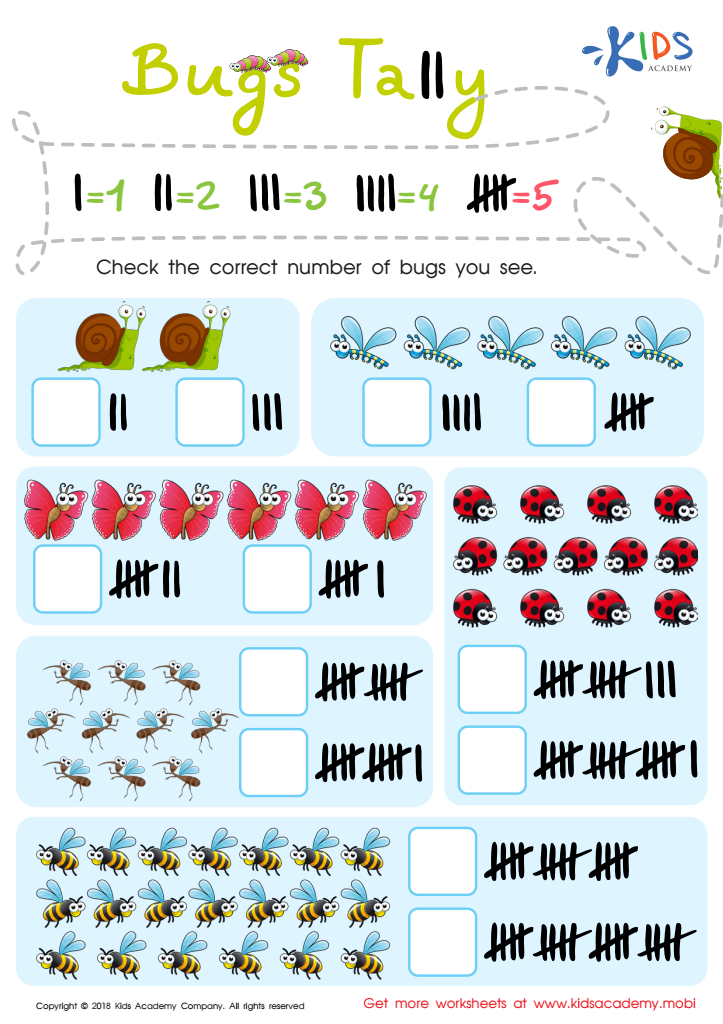
Bugs Tally Worksheet
 Assign to My Students
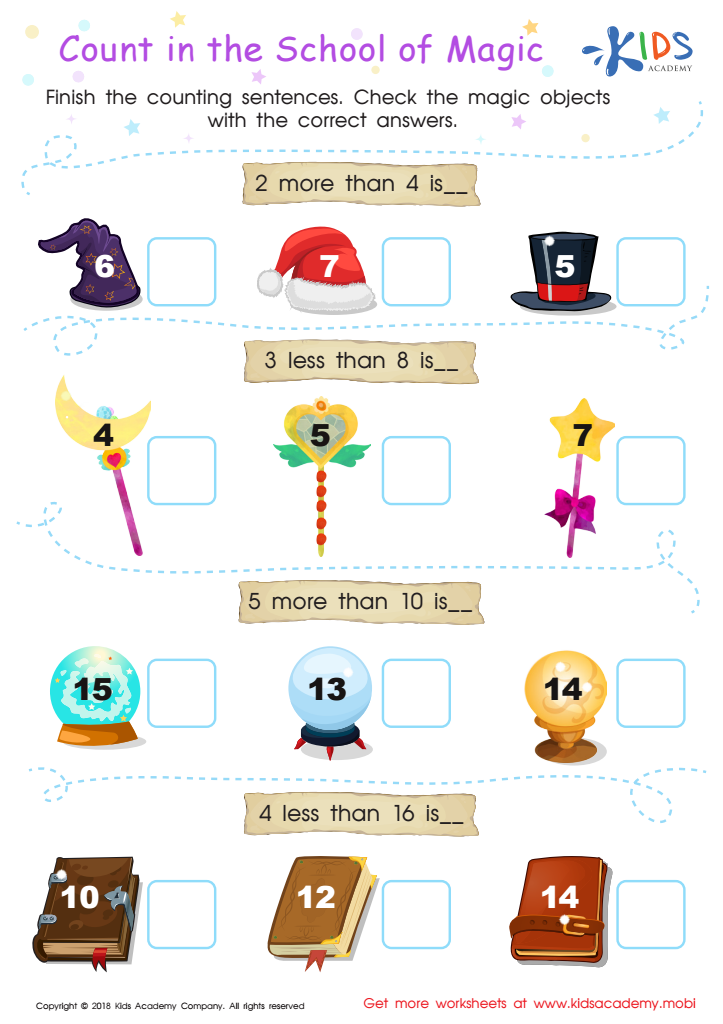
Count in the School of Magic Worksheet
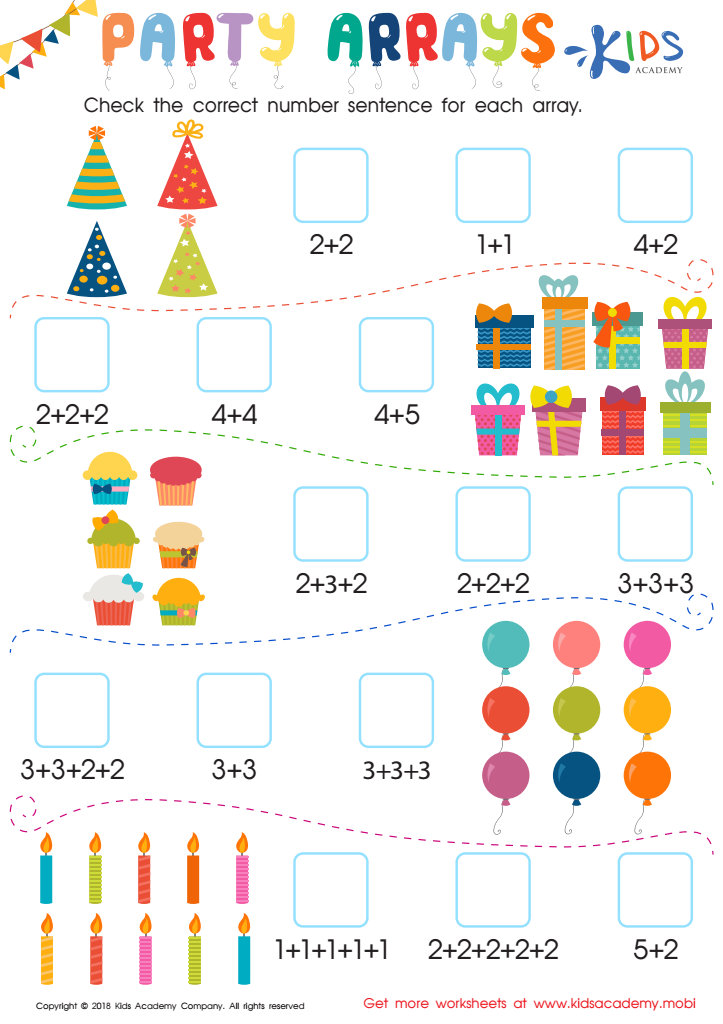
Party Arrays Worksheet
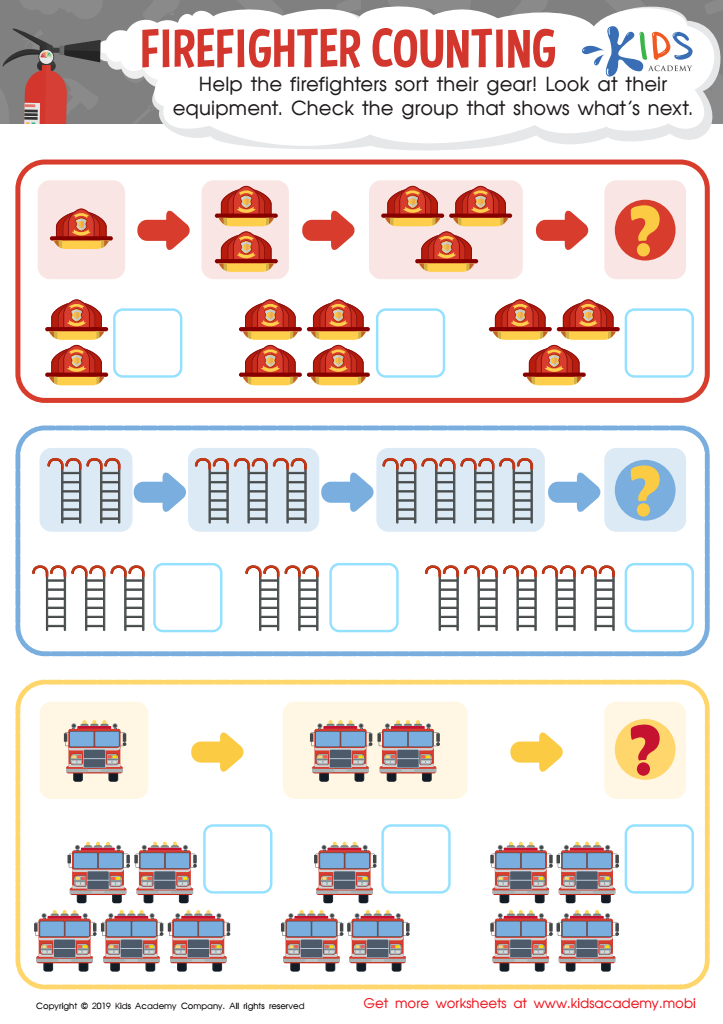
Firefighter Counting Worksheet








Observational skills are fundamental to early childhood development, and integrating them with easy math concepts for ages 4-9 sets a robust foundation for future learning. These skills help children notice patterns, relationships, and differences in the world around them, which are critical for mathematical reasoning and problem-solving.
When parents and teachers prioritize developing observational skills through easy math activities, they foster a child's natural curiosity and ability to focus on details. For instance, examining shapes, counting objects, or comparing sizes encourages kids to observe carefully and make mathematical connections. These activities are not only engaging but also cultivate cognitive abilities crucial for more complex mathematical concepts later on, such as geometry, set theory, and data analysis.
Furthermore, observational skills nurtured through mathematical play enhance children's understanding of their environment, improving their abilities to classify and organize information. This enhanced awareness contributes to better academic performance across the board. For instance, tasks like finding repeated patterns in a sequence or judging quantities can improve logical thinking and spatial awareness, promoting overall cognitive development.
Moreover, focusing on these skills builds confidence and fosters a positive attitude towards learning math. As children see the immediate results of their efforts, they develop resilience and a growth mindset, both of which are essential for academic and personal success. So, encouraging observational skills in math during these formative years is invaluable for nurturing well-rounded, thoughtful, and proficient young learners.








