Spatial reasoning Easy Math Worksheets for Ages 4-9
3 filtered results
-
From - To
Explore our engaging "Spatial Reasoning Easy Math Worksheets" designed for children aged 4-9! These high-quality, printable worksheets help young learners develop essential spatial reasoning skills through fun and interactive activities. Perfectly aligned with early childhood education standards, each worksheet promotes critical thinking and problem-solving abilities. Your child will enjoy exercises that involve shape recognition, visual perception, and spatial relationships, all while building a strong math foundation. Watch your little ones thrive as they master these concepts in a playful and supportive environment. Elevate their learning experience today with our curated collection of easy math worksheets for every budding mathematician!
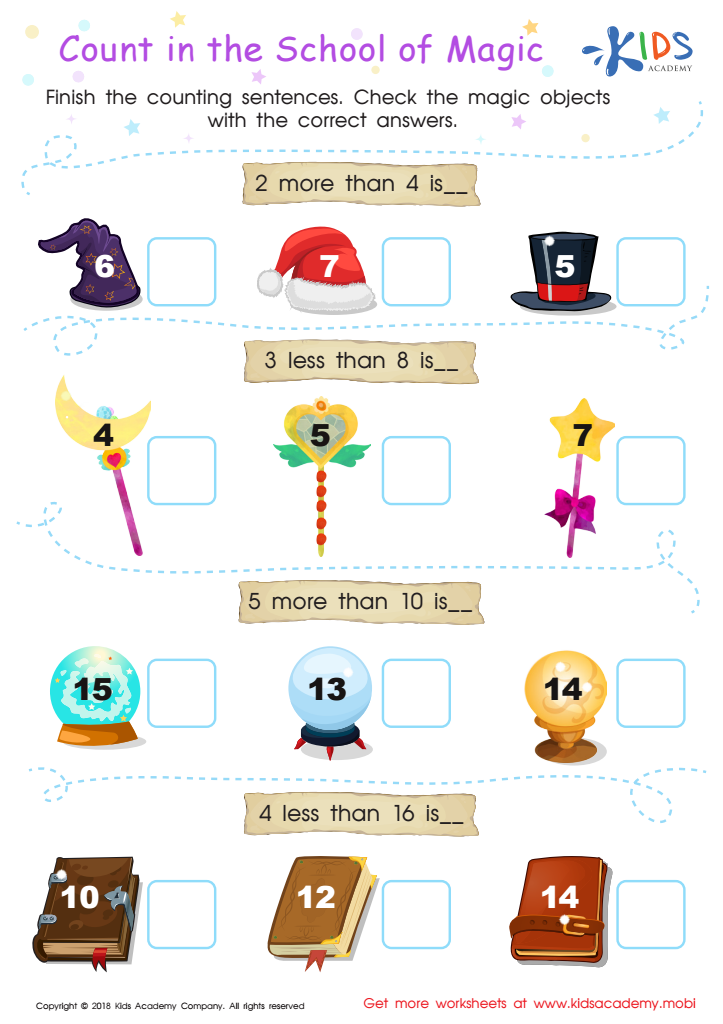
Count in the School of Magic Worksheet
 Assign to My Students
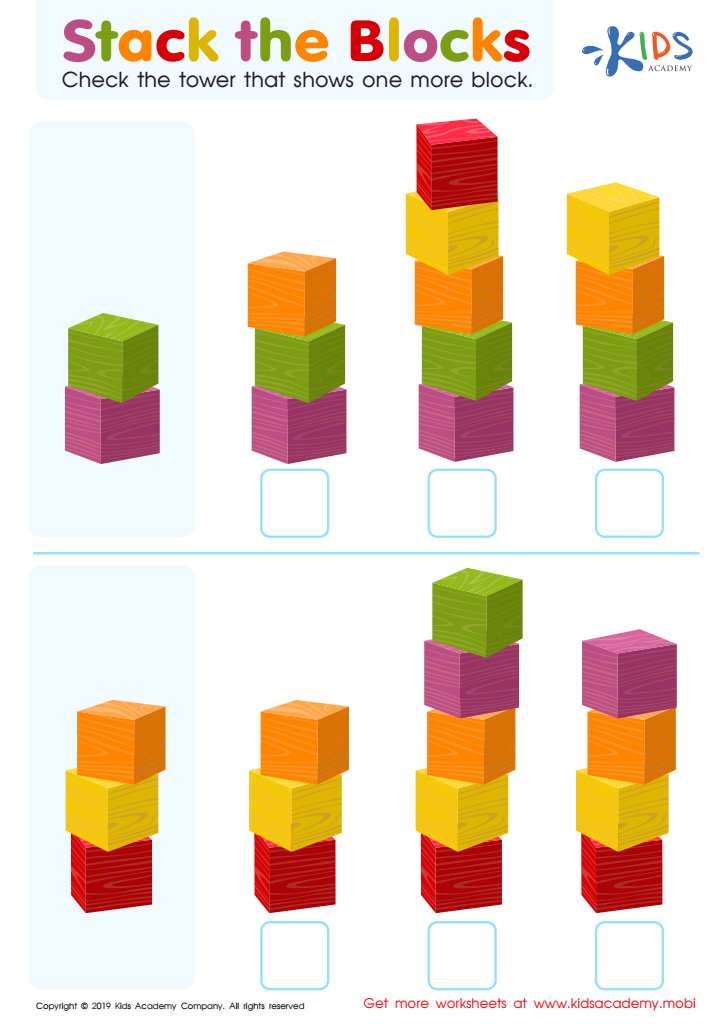
Stack the Blocks Worksheet
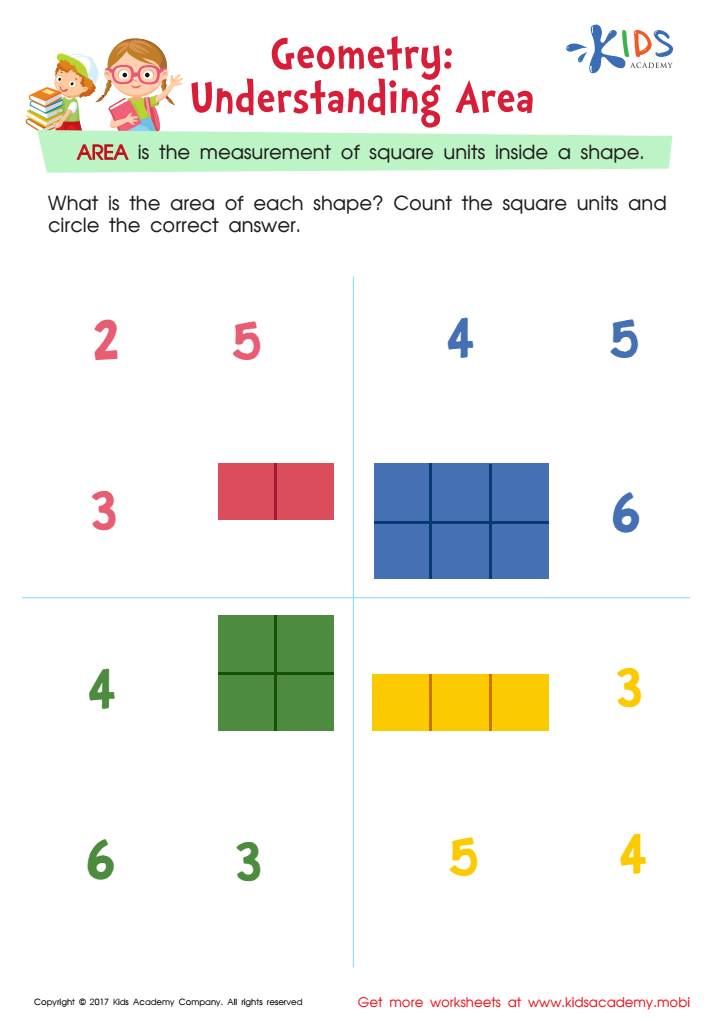
Understanding Area Worksheet








Spatial reasoning is a critical skill that lays the foundation for success in mathematics and other disciplines. For children aged 4 to 9, developing strong spatial reasoning abilities can significantly enhance their understanding of concepts such as geometry, measurement, and even basic arithmetic. Parents and teachers should care about fostering this skill because spatial reasoning is linked to problem-solving abilities and logical thinking, which are essential for academic achievement and everyday decision-making.
Engaging children in activities that promote spatial reasoning can lead to improved cognitive skills, increased creativity, and better performance in STEM subjects. Introducing easy math activities, such as puzzles, building blocks, and spatial games, can make learning enjoyable and effective. These activities encourage children to visualize and manipulate objects in their minds, bolstering their confidence in tackling more complex math challenges as they grow older.
Additionally, the implications of spatial reasoning extend beyond math; studies have shown its correlation with literacy and language development. By nurturing spatial reasoning at a young age, parents and teachers equip children with a comprehensive skill set that is essential for academic and life success. Therefore, prioritizing spatial reasoning through engaging and approachable math activities is vital for holistic development in early education.








