Visual discrimination Easy Math Worksheets for Ages 4-9
3 filtered results
-
From - To
Boost your child's math and visual skills with our Visual Discrimination Easy Math Worksheets, designed specifically for children aged 4-9. These engaging worksheets focus on honing attention to detail and differentiating between objects, numbers, and shapes. Through fun activities such as finding and matching differences, children develop essential skills crucial for math success. Perfect for young learners, each worksheet is age-appropriate and thoughtfully crafted to make learning enjoyable. Enhance your child's educational journey with these creative and effective resources. Visit Kids Academy to download and print these free worksheets that transform learning into a delightful adventure.
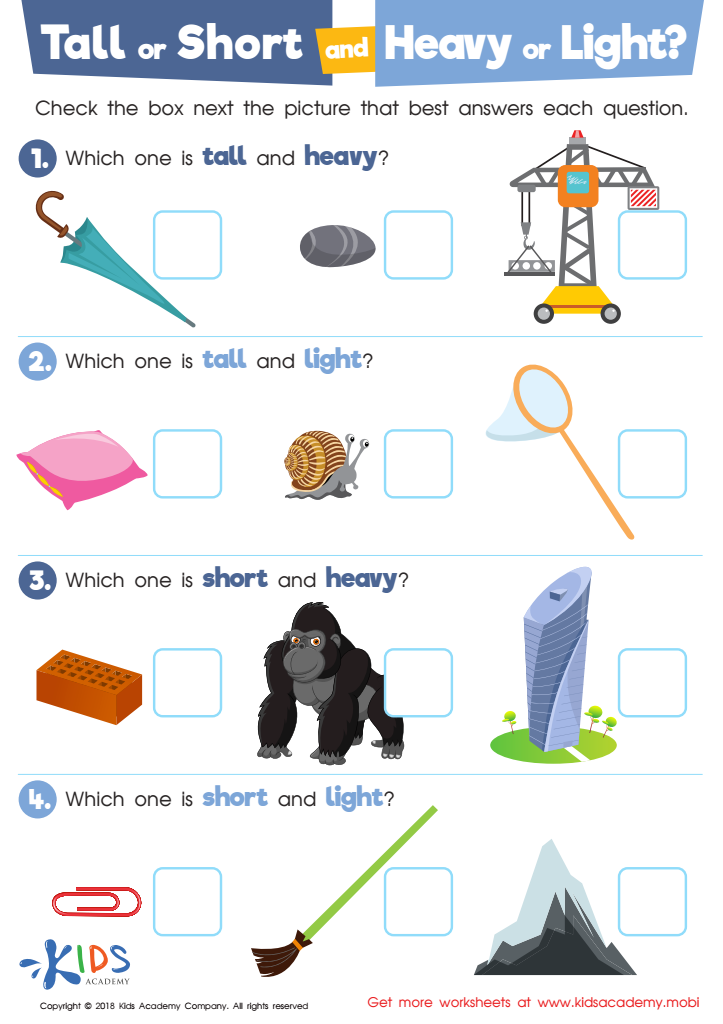
Tall or Short and Heavy or Light? Worksheet
 Assign to My Students
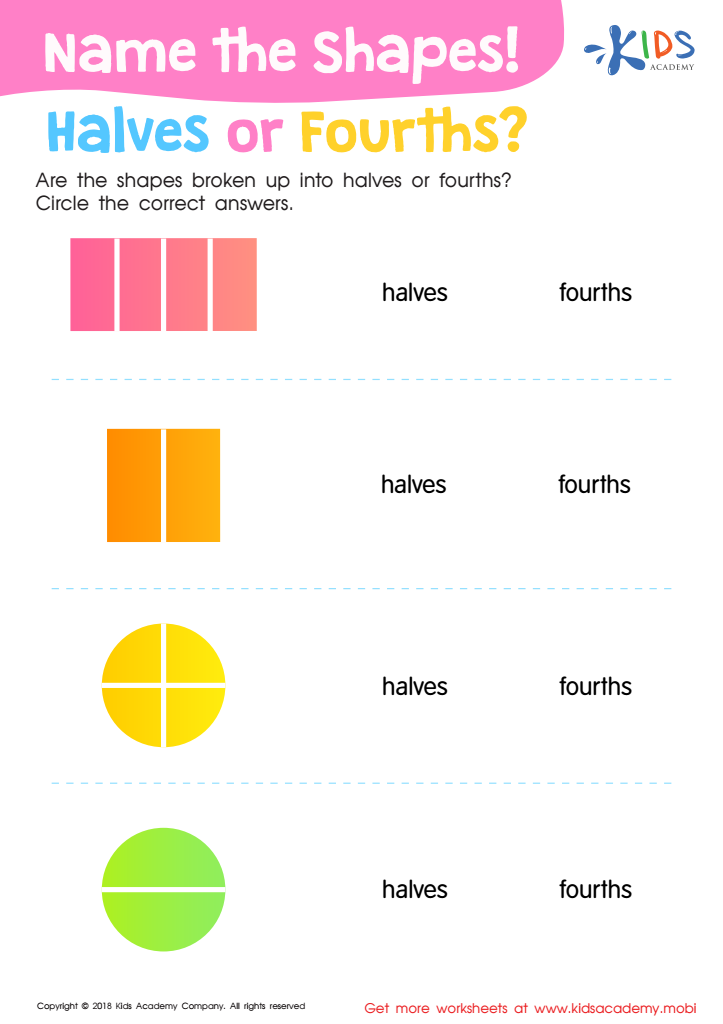
Name the Shapes Halves or Fourths? Worksheet
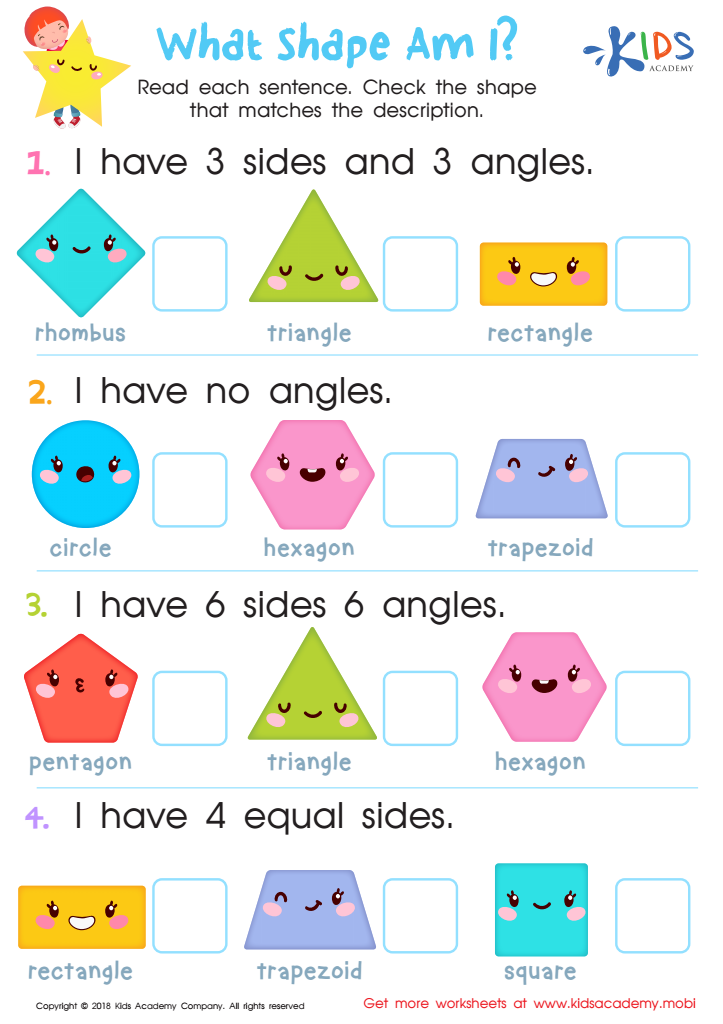
What Shape Am I? Worksheet



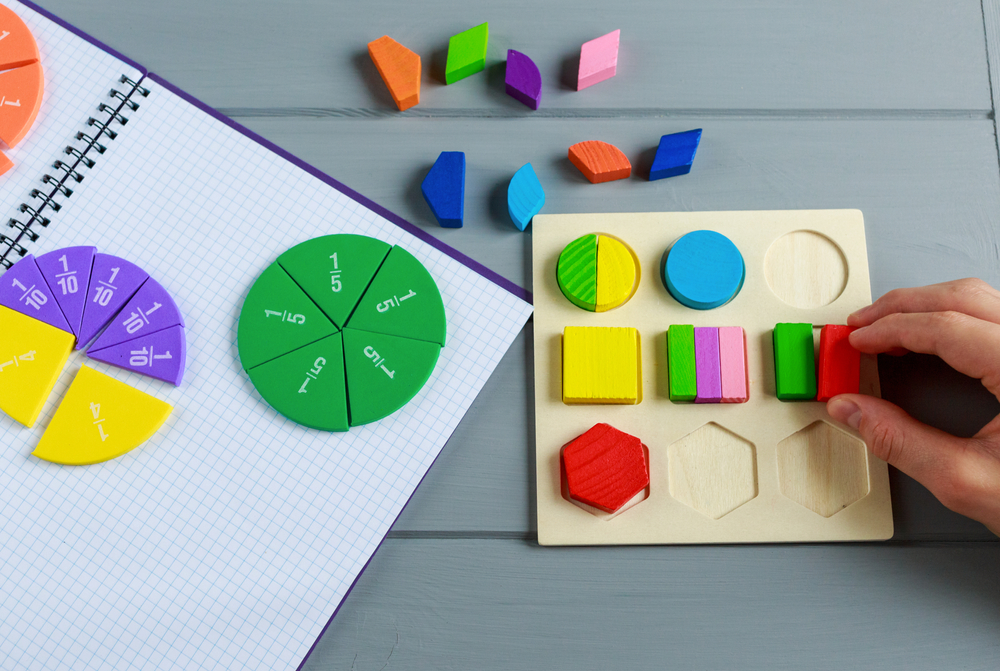




Visual discrimination is the ability to recognize details in visual images, which is crucial for children's cognitive development and foundational learning, especially for ages 4-9. Parents and teachers should prioritize this skill, as it directly impacts how children interpret visual information, influencing their reading, writing, and mathematics abilities.
In early math, recognizing differences in shapes, numbers, and patterns is vital. For instance, distinguishing between '6' and '9' or identifying geometric shapes is a form of visual discrimination. Ensuring children develop these skills aids in accurate number formation, understanding places in numbers, and grasping basic operations such as addition and subtraction.
Early mastery of visual discrimination can also enhance problem-solving skills. When children engage in activities like matching or sorting objects based on their attributes, they learn to analyze similarities and differences, promoting critical thinking.
Moreover, strong visual discrimination supports overall academic success. Children with underdeveloped visual discrimination may face challenges in following classroom instructions, independent work, and advancing in more complex subjects.
Therefore, focusing on visual discrimination in early math helps build a strong foundation for future academic achievement, fostering skills that span across various learning domains and essential daily tasks. By integrating activities that boost visual discrimination, parents and teachers can significantly impact a child's educational journey.








