Comparing numbers Easy Measurement Worksheets for Ages 4-9
3 filtered results
-
From - To
Discover our "Comparing Numbers Easy Measurement Worksheets" designed specifically for children aged 4–9! These engaging and interactive worksheets help young learners understand the concept of comparing numbers through fun and stimulating activities. With colorful illustrations and simple exercises, kids will develop essential math skills, learn to recognize greater than, less than, and equal to, and enhance their number sense. Ideal for classroom use or at-home practice, these worksheets provide a solid foundation in math while promoting critical thinking and problem-solving abilities. Perfect for educators and parents alike, these resources ensure that learning about numbers is both enjoyable and effective!
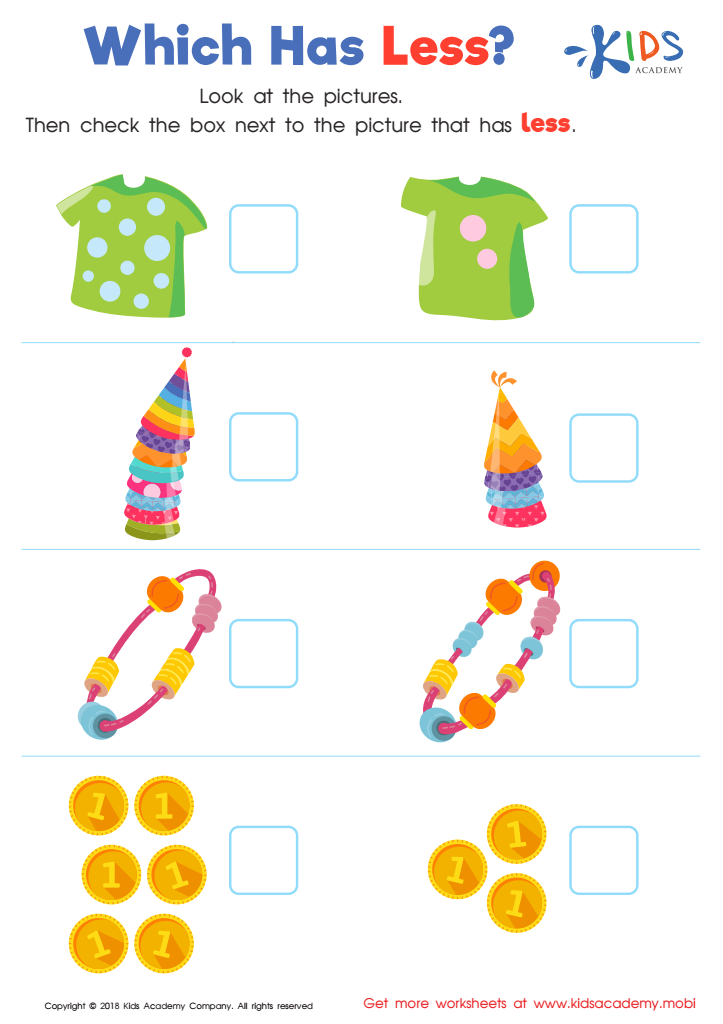
Which Has Less? Worksheet
 Assign to My Students
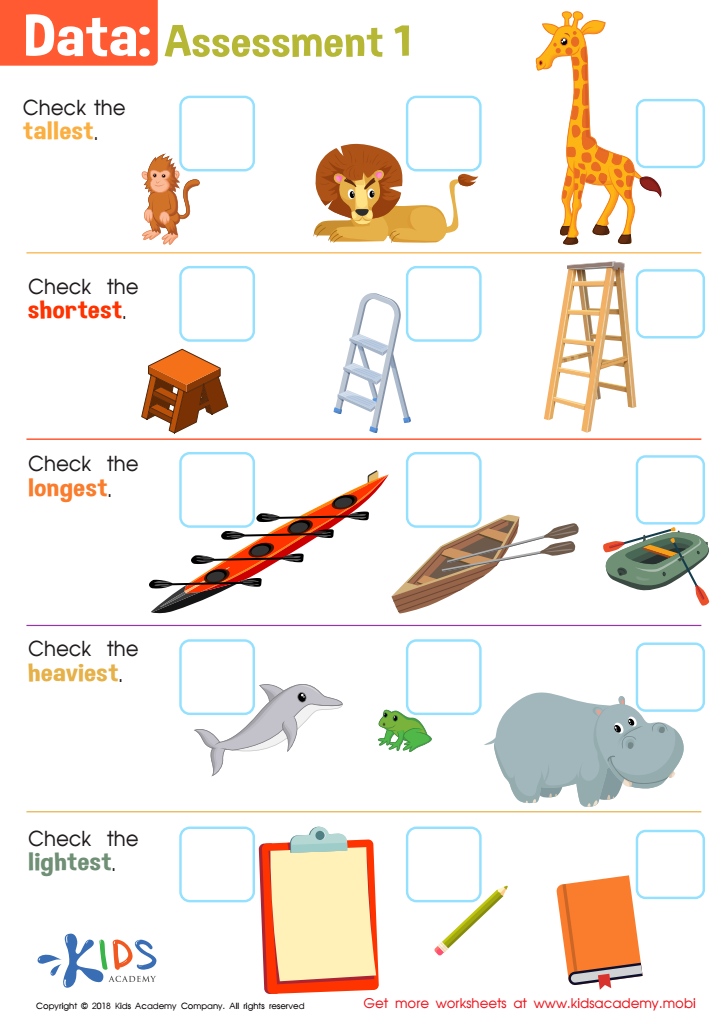
Data: Assessment 1 Worksheet
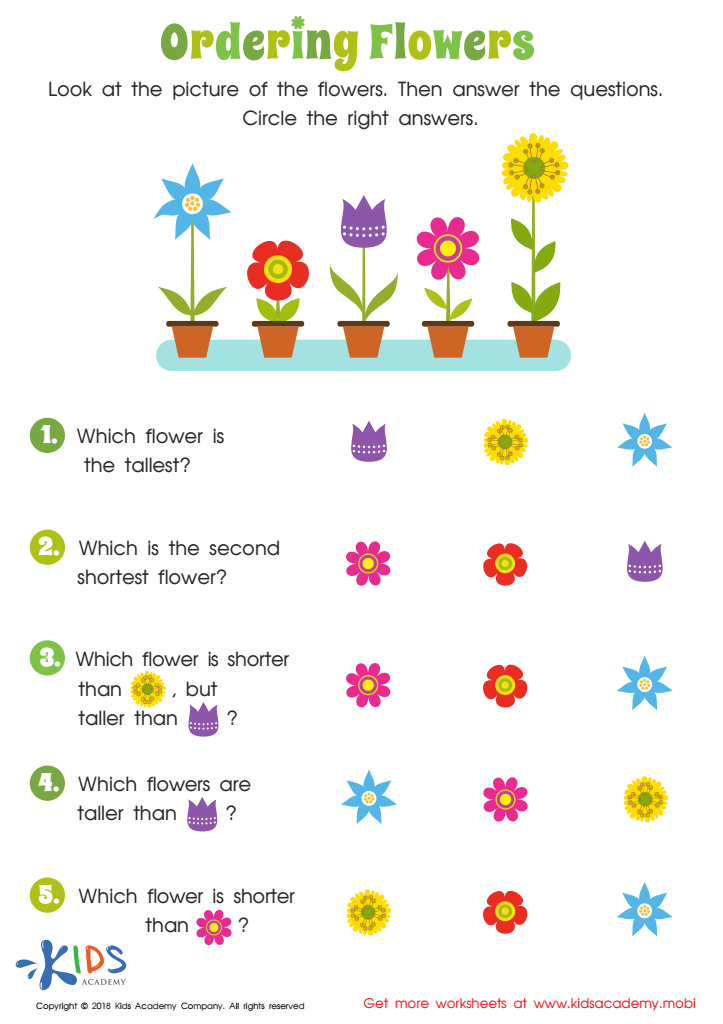
Ordering Flowers Worksheet








Parents and teachers should prioritize teaching young children about comparing numbers and easy measurement because these foundational skills foster critical thinking, problem-solving, and mathematical understanding. At ages 4-9, children are naturally curious and eager to explore concepts related to size, quantity, and measurement, which makes this the perfect time to introduce these ideas.
By learning to compare numbers, children develop the ability to recognize greater, lesser, and equal values. This skill supports their understanding of numerical relationships, which is essential for more complex math tasks later on. Easy measurement, on the other hand, helps children relate math to real-world contexts, enhancing their spatial awareness and observational skills.
When kids engage in activities that involve comparing numbers and measuring objects, they enhance their cognitive abilities and improve their confidence in handling mathematical concepts. These skills are not just crucial for academic success; they also lay the groundwork for everyday decision-making and understanding the world around them.
Moreover, involving parents in this learning process encourages positive interactions between them and their children, creating a collaborative and supportive learning environment. Ultimately, focusing on these fundamental skills builds a strong academic foundation that helps shape confident, competent learners.








