
Time reading skills Easy Time Worksheets for Ages 4-9
3 filtered results
Difficulty Level
Grade
Age
-
From - To
Subject
Activity
Standards
Introduce your child to the world of time reading with Easy Time Worksheets, designed for ages 4-9. Perfect for young learners, our expertly crafted worksheets make mastering the clock both fun and educational. From understanding the basics of hour and minute hands to more complex time-telling skills, these worksheets provide engaging activities tailored to your child's developmental stage. Foster a love for learning as your child progresses through interactive exercises that build confidence and proficiency in time reading. Ideal for both classroom and at-home practice, Easy Time Worksheets are your go-to resource for making time-telling a breeze!
Favorites
With answer key
Interactive
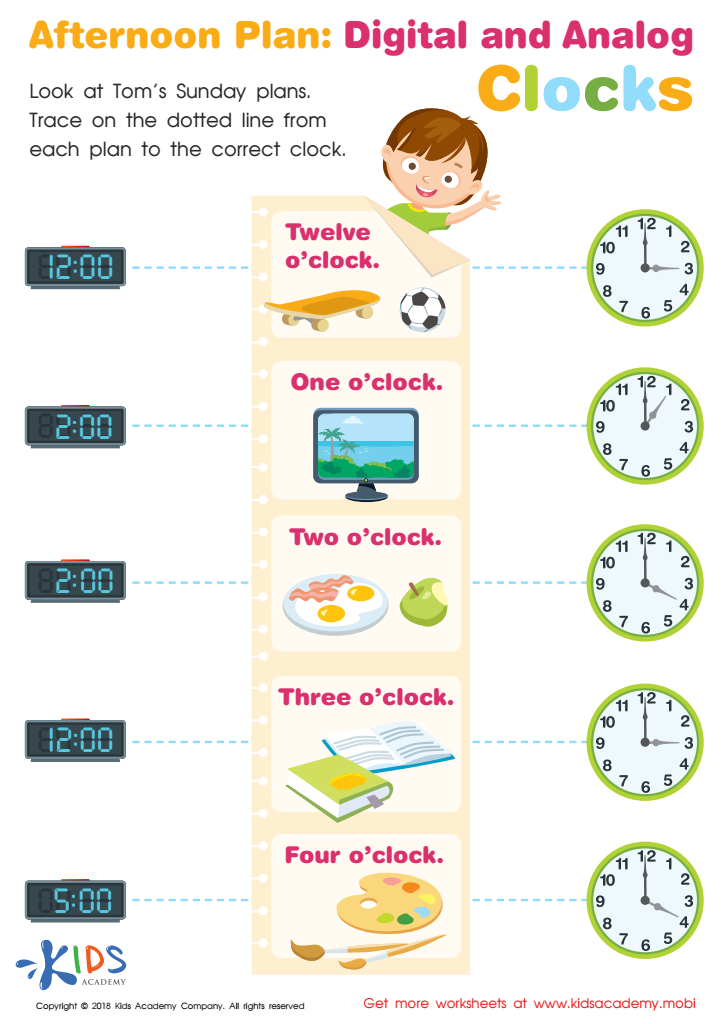
Afternoon Plan: Digital and Analog Clocks Worksheet
Tom's got Sunday plans and your kids can use this worksheet to help them learn how to tell the time. With tracing dotted lines from plans to the correct clock, they'll gain the skills to accurately convert digital time to analog. It'll be a great way to get them better at telling the time.
 Assign to My Students
Afternoon Plan: Digital and Analog Clocks Worksheet
Worksheet
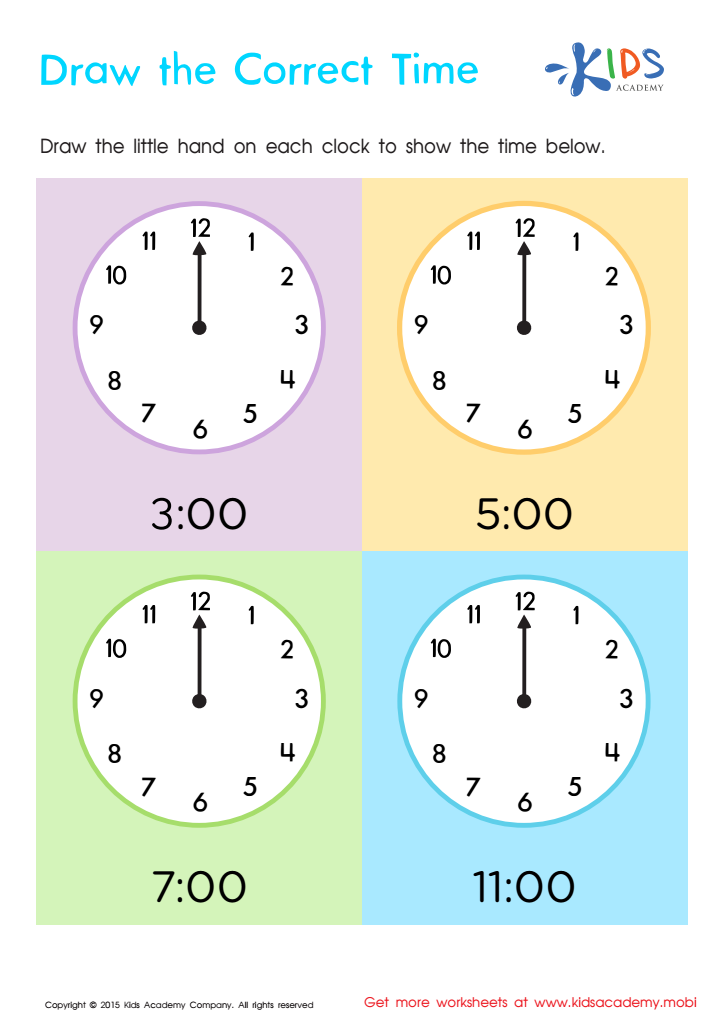
Telling The Time Worksheet: Part 1
Practice telling the time with Kids Academy. Our worksheets make it fun for kindergarteners to learn about clocks and reading the time. Find our free math worksheets on telling the time and draw the little hand on the clock faces to show the time. Let's learn together!
Telling The Time Worksheet: Part 1
Worksheet
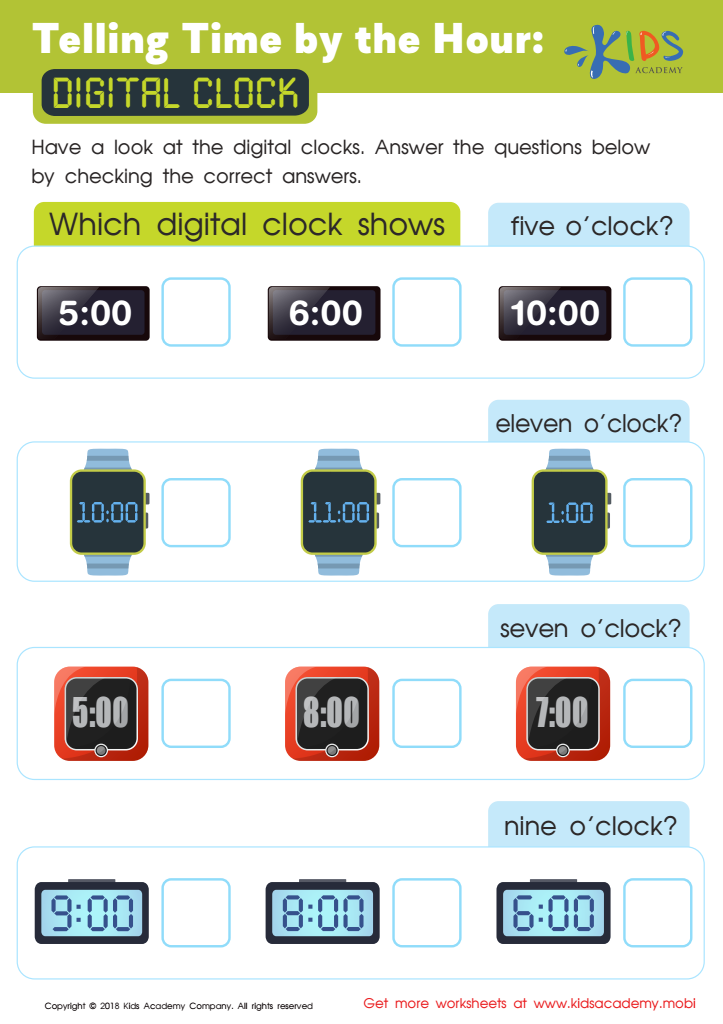
Telling Time by the Hour: Digital Clock Worksheet
Introduce your students to digital clocks. This worksheet will help them become familiar with them. Guide them through answering the questions - they're simple and stimulating. Encourage their young minds to explore the digital clocks in the exercise.
Telling Time by the Hour: Digital Clock Worksheet
Worksheet
Join Kids Academy for Free
Who is primarily going to use this learning content?








Developing time reading skills is crucial for young children, particularly those between the ages of 4-9, because it lays the foundation for important cognitive and practical abilities. At this formative age, children are rapidly building their understanding of the world around them, and comprehending the concept of time is a fundamental aspect of that development.
For parents and teachers, there are several key reasons to prioritize these skills. Firstly, understanding time helps children develop a sense of routine and responsibility. Knowing when to wake up, go to school, play, and do homework fosters a structured daily schedule, which is beneficial for their overall well-being and productivity.
Secondly, time reading enhances their mathematical skills. Recognizing numbers on a clock, understanding increments, and calculating time intervals inherently build their numerical and reasoning abilities, which are essential for their academic progress.
Moreover, learning to tell time also improves executive functions such as planning, focusing, and managing tasks. These skills are critical throughout their educational journey and in life.
On a social level, being able to keep track of time teaches punctuality, a valuable trait that shows respect and consideration for others' schedules and transitions into good habits that last a lifetime.
In summary, teaching time reading skills to young children equips them with essential cognitive, practical, and social tools that support their holistic development.








