Understanding times tables Easy Times Tables Worksheets for Ages 4-9
3 filtered results
-
From - To
Explore our "Understanding Times Tables" worksheets, designed specifically for children ages 4-9! These interactive and engaging worksheets make learning times tables enjoyable and accessible. With a variety of activities and colorful visuals, kids will build a solid foundation in multiplication concepts at their own pace. Tailored for early learners, our resources focus on boosting confidence and retention through fun exercises. Whether at home or in the classroom, these easy-to-follow worksheets are perfect for young students. Help your child master multiplication while developing essential math skills, preparing them for future academic success. Start their journey into math mastery today!
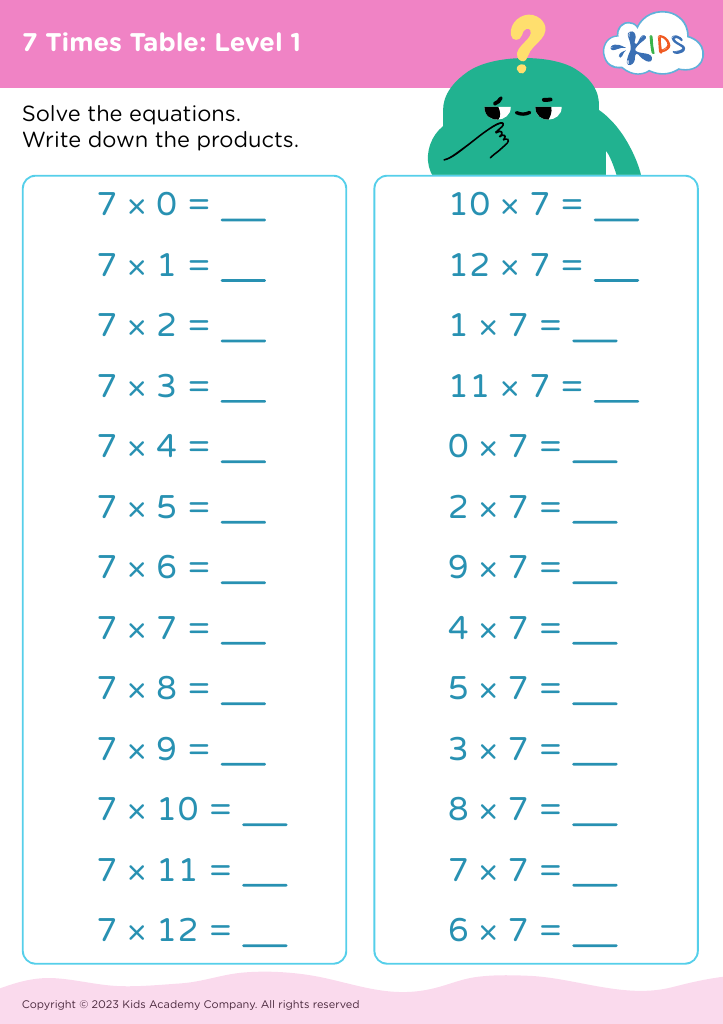
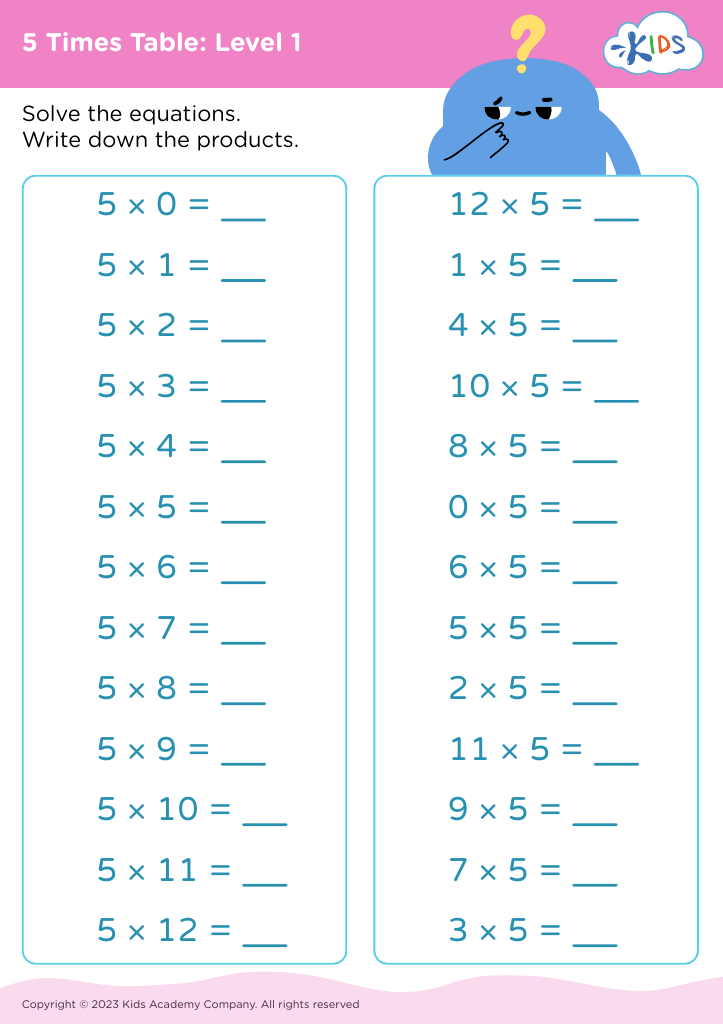
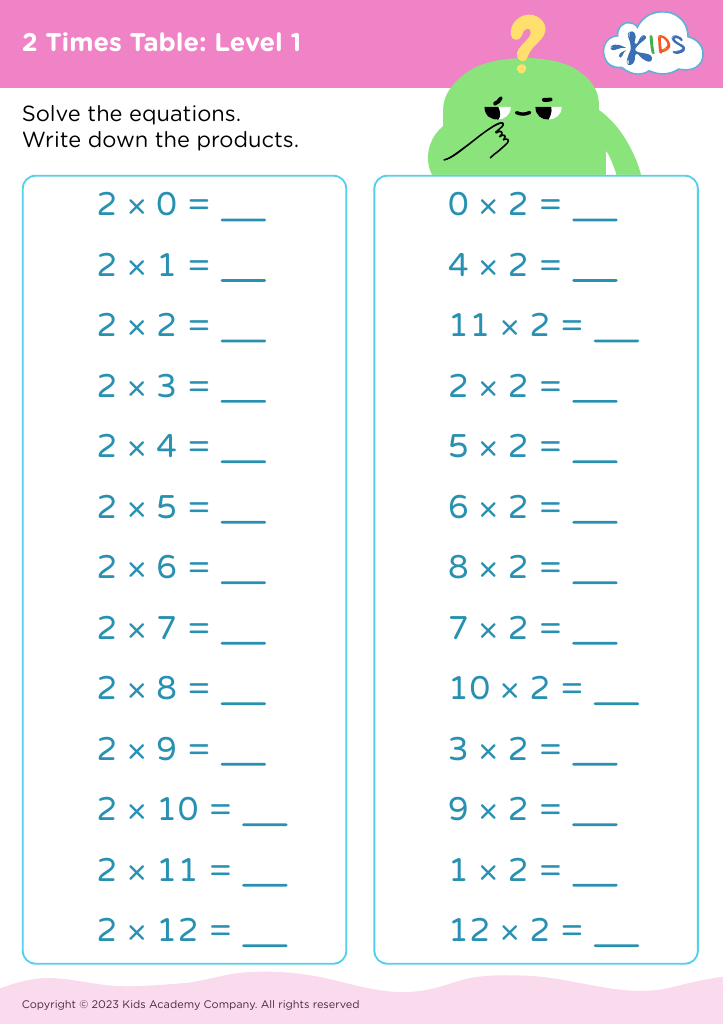





Understanding times tables is essential for children aged 4-9 as it lays the foundation for crucial mathematical skills and boosts confidence in their abilities. Early mastery of multiplication tables helps solidify number sense and promotes mental math capabilities, which are vital for more advanced mathematical concepts in later years.
When parents and teachers embrace tools like "Easy Times Tables," they provide engaging methods that make learning interactive and enjoyable. Tailored approaches to presenting this information can cater to diverse learning styles, ensuring that all children—whether visual, auditory, or kinesthetic learners—can effectively grasp the concept. Moreover, a strong foundation in multiplication enhances problem-solving skills, enabling students to tackle arithmetic operations more easily.
Furthermore, learning times tables at an early age instills a sense of achievement and encourages a positive attitude towards math. As children succeed in memorizing and applying multiplication, they become more willing to take on new challenges, reducing math anxiety.
In conclusion, by prioritizing understanding of times tables, parents and teachers empower children with the skills needed for academic success, fostering a love for learning that transcends mathematics and flourishes throughout their education.








