Critical Thinking Easy Building Vocabulary Worksheets for Ages 4-9
3 filtered results
-
From - To
Enhance your child's critical thinking skills with our Easy Building Vocabulary Worksheets, designed for ages 4-9. These engaging and interactive activities not only expand vocabulary but also encourage children to analyze, question, and explore concepts deeply. Tailored to meet the developmental needs of early learners, our worksheets feature fun themes and visuals that captivate young minds. Children will practice problem-solving and reasoning while mastering new words through enjoyable exercises. Ideal for both classroom and home learning, these worksheets foster a love for language and promote essential critical thinking skills. Unlock your child's potential today with our vibrant vocabulary-building resources!
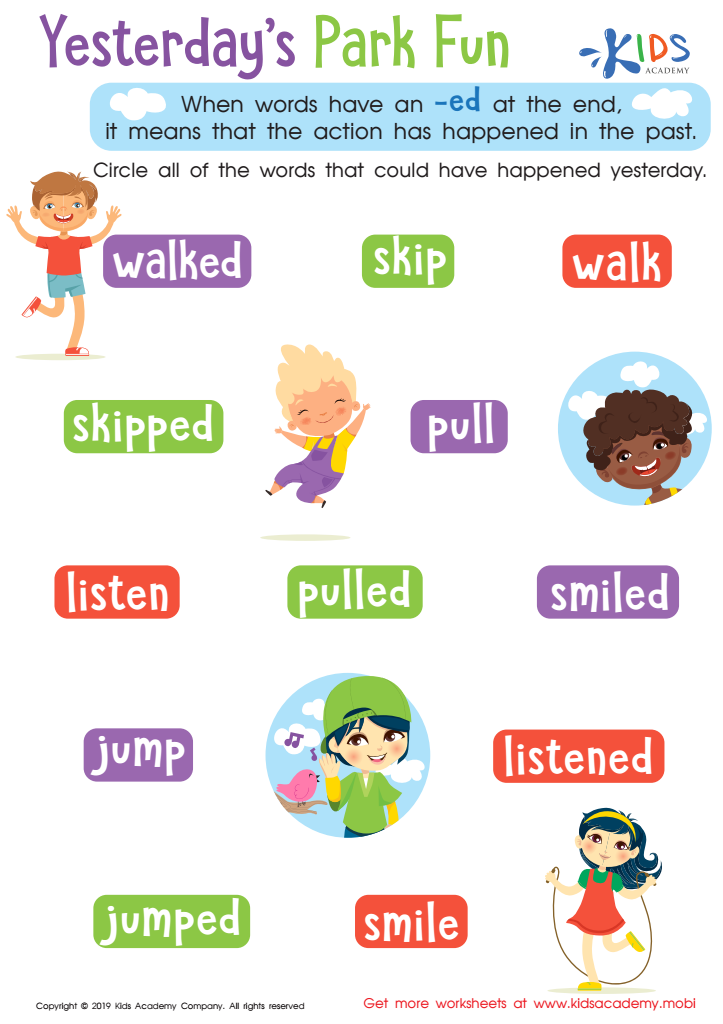
Yesterday's Park Fun Worksheet
 Assign to My Students











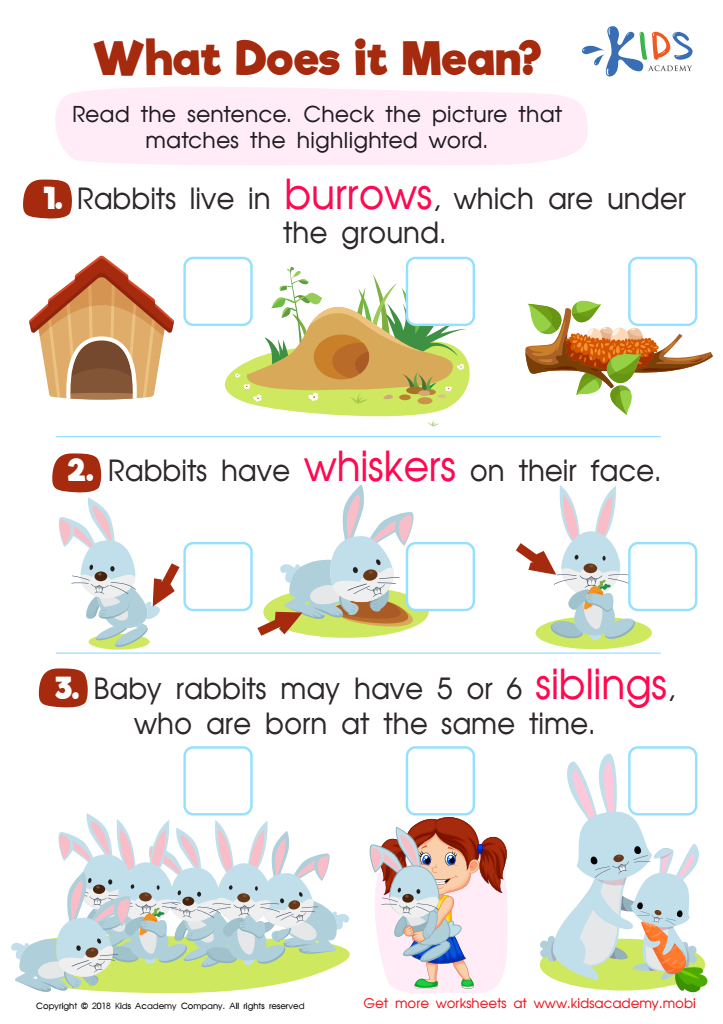
What Does It Mean? Worksheet
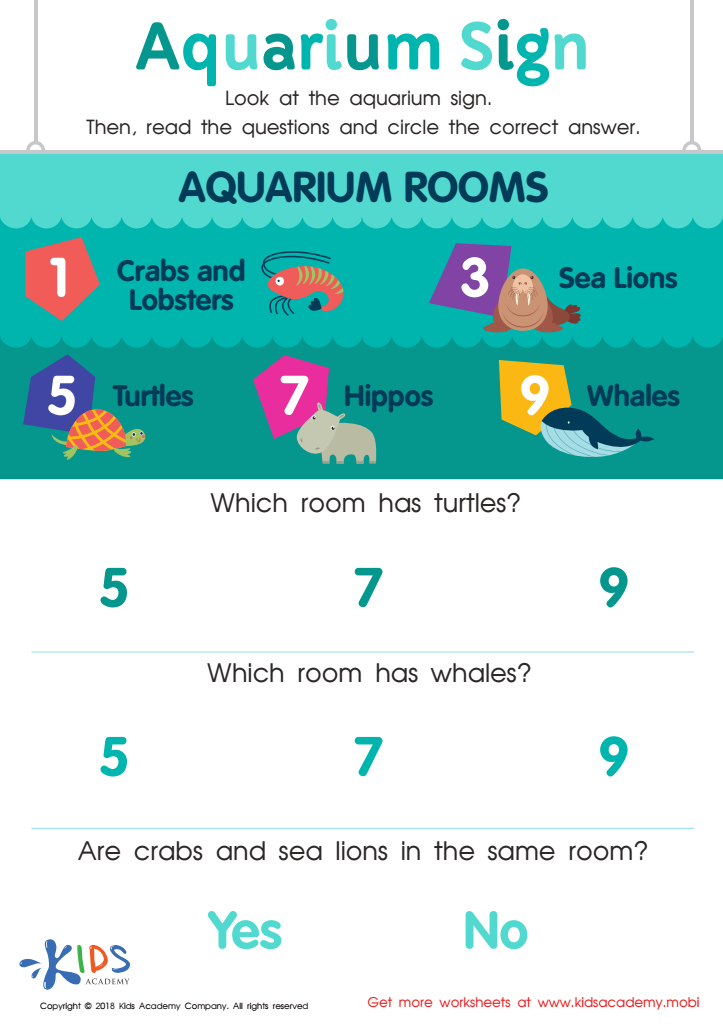
Assessment: Aquarium Sign Worksheet





.jpg)


Critical thinking and vocabulary building are essential components of a child's cognitive development, especially from ages 4 to 9. During these formative years, children are naturally curious and eager to explore the world around them. Encouraging critical thinking helps them analyze information, develop problem-solving skills, and make informed decisions. By engaging in activities that promote inquiry and reflection, children learn to ask questions, evaluate answers, and appreciate different perspectives.
Simultaneously, expanding vocabulary is crucial for effective communication. A rich vocabulary fosters better reading comprehension, allowing children to understand and engage with more complex texts. When children learn new words, they also learn to express their thoughts and emotions more clearly, enhancing their social interactions and building confidence.
Parents and teachers play a vital role in nurturing these skills through intentional activities like discussions, storytelling, and interactive games. By integrating critical thinking exercises and vocabulary enrichment into daily routines, caregivers can provide a supportive environment that stimulates intellectual curiosity and language acquisition. This holistic approach not only prepares children for academic success but also shapes them into thoughtful, articulate individuals capable of navigating an increasingly complex world. Encouraging these skills now lays a foundation for lifelong learning and personal growth.