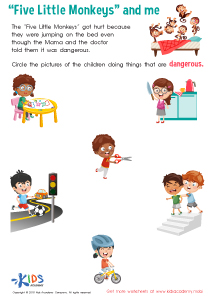
Word Recognition Easy Building Vocabulary Worksheets for Ages 4-9
3 filtered results
-
From - To
Enhance your child's reading skills with our engaging "Word Recognition Easy Building Vocabulary Worksheets" designed for ages 4-9. Our carefully crafted worksheets focus on helping young learners recognize and understand key sight words, expanding their vocabulary through interactive activities. These resources are perfect for both classroom settings and home practice, encouraging independent learning while making it fun. Each worksheet is tailored to promote word recognition, enhance phonetic understanding, and boost literacy confidence. Help your child embark on their reading adventure with these stimulating vocabulary-building materials. Discover the joy of words and empower your little reader today!
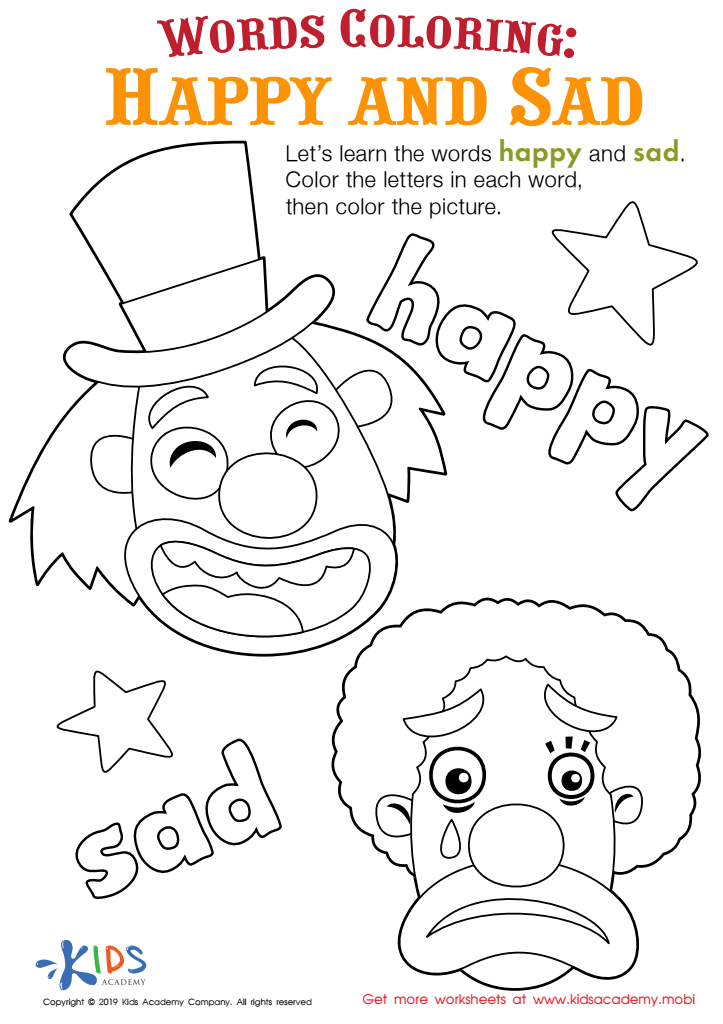
Happy and Sad Words Coloring Worksheet
 Assign to My Students











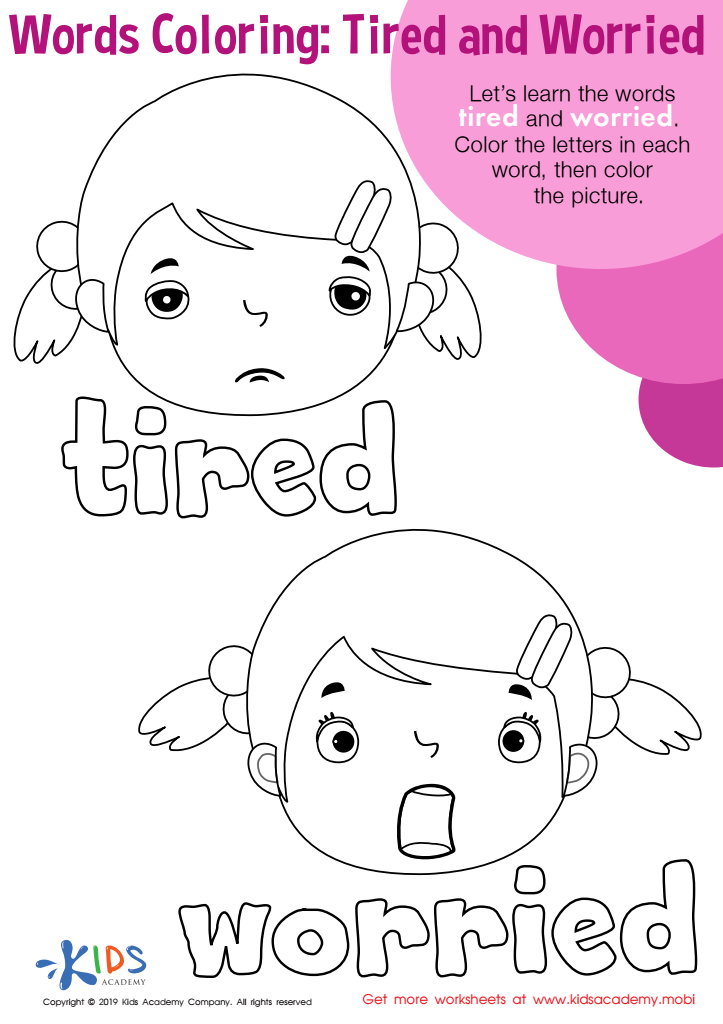
Tired and Worried Words Coloring Worksheet
Assign to My Students
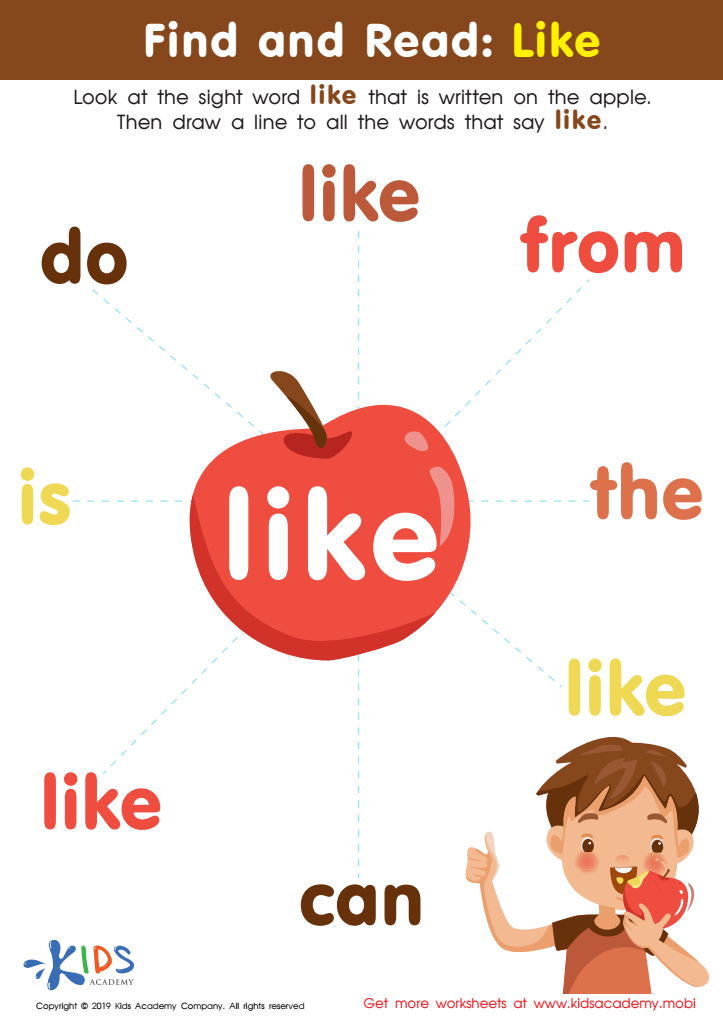
Find and Read: Like Worksheet








Parents and teachers should prioritize Word Recognition and Vocabulary Building for children aged 4-9 as these skills form the foundation for literacy and overall academic success. Early exposure to word recognition helps children understand that words stand for ideas, while vocabulary building expands their ability to communicate effectively. Together, these skills enhance reading fluency, comprehension, and expression.
These ages are critical for cognitive development, and a robust vocabulary enables children to engage with texts of increasing complexity, making them more confident readers and learners. A strong vocabulary also fosters critical thinking and enhances social interactions, as children can better articulate their thoughts and feelings.
Furthermore, activities aimed at improving word recognition and vocabulary — such as reading aloud, rhyming games, and interactive storytelling — can strengthen the parent-child or teacher-student bond, making learning enjoyable and collaborative. As children acquire language skills, they're equipped to explore their world more fully, promoting curiosity and a lifelong love of learning. In today’s increasingly competitive environment, empowering children with solid reading and vocabulary skills sets them up for academic achievement and greater opportunities in the future. Hence, nurturing these abilities is paramount for parents and educators alike.