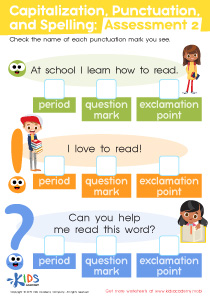
Vocabulary expansion Easy Grammar Worksheets for Ages 4-9
6 filtered results
-
From - To
Discover engaging Vocabulary Expansion Easy Grammar Worksheets designed specifically for children aged 4 to 9! Our worksheets foster a love for language while enhancing vocabulary skills through fun, interactive activities. Ideal for early learners, these worksheets encompass a variety of exercises that stimulate critical thinking and comprehension. From matching words to exploration through pictures, each activity offers a captivating way to learn. Perfect for classrooms or at-home learning, our resource is crafted to support educators and parents in nurturing children's linguistic abilities. Boost your child's vocabulary and grammar with our accessible, age-appropriate worksheets tailored for young minds eager to explore!
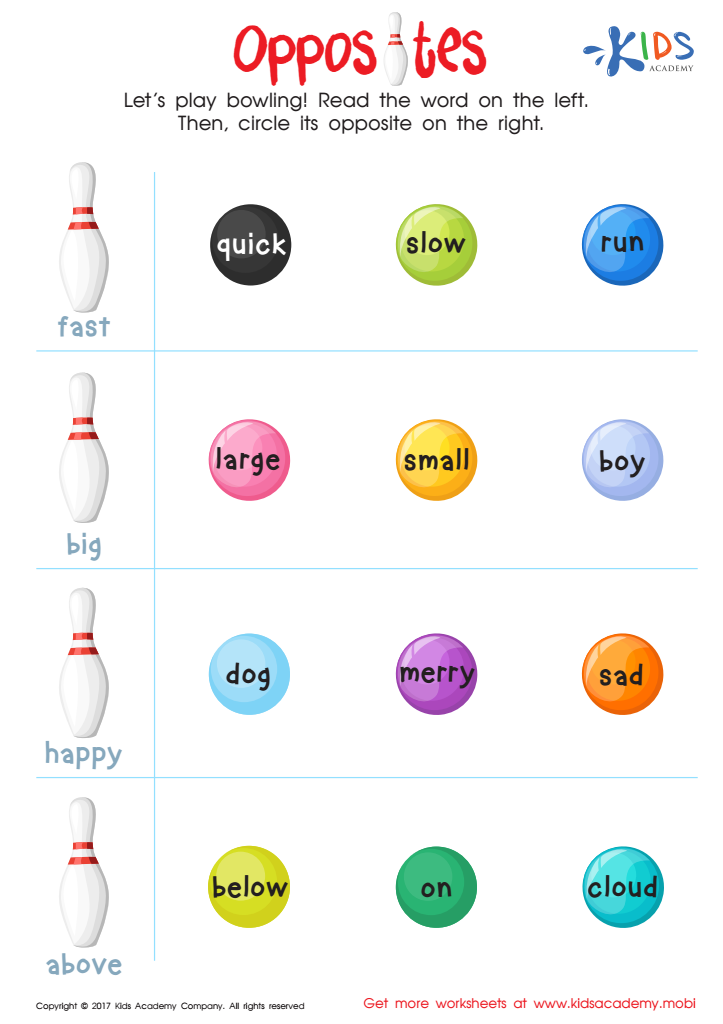
Opposites Worksheet
 Assign to My Students
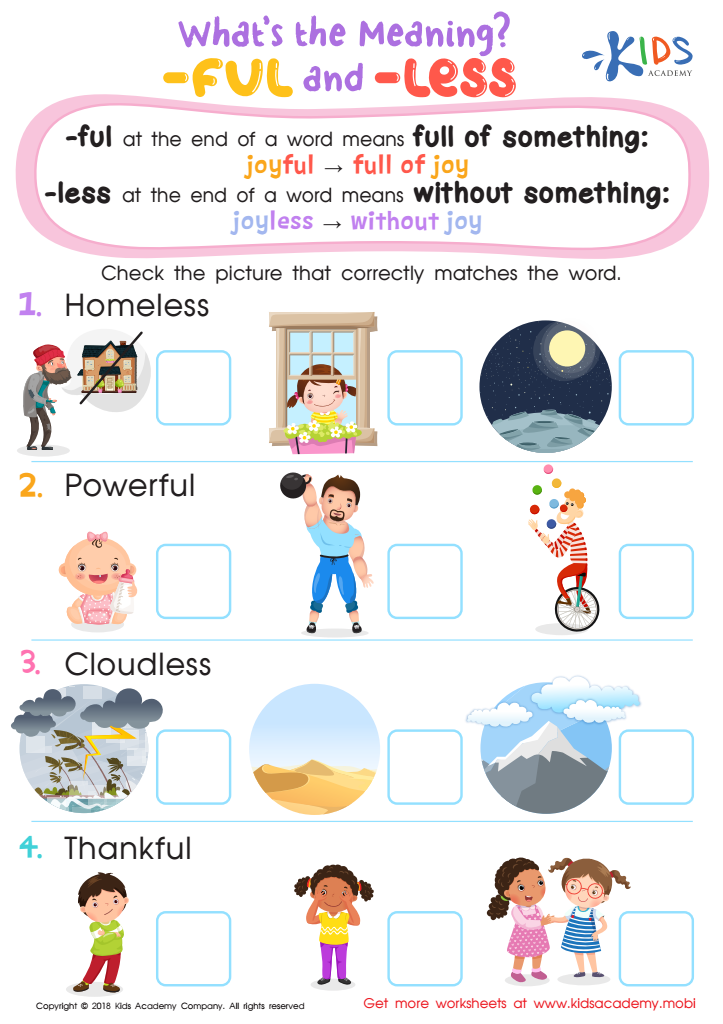
What's the Meaning? Worksheet
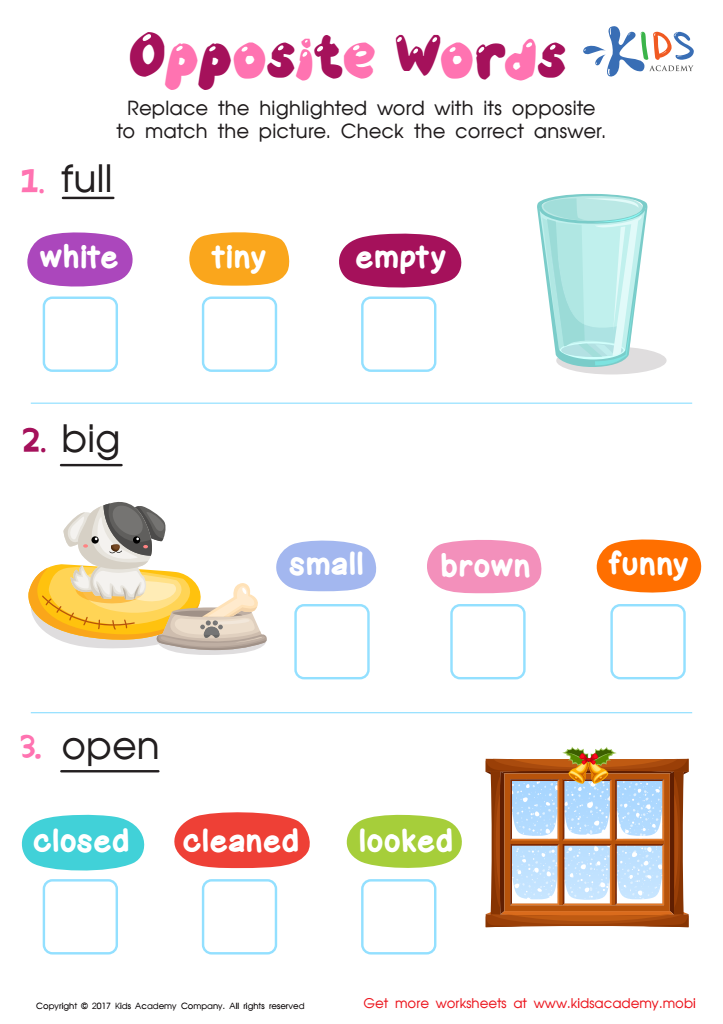
Opposite Words Worksheet
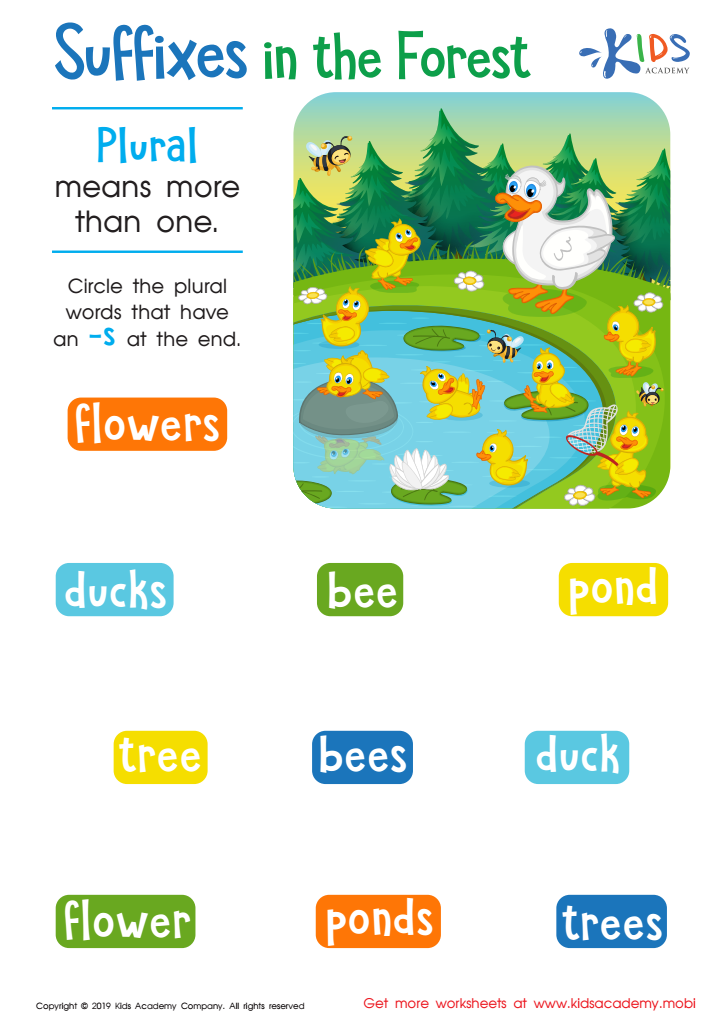
Suffixes in the Forest Worksheet
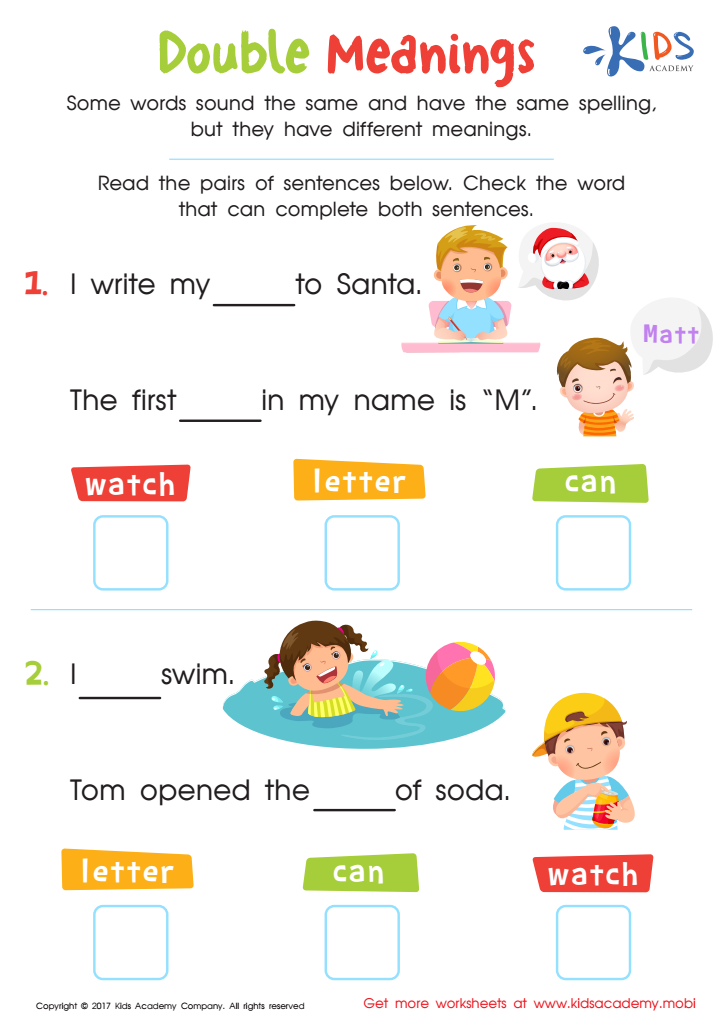
Double Meanings Worksheet
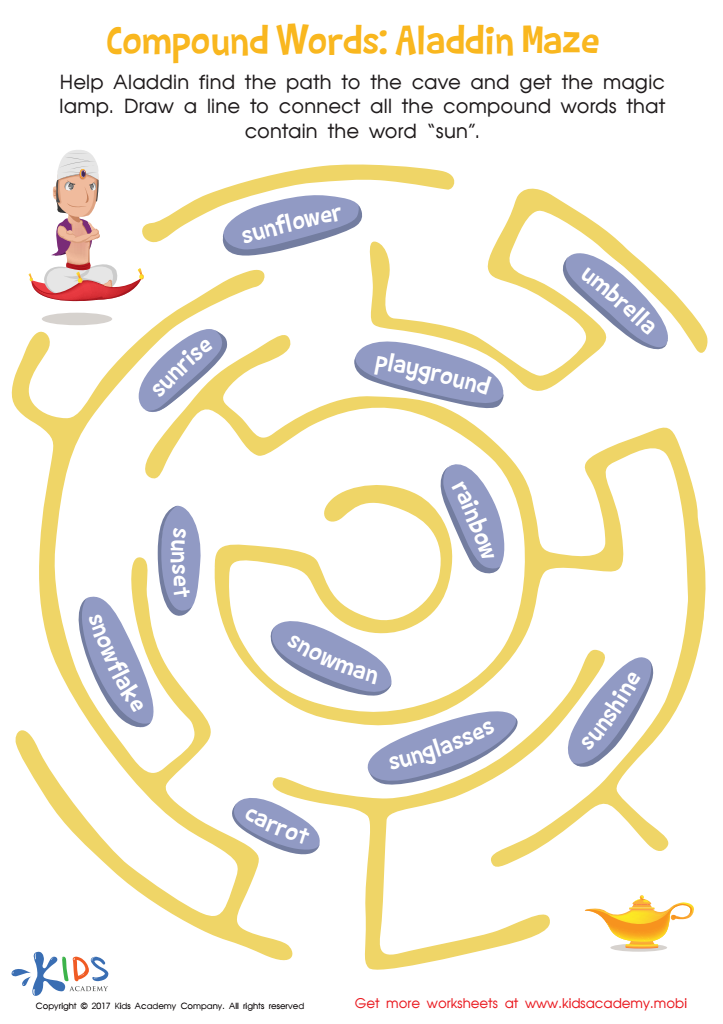
Compound Aladdin Maze Word Structure Worksheet







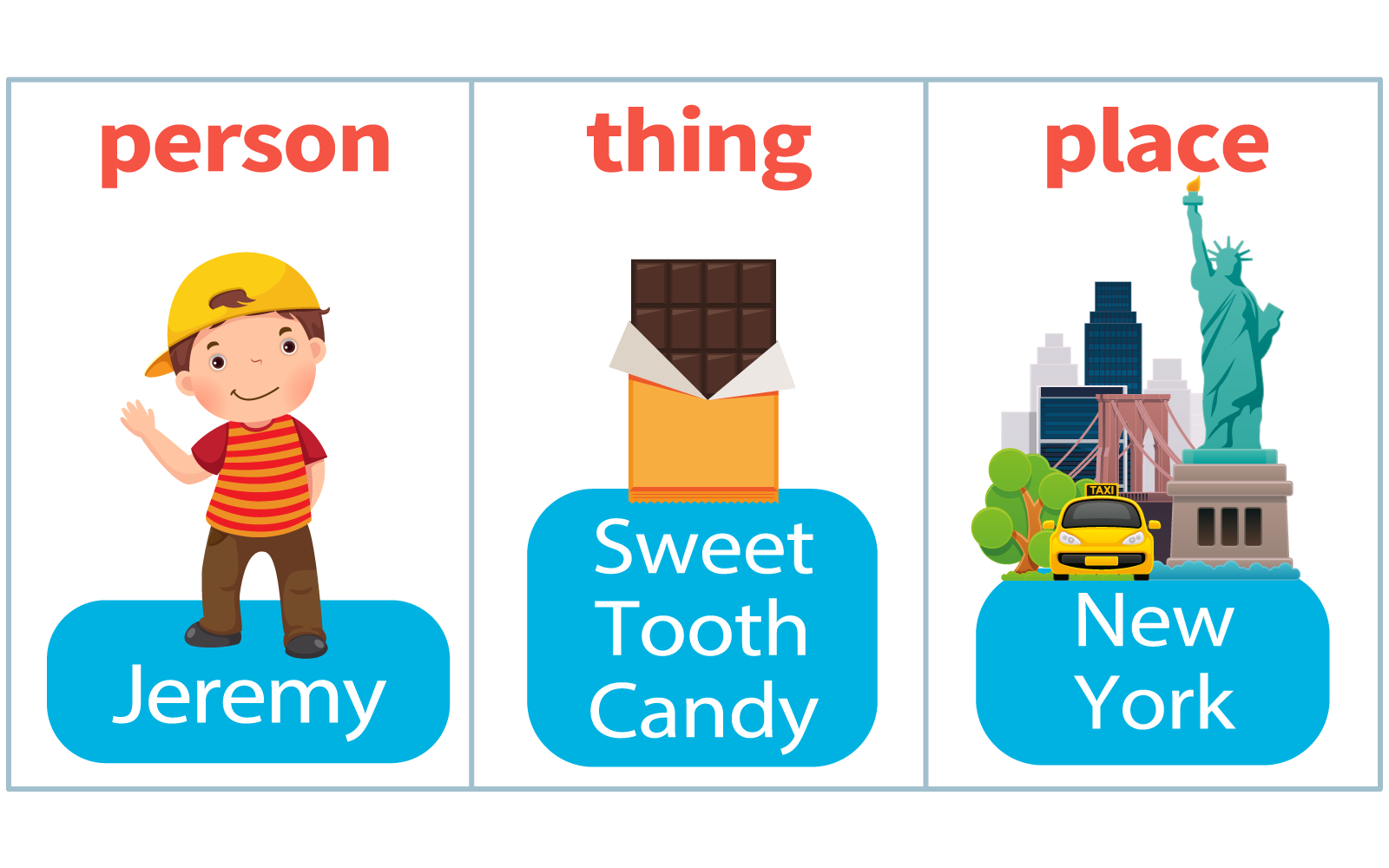
Vocabulary expansion is crucial for children aged 4-9, as it lays the foundation for effective communication, writing skills, and overall academic success. Parents and teachers should prioritize vocabulary development during these formative years because children are incredibly receptive to language at this age. An extensive vocabulary enhances their ability to express thoughts and emotions clearly and understand the language in various contexts, from reading books to engaging in conversations.
Using materials such as Easy Grammar introduces age-appropriate words in a structured manner, enabling children to grasp that each word has a meaning and purpose. This not only aids in comprehension but also fosters a love for reading, as a robust vocabulary empowers children to explore and appreciate literature independently.
Furthermore, a solid vocabulary contributes to critical thinking and problem-solving abilities. When children can articulate their ideas, they become more confident learners. By investing time and energy into vocabulary expansion, parents and teachers can equip young minds with tools vital for lifelong learning, better social interactions, and improved performance in school. Ultimately, supporting vocabulary development today can lead to a brighter, more successful future for our children.