Comparing quantities Easy Math Worksheets for 4-Year-Olds
3 filtered results
-
From - To
Dive into an engaging learning experience tailored for young minds with our "Comparing Quantities Easy Math Worksheets for 4-Year-Olds." These expertly designed worksheets promote foundational math skills by helping preschoolers easily grasp the concept of comparing quantities. Vibrant visuals and age-appropriate activities make learning fun and intuitive. These worksheets are perfect for nurturing early math curiosity, enhancing critical thinking, and building confidence. Created with educational goals in mind, they support effective skill development in a playful manner. Perfect for classroom and home use, ensuring that learning is always accessible and enjoyable. Discover how fun and easy learning math can be!
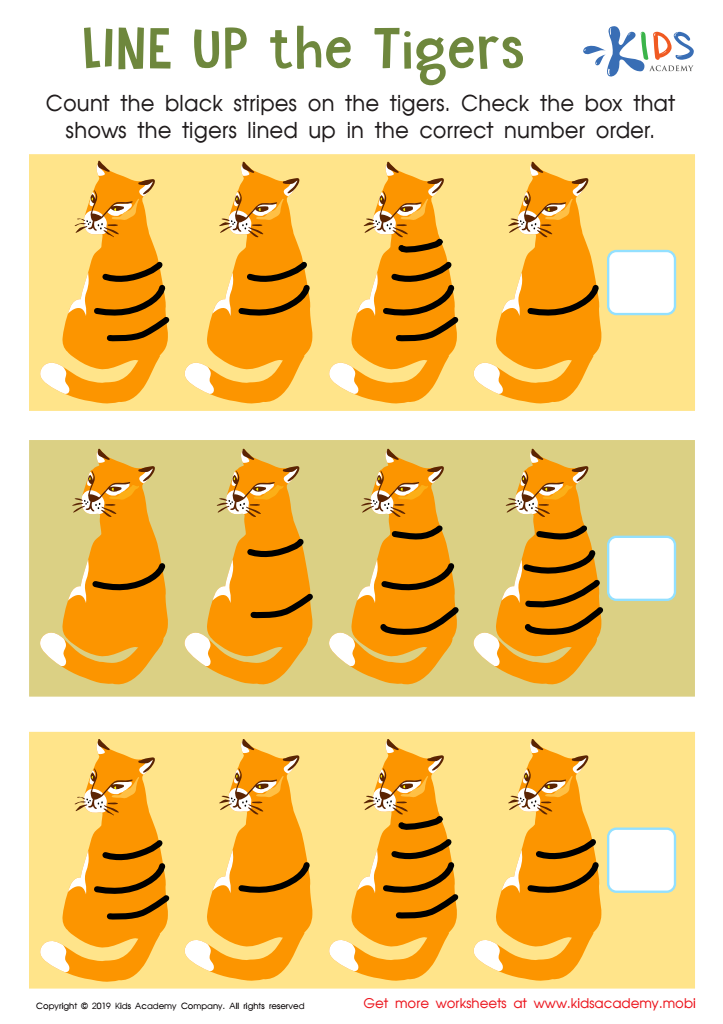
Line up the Tigers Worksheet
 Assign to My Students
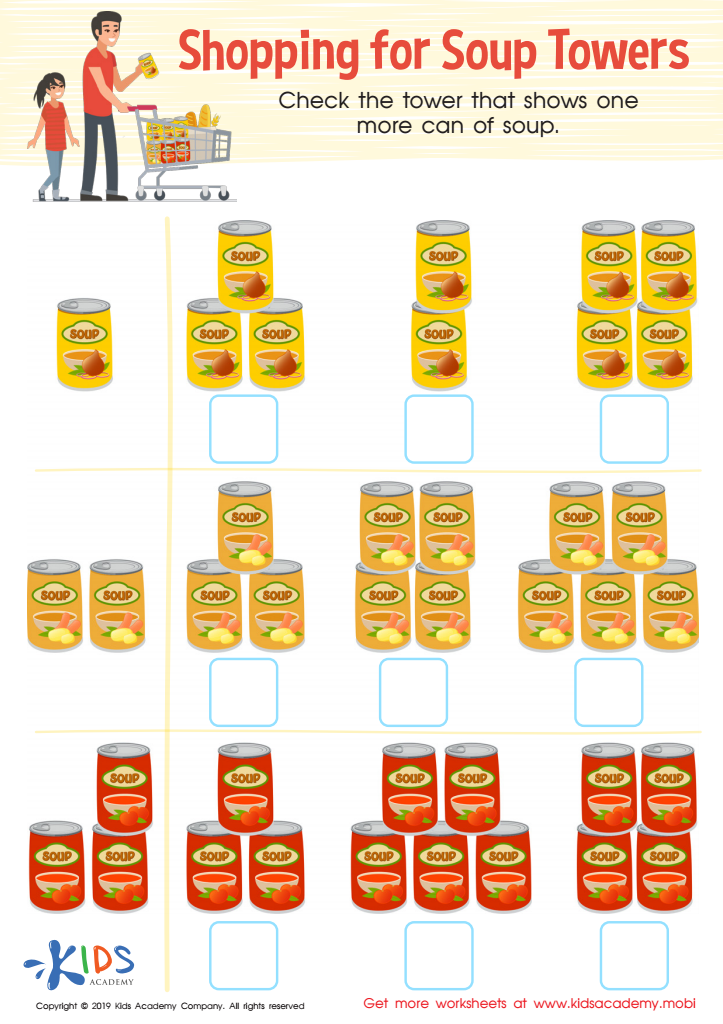
Soup Towers Worksheet
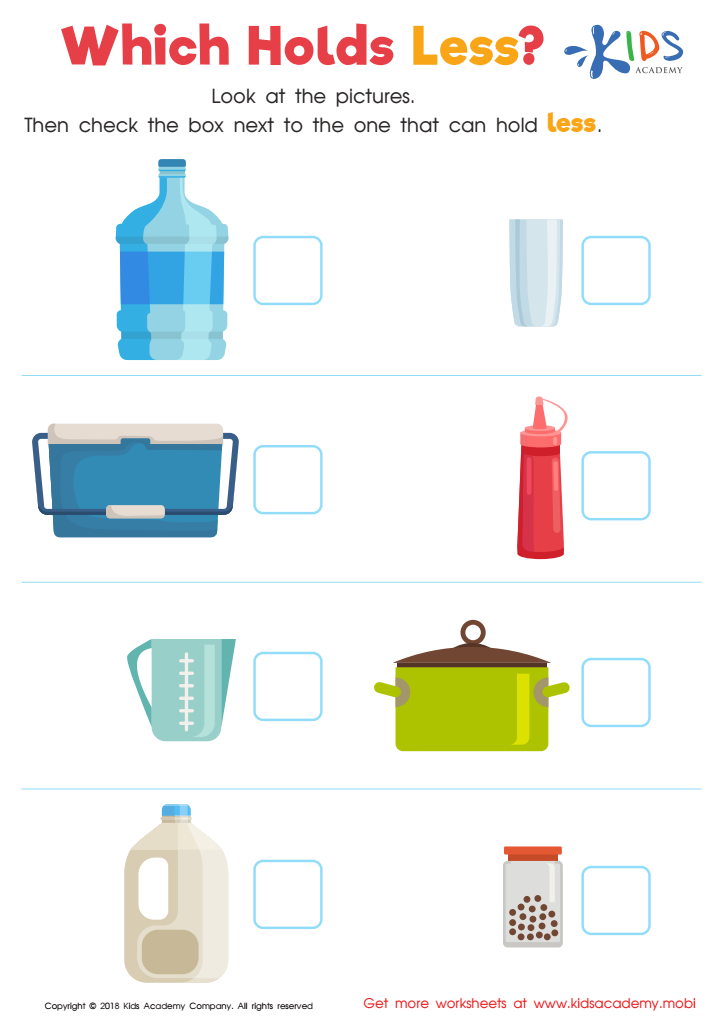
Which Holds Less? Worksheet







Parents and teachers should prioritize teaching 4-year-olds how to compare quantities because it lays the foundation for essential mathematical skills that will be crucial throughout their education and daily life. Comparing quantities helps young children understand basic concepts of more, less, equal, bigger, and smaller, which are integral to mathematical reasoning. At this developmental stage, children are naturally curious and absorb information quickly, making it the perfect time to introduce these fundamental concepts.
Early exposure to comparing quantities encourages critical thinking and problem-solving abilities. For instance, when a child learns to determine which pile of blocks is larger or which container holds more water, they're not just learning math; they're also developing their analytical and cognitive skills. This practice promotes a deeper understanding of numbers and quantities, which is critical for more advanced math topics they will encounter later.
Moreover, engaging in activities that involve comparing quantities can make learning fun and interactive. Simple, everyday activities like comparing the number of apples in two baskets or deciding which toy car is longer can turn basic math into play. This positive experience can foster a love for learning and instill confidence, ensuring children view math as approachable and enjoyable. Parents and teachers, thus, play a vital role in nurturing these early skills that form a strong educational foundation.








