Animal recognition Easy Addition and Subtraction Word Problems Worksheets for Ages 5-6
3 filtered results
-
From - To
Welcome to our engaging Animal Recognition Easy Addition and Subtraction Word Problems Worksheets, designed specifically for children ages 5-6! These worksheets combine fun animal themes with foundational math skills, making learning addition and subtraction enjoyable and interactive. Each word problem encourages critical thinking and enhances comprehension as young learners recognize animals while solving mathematical challenges. Perfect for classroom or at-home use, these resources foster a love for math and nature, helping kids build confidence in their problem-solving abilities. Download our worksheets today and watch your little ones thrive in math with the help of their favorite furry friends!
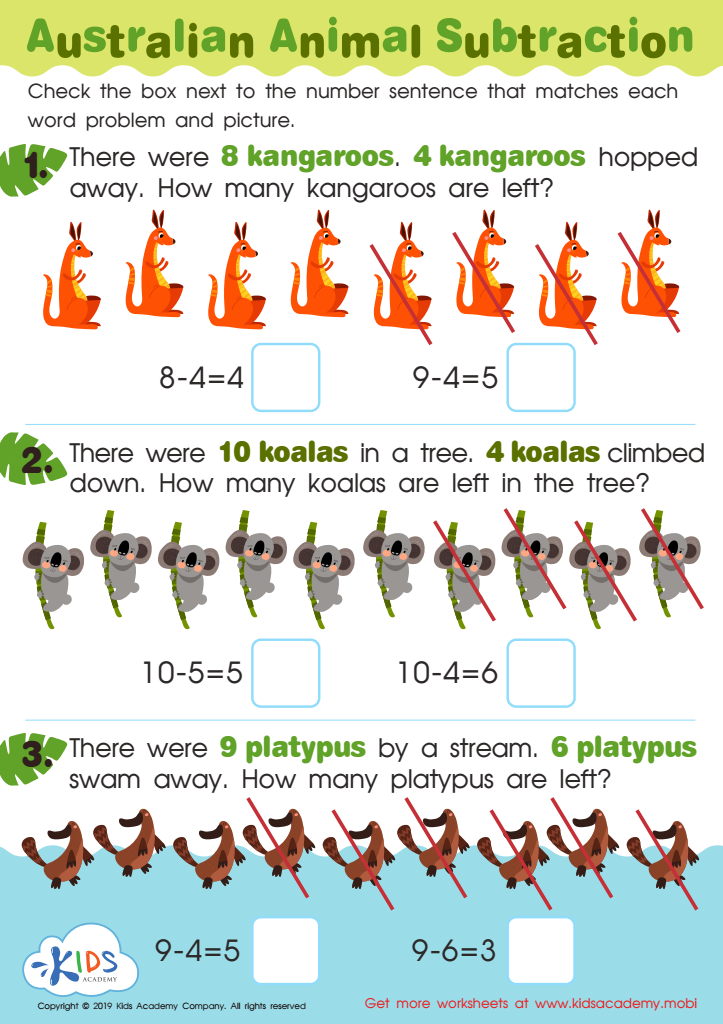
Australian Animal Subtraction Worksheet
 Assign to My Students
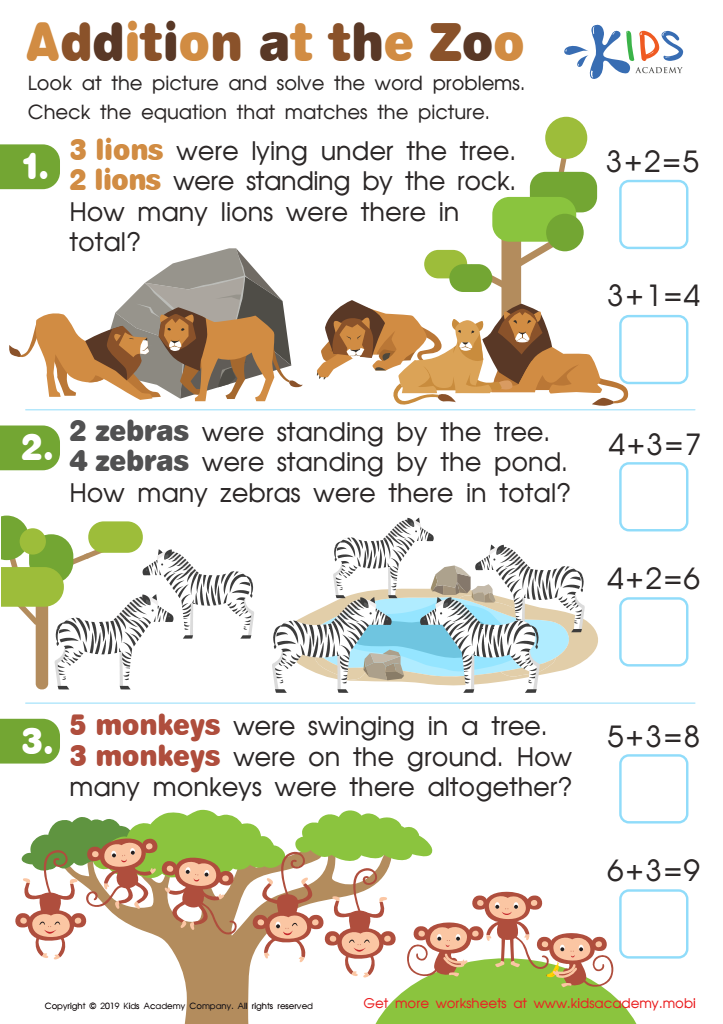
Addition at the Zoo Worksheet
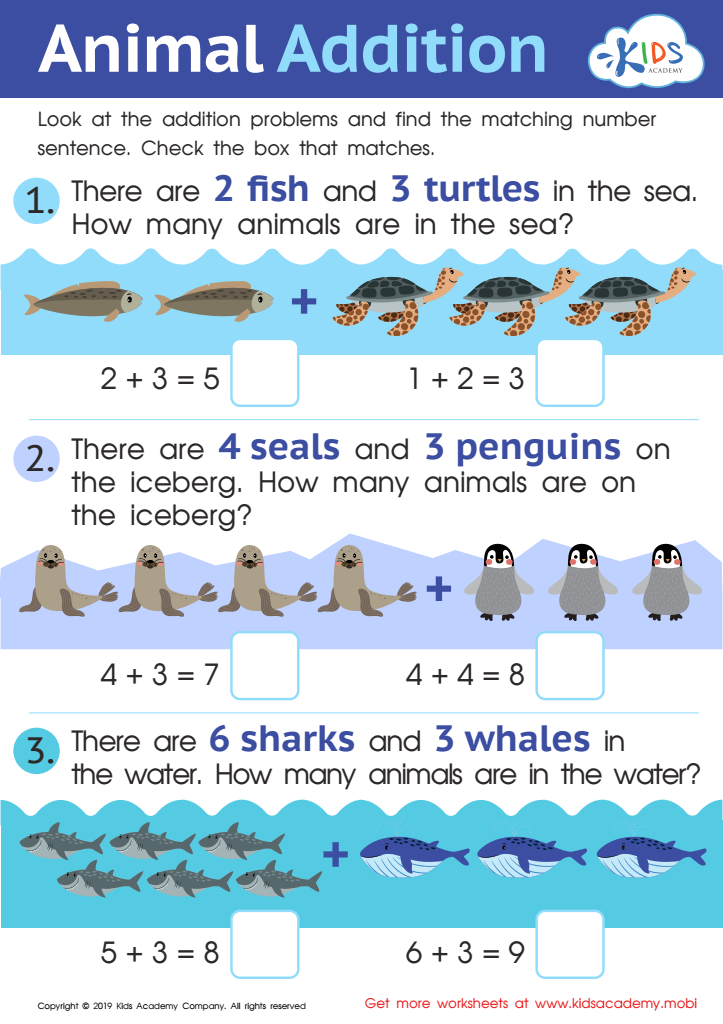
Animal Addition Worksheet








Animal recognition easy addition and subtraction word problems for ages 5-6 play a crucial role in early childhood education. These engaging activities combine two essential learning areas: mathematics and animal literacy.
First, they promote mathematical skills by presenting problems in a fun, relatable context. When young learners solve word problems that involve their favorite animals, they can more easily understand the concepts of addition and subtraction. This relatable framework enhances their ability to visualize math in real-life scenarios, facilitating mathematical thinking and reasoning.
Second, interaction with animals in educational contexts fosters curiosity and empathy. Recognizing and learning about different animals can spark children's interest in biology and nature. This awareness can help cultivate a sense of responsibility towards animals and encourage positive behavior towards the environment.
Finally, such activities enhance critical thinking and language skills as children read, interpret, and solve word problems. This multi-faceted approach boosts children's confidence in both math and language, laying a strong foundation for future learning.
By integrating fun animal themes with foundational arithmetic, parents and teachers can ensure young learners develop a love for learning while enhancing essential life skills. Encouraging this joyful approach can lead to more enthusiastic and engaged learners.