Number Recognition Easy Addition & Subtraction Worksheets for Ages 5-6 - Page 2
28 filtered results
-
From - To
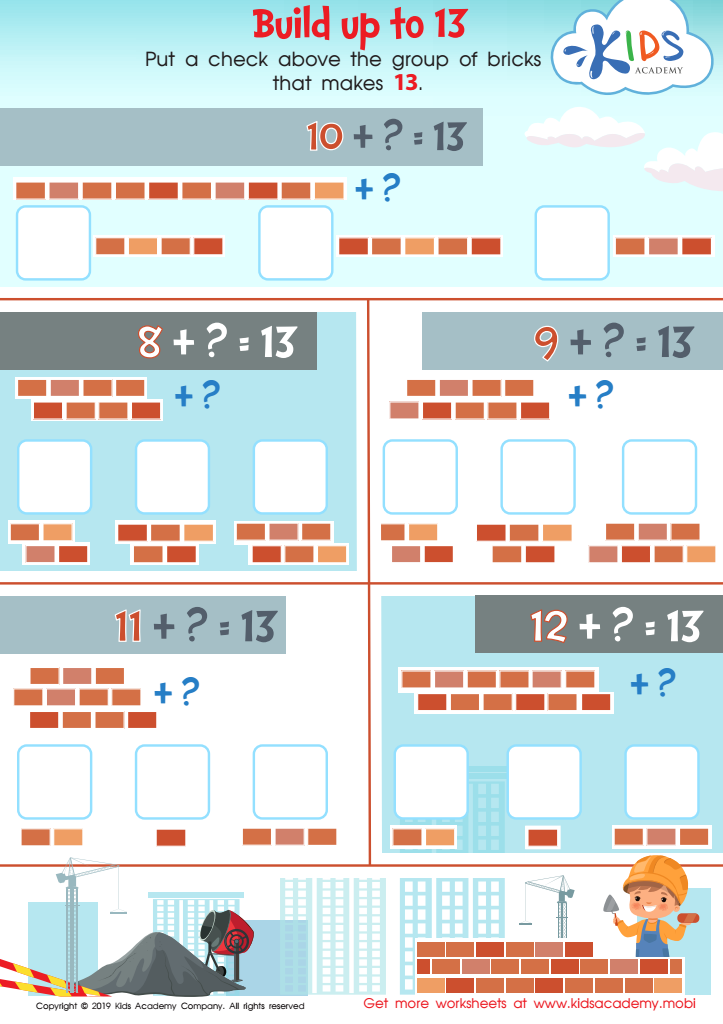
Build up to 13 Worksheet
 Assign to My Students
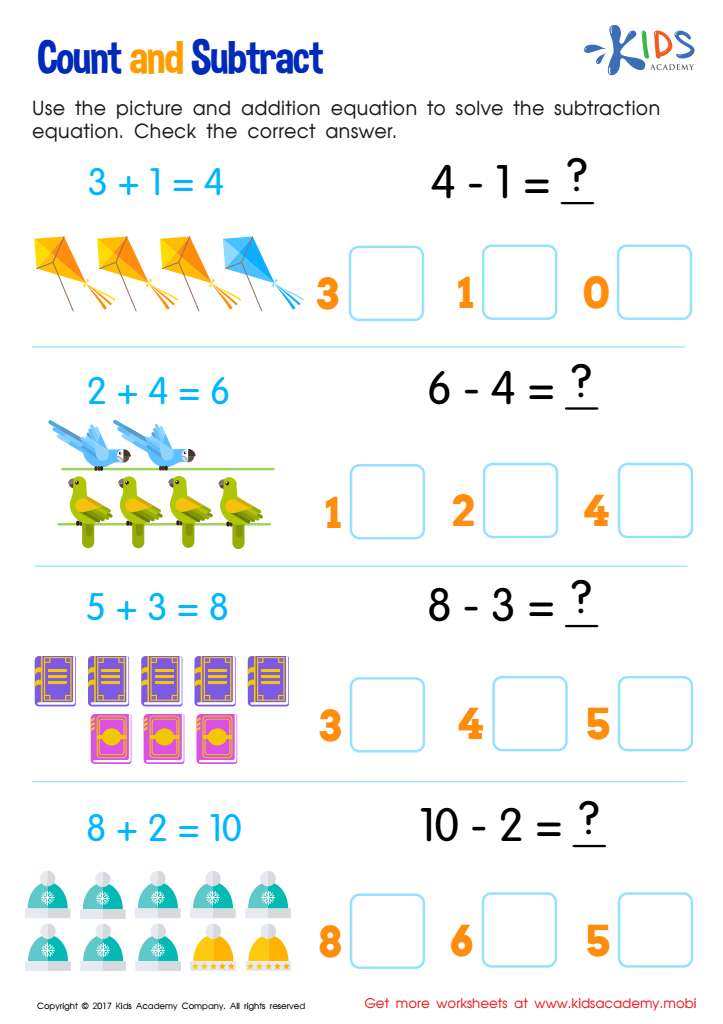
Count and Subtract Worksheet
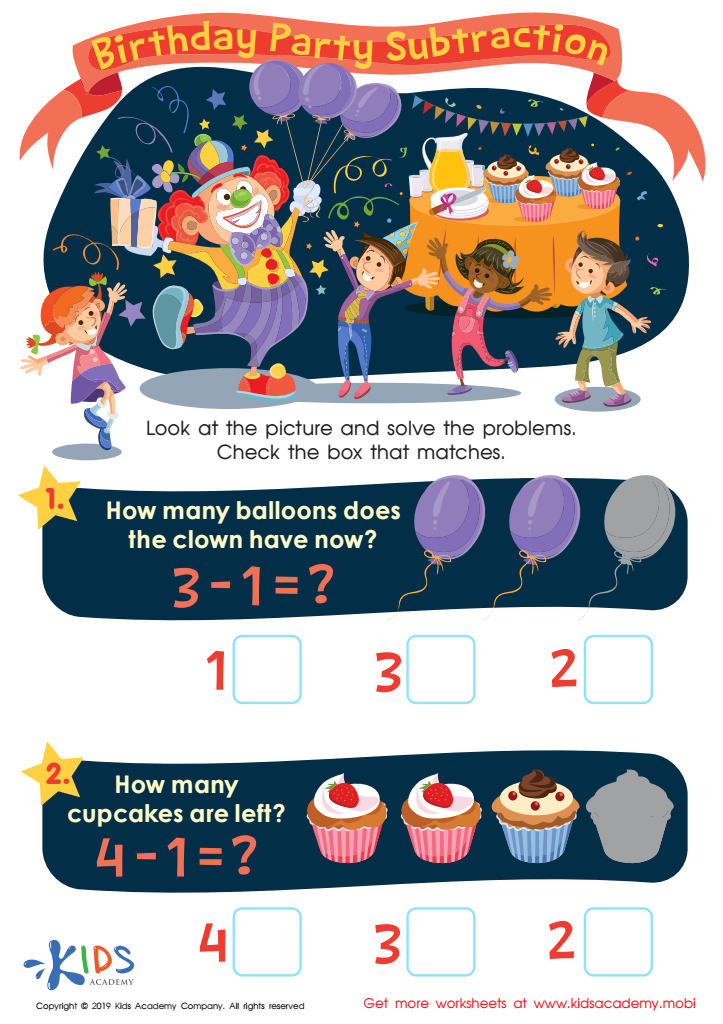
Birthday Party Subtraction Worksheet
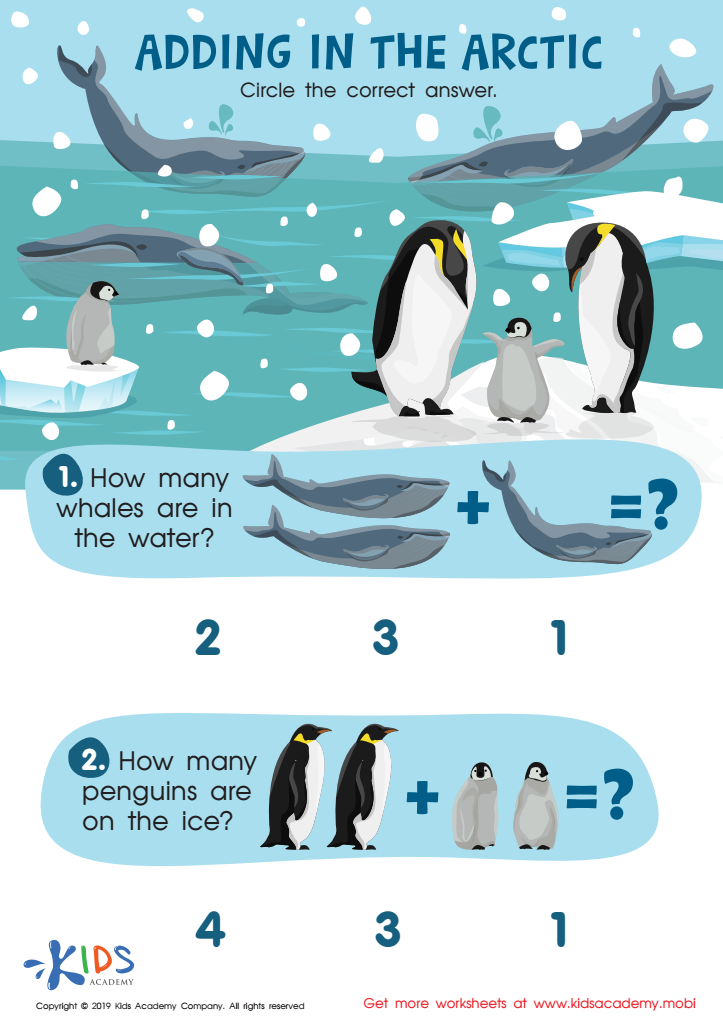
Adding in the Arctic Worksheet








Number recognition, easy addition, and subtraction are foundational mathematical skills that are crucial for young children (ages 5-6). At this stage, parents and teachers play a pivotal role in fostering these competencies for several reasons.
First, number recognition is the ability to visually identify and name numbers. This is fundamental as it equips children with the skills to understand the concept of quantity, which is essential for all subsequent mathematical learning. Without recognizing numbers, children cannot effectively understand operations or apply them to real-world contexts.
Second, learning simple addition and subtraction helps children develop problem-solving skills. These operations are the building blocks for more complex mathematical concepts that they will encounter later. Mastery in these areas through engaging activities can instill confidence and a positive attitude toward mathematics at an early age.
Moreover, early arithmetic fosters cognitive development by enhancing memory, attention to detail, and logical reasoning. Incorporating playful methods like educational games, story problems, or interactive apps can make learning these skills enjoyable.
Lastly, competency in early math skills is associated with better academic performance across subjects, as it encourages a broader understanding of patterns and sequences. Parents and teachers who prioritize number recognition and basic arithmetic form a strong foundation that supports lifelong learning and critical thinking abilities in children.








