Problem-solving abilities Easy Addition & Subtraction Worksheets for Ages 5-6
4 filtered results
-
From - To
Introducing our "Problem-Solving Abilities Easy Addition & Subtraction Worksheets" designed specifically for children ages 5-6! These engaging worksheets provide an interactive way for young learners to enhance their math skills while fostering logical thinking and problem-solving abilities. Each worksheet features colorful graphics and age-appropriate math problems that challenge kids to apply their addition and subtraction knowledge creatively. Perfect for classroom use or home practice, our worksheets encourage independent thinking and boost confidence in young mathematicians. With fun exercises and clear instructions, children will enjoy mastering foundational math concepts in a fun and supportive environment!
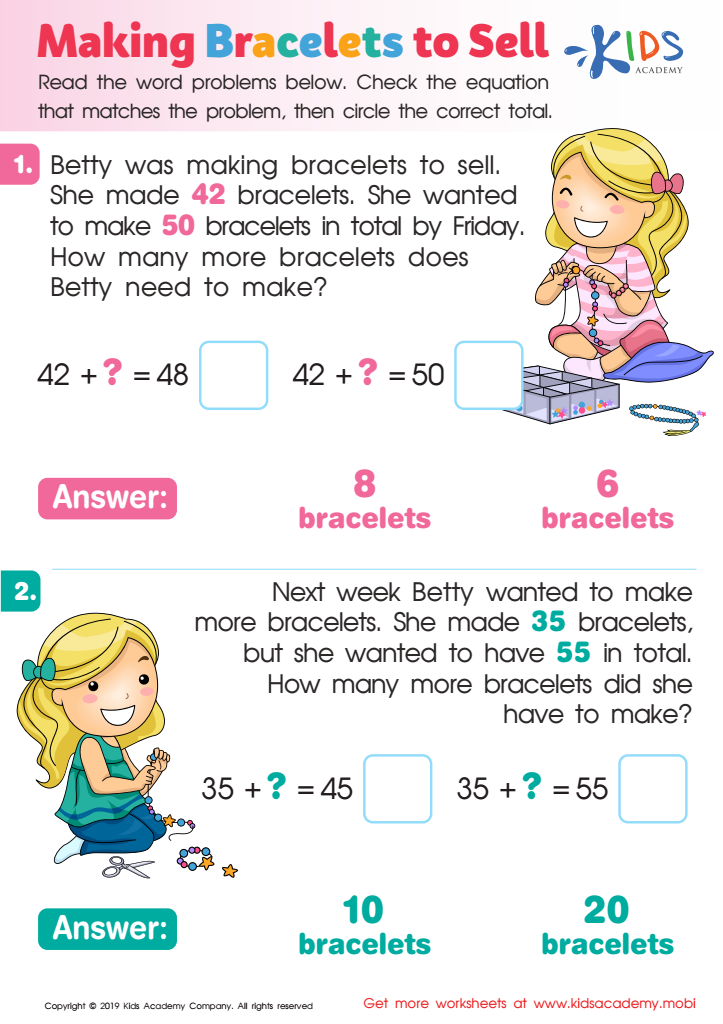
Making Bracelets to Sell Worksheet
 Assign to My Students
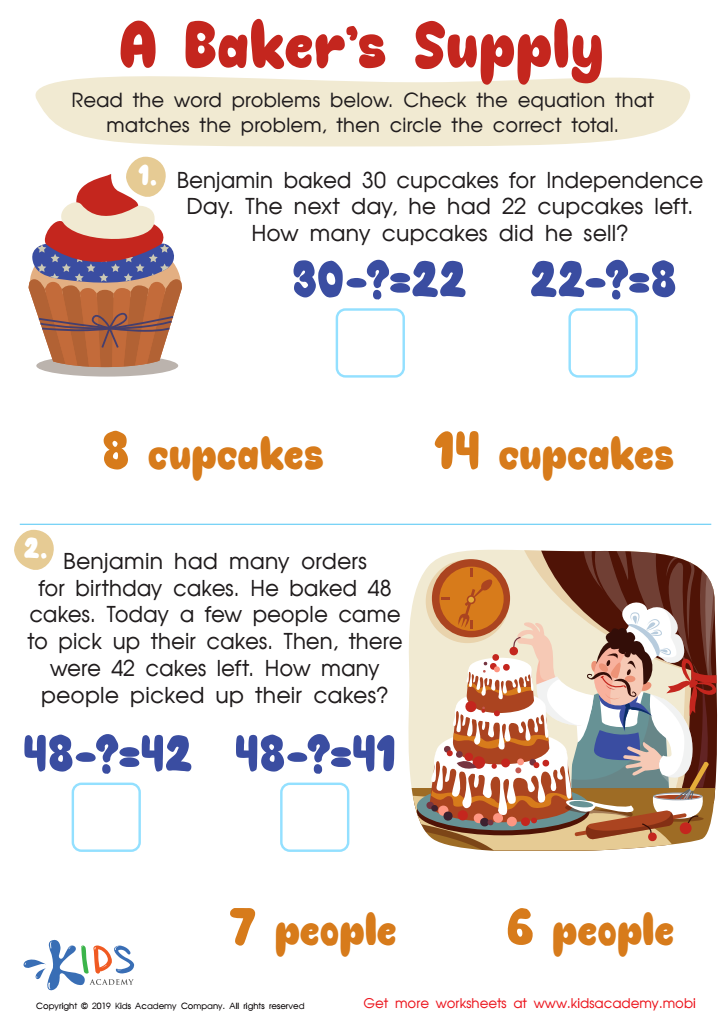
A Baker's Supply Worksheet
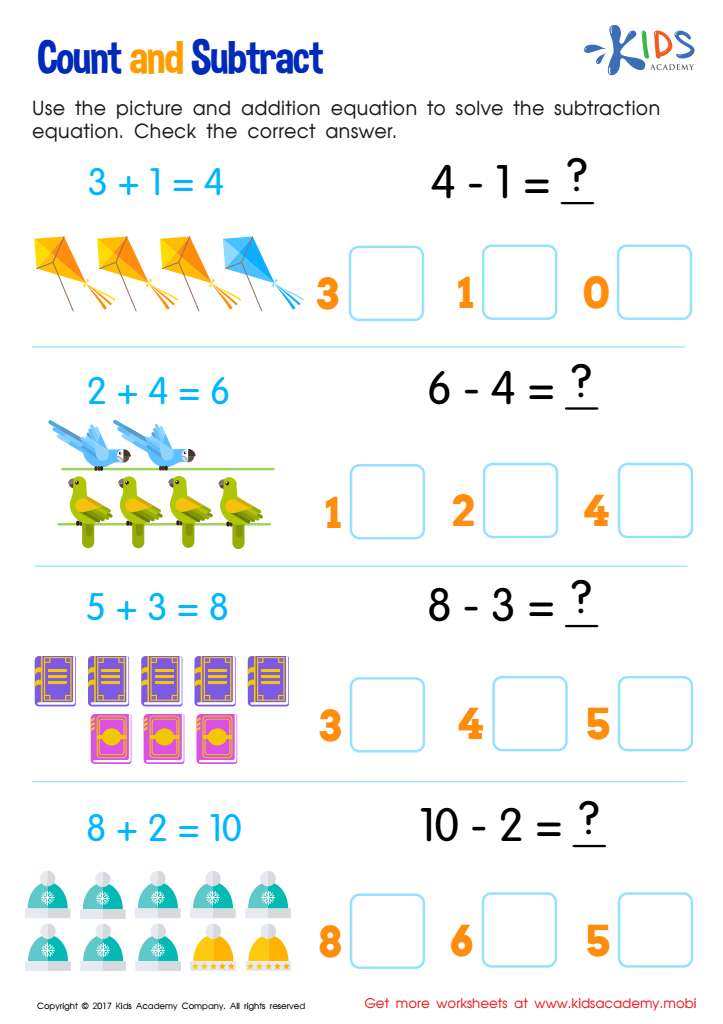
Count and Subtract Worksheet
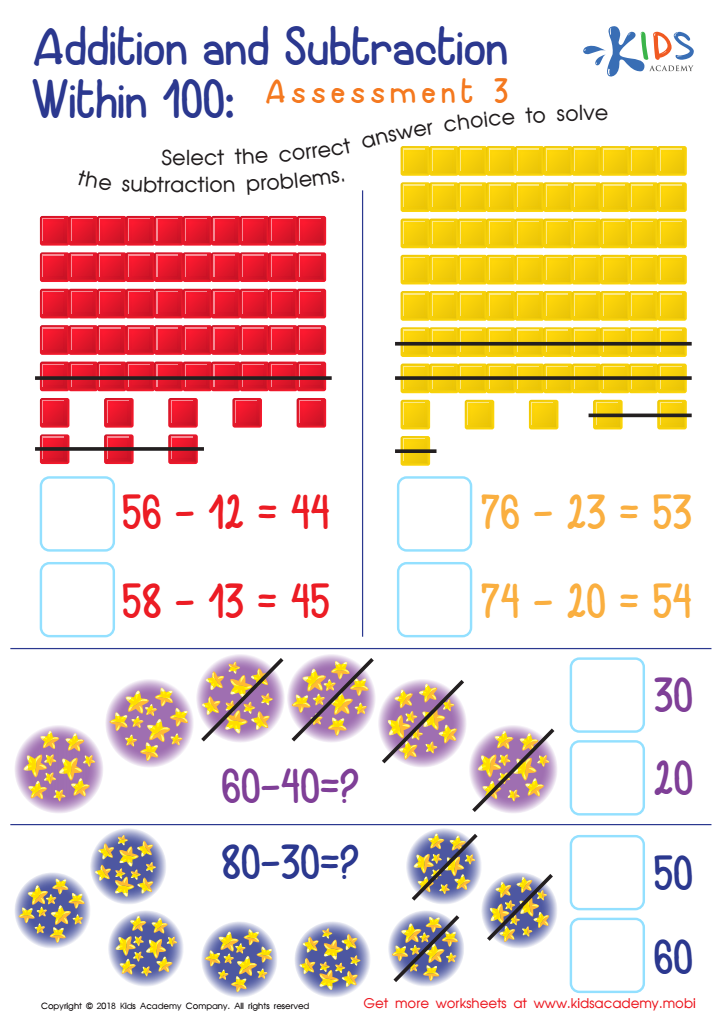
Addition and Subtraction Within 1: Assessment 3 Worksheet








Problem-solving abilities in early learners, particularly in easy addition and subtraction for ages 5-6, are crucial for several reasons. Firstly, these skills form the foundation for more complex mathematical concepts. When children learn to solve simple problems, they not only grasp basic arithmetic but also develop critical thinking skills that are applicable across subjects.
Moreover, engaging in problem-solving enhances a child's cognitive development. It encourages them to think logically, make decisions, and understand relationships between numbers, which is vital for their academic growth. Additionally, introducing addition and subtraction in a playful manner can foster a positive attitude towards math, helping to reduce anxiety around the subject later in life.
Furthermore, these skills promote perseverance. Learning to tackle and solve problems teaches children that challenges can be faced with effort and strategy. This resilience is valuable beyond just mathematics; it cultivates a growth mindset applicable in all areas of learning and everyday life.
Ultimately, nurturing problem-solving abilities in young children lays the groundwork for lifelong learning, equipping them with the confidence and skills they need to succeed in an increasingly complex world. Therefore, parents and teachers should prioritize these foundational math skills for balanced intellectual and emotional development.








