
Shape identification Easy Math Worksheets for Ages 5-6
4 filtered results
Difficulty Level
Grade
Age
-
From - To
Subject
Activity
Standards
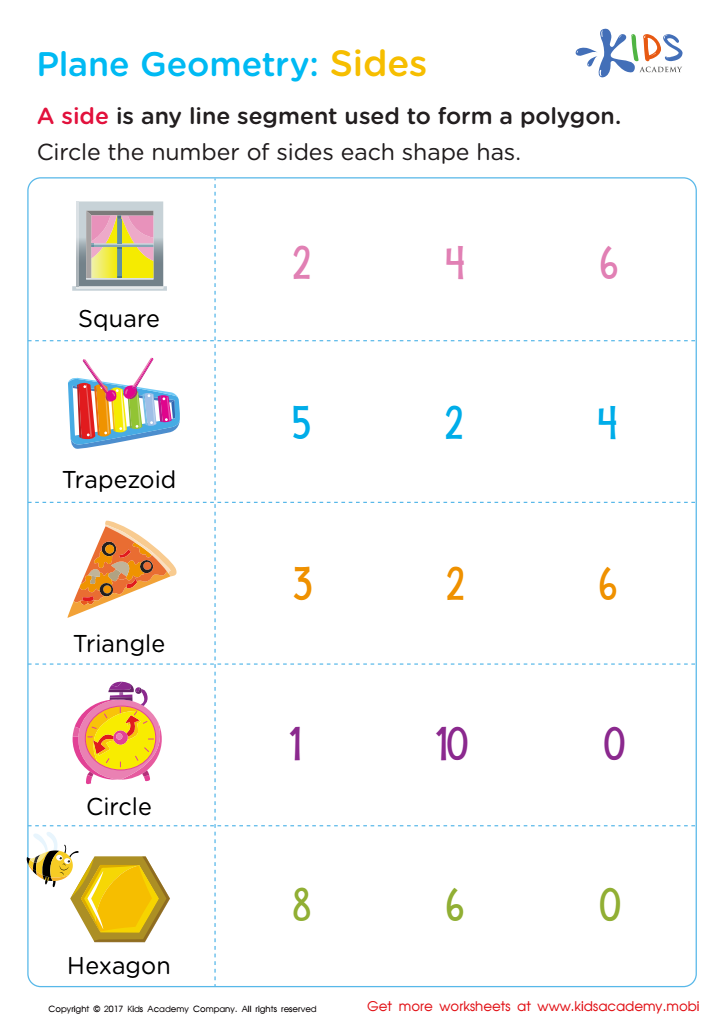
Discover fun and engaging Shape Identification Math Worksheets designed for children ages 5-6! Our easy-to-use resources help young learners recognize and identify various shapes, enhancing their foundational math skills. Through vibrant illustrations and interactive activities, kids can practice naming shapes, understanding their properties, and improving their spatial awareness. These worksheets are perfect for homeschooling, classroom activities, or extra practice at home. With a range of exercises that cater to different learning styles, children will enjoy exploring geometry while developing essential math skills. Start your child's journey to shape mastery with our delightful worksheets today!
Favorites
With answer key
Interactive
Number 2 Printable
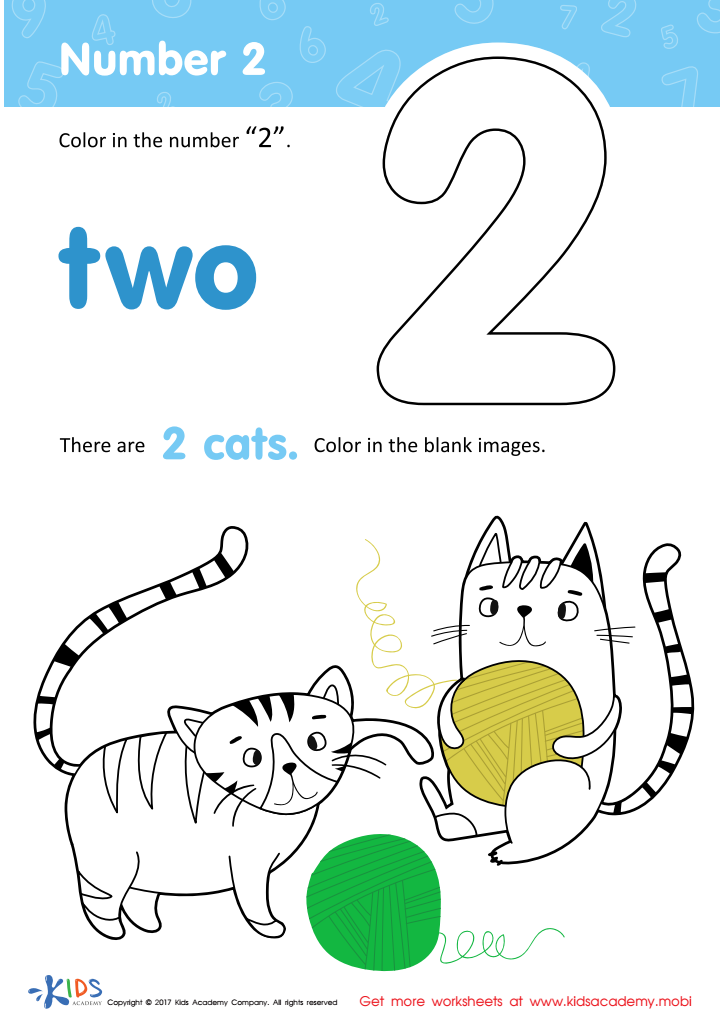
Help your child learn to recognize the number two with these cats and their yarn balls. Print this coloring page – it's great for counting and coloring fun! Your child will develop basic numeracy skills as they visually see numbers in action.
Download (PDF)
 Assign to My Students
Assign to My Students
Number 2 Printable
Worksheet
Bicycle Shapes Worksheet
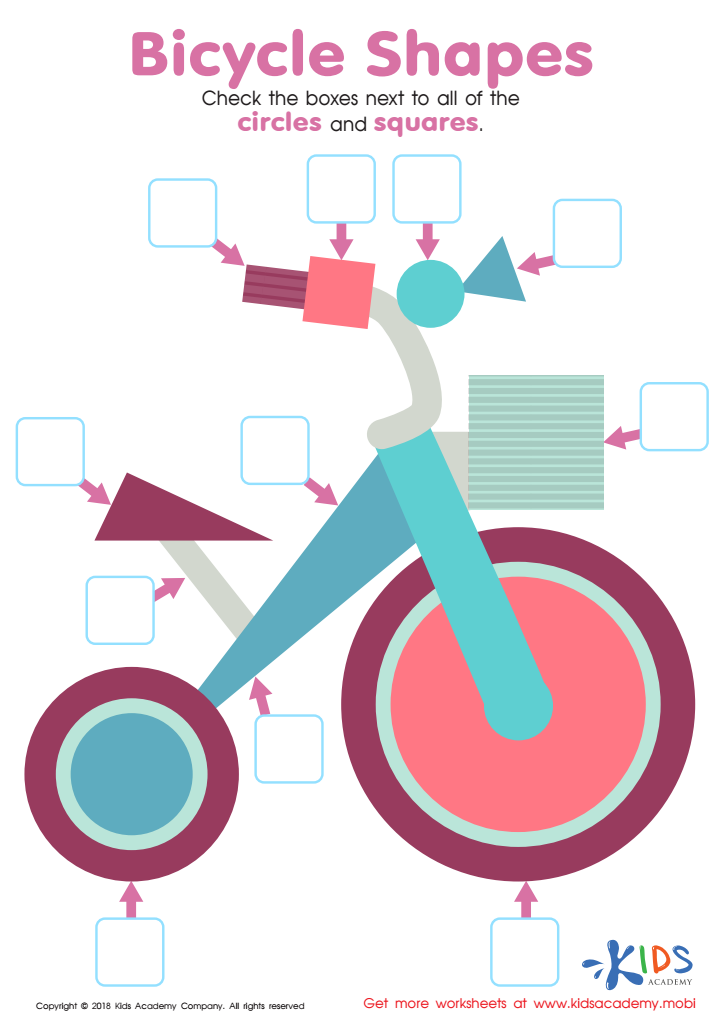
This fun geometry worksheet for preschoolers asks the child to spot hidden shapes (circles, squares) in a colorful bicycle. Each shape varies in size and the child checks the box when it's found. It's a visual way to teach shapes.
Bicycle Shapes Worksheet
Worksheet
Compare and Describe: Part 1 Worksheet
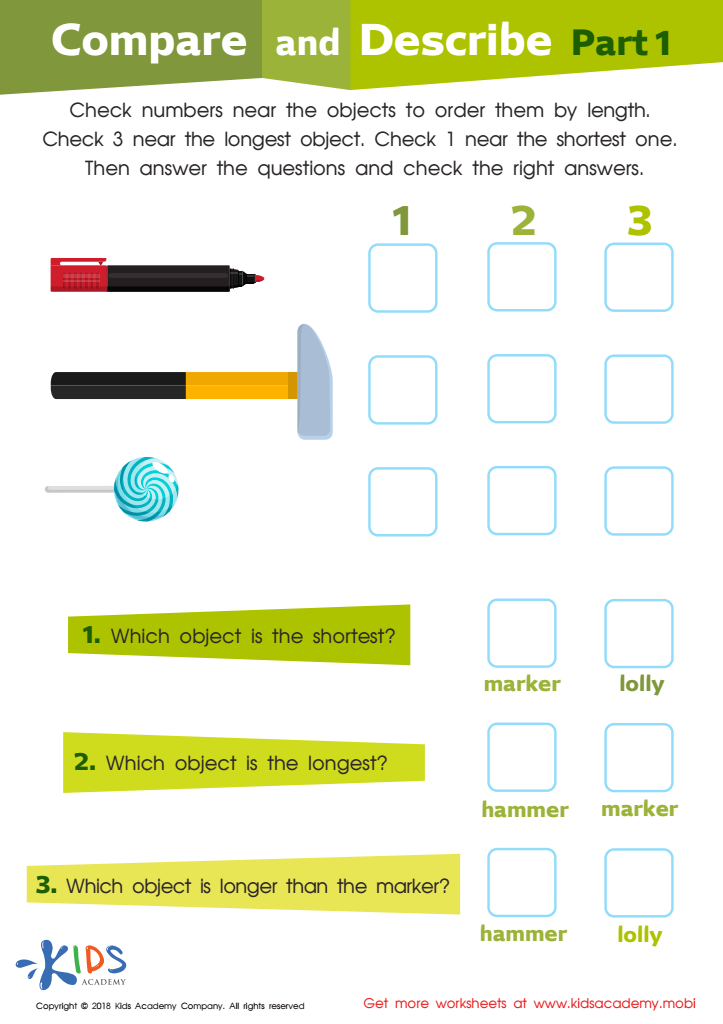
In this worksheet from Kids Academy, kids can start learning measurement in stages. Observe the images, then compare their length - which one is shortest? Which one is longest? Answer the questions at the bottom to complete the sheet. It's an easy way to help kids understand measurement basics.
Compare and Describe: Part 1 Worksheet
Worksheet
Join Kids Academy for Free
Who is primarily going to use this learning content?








Shape identification is a crucial foundational skill in early childhood education, particularly for children aged 5-6. Parents and teachers should care about it because recognizing shapes lays the groundwork for more advanced mathematics and critical thinking skills. At this age, children are naturally curious and eager to explore their environment. Introducing shape identification fosters this curiosity, encouraging them to observe and categorize the world around them.
Shape recognition enhances cognitive development by helping children understand properties and relationships between objects. It also supports language development, as children learn to articulate their thoughts and ideas about shapes, promoting communication skills. Furthermore, early shape recognition aids in visual-spatial awareness, which is vital for fields like engineering, architecture, and art.
Moreover, mastering shapes contributes to problem-solving abilities, as children begin to understand spatial reasoning and how shapes fit together. These skills are essential in everyday tasks and more complex mathematical concepts, such as geometry. By prioritizing shape identification in educational settings, parents and teachers equip children with essential tools for academic success, while also fostering a lifelong love for learning and exploration in mathematics and beyond.








