Comparing numbers Easy Measurement Worksheets for Ages 5-6
3 filtered results
-
From - To
Welcome to our "Comparing Numbers Easy Measurement Worksheets" designed specifically for children aged 5-6! These engaging worksheets help young learners develop essential math skills by introducing basic concepts of comparison. Through fun activities and vivid illustrations, kids will learn to identify greater than, less than, and equal to relationships among numbers. Perfect for early education, these worksheets support critical thinking and number sense while making learning enjoyable. Ideal for classroom use or at-home practice, these materials are tailored to keep little ones engaged as they embark on their math journey. Start building confidence in comparing numbers today with our easy-to-use resources!
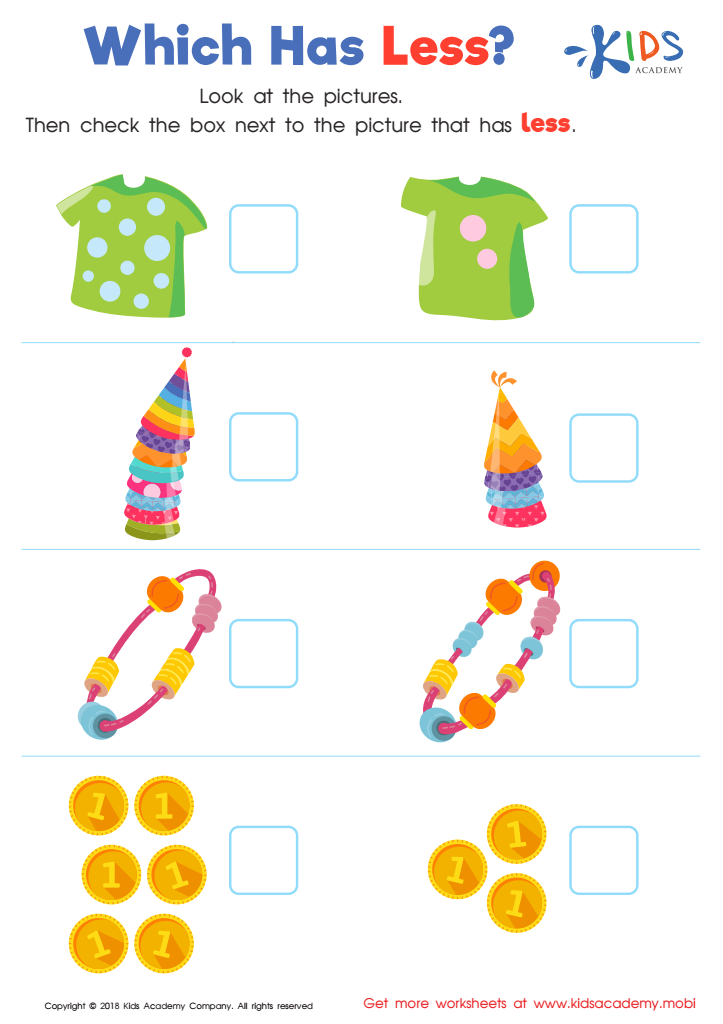
Which Has Less? Worksheet
 Assign to My Students
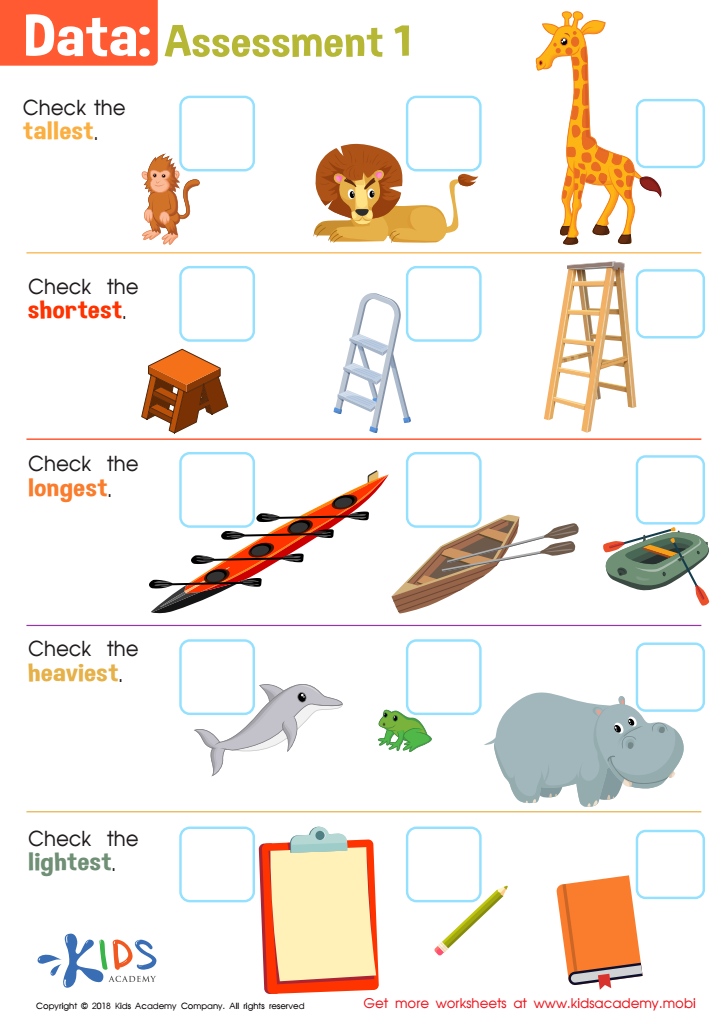
Data: Assessment 1 Worksheet
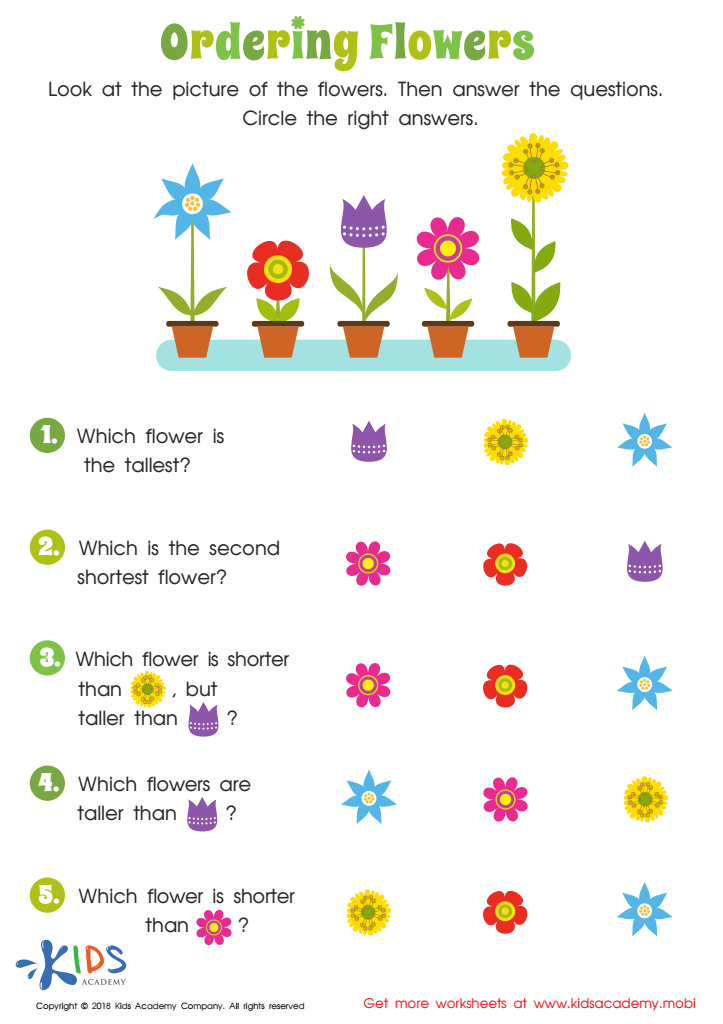
Ordering Flowers Worksheet








Understanding comparing numbers and measurement is crucial for children aged 5-6, as it lays the foundation for their mathematical development. During this stage, children are naturally curious and eager to learn about the world around them, making it an ideal time to introduce these concepts. When parents and teachers emphasize comparing numbers, they foster critical thinking and reasoning skills. Children learn to identify which numbers are larger or smaller, enhancing their ability to make informed decisions in everyday situations, such as sharing treats or deciding which toy is bigger.
Furthermore, measurement introduces vital concepts of quantity, size, and capacity. These concepts are not only vital in mathematics but also in practical life skills, including cooking, building, and art. By integrating hands-on activities like measuring ingredients or comparing the heights of different objects, educators and parents can make learning engaging and relevant.
Moreover, mastering these skills promotes confidence in young learners. As children become proficient in comparing numbers and understanding measurement, they build a solid foundation for more complex mathematical concepts in the future. Ultimately, parents and teachers play an essential role in nurturing these skills, setting children on the path to academic success and lifelong learning.








