
Time reading skills Easy Time Worksheets for Ages 5-6
3 filtered results
Difficulty Level
Grade
Age
-
From - To
Subject
Activity
Standards
Help young learners master the fundamentals of time reading with our engaging Easy Time Worksheets, specially designed for children ages 5-6. These printable resources provide a fun and interactive way for kids to grasp essential time concepts, including understanding clocks and reading both digital and analog time. Each worksheet is crafted to enhance critical thinking and problem-solving skills while encouraging independence in learning. Ideal for classroom and home use, these worksheets will prepare your child to confidently tell time. Explore our collection and make learning about time a delightful experience for your little ones!
Favorites
With answer key
Interactive
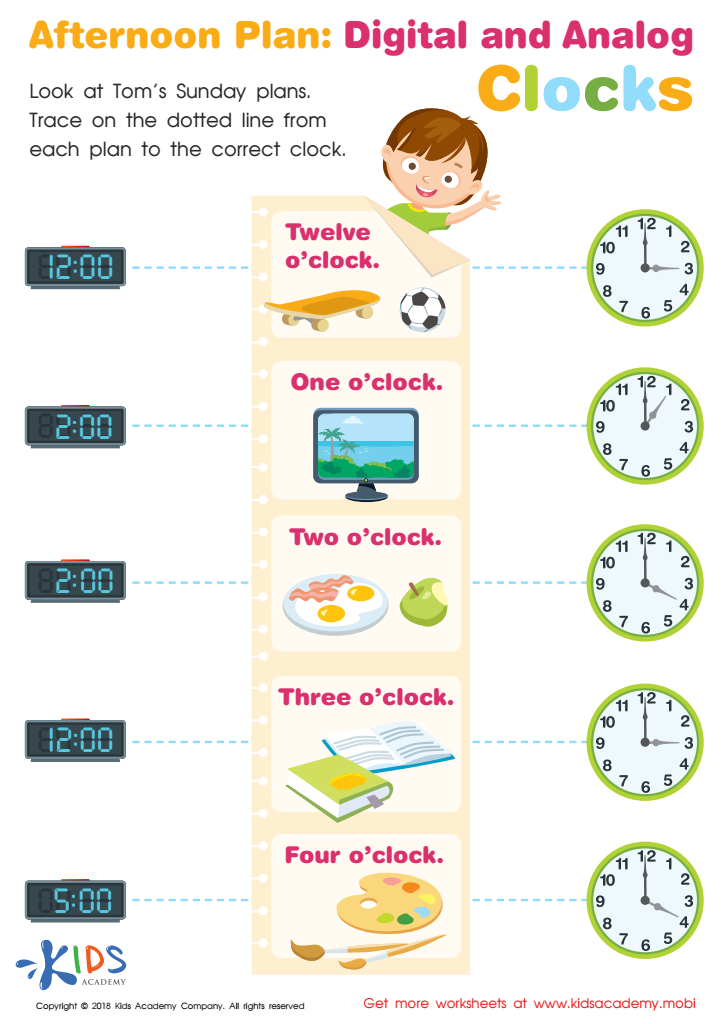
Afternoon Plan: Digital and Analog Clocks Worksheet
Tom's got Sunday plans and your kids can use this worksheet to help them learn how to tell the time. With tracing dotted lines from plans to the correct clock, they'll gain the skills to accurately convert digital time to analog. It'll be a great way to get them better at telling the time.
 Assign to My Students
Afternoon Plan: Digital and Analog Clocks Worksheet
Worksheet
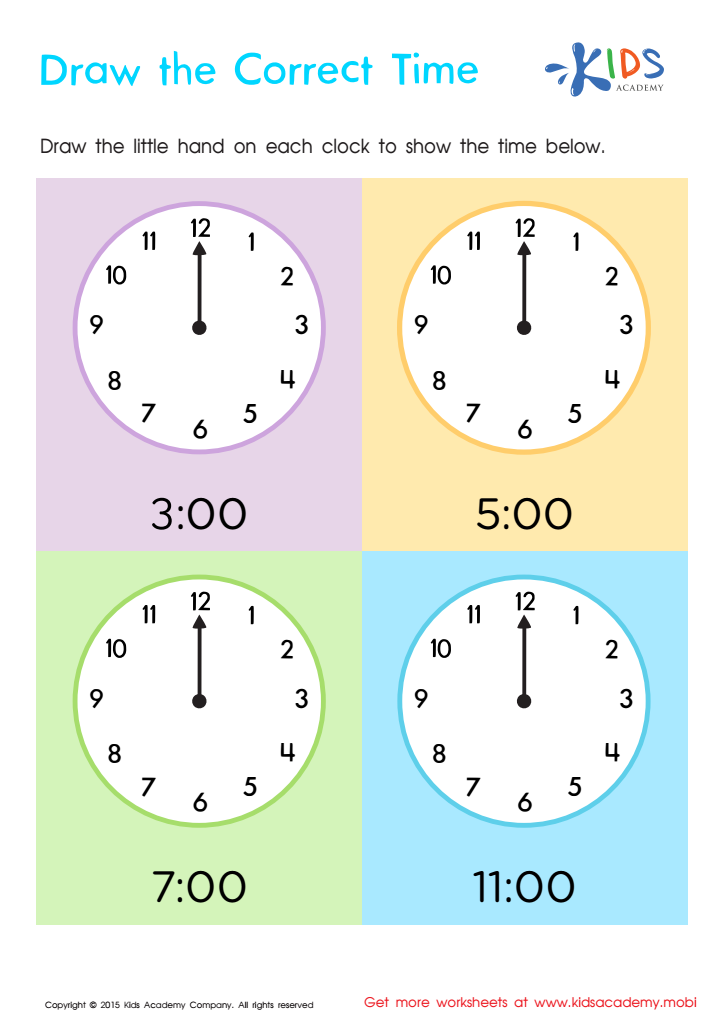
Telling The Time Worksheet: Part 1
Practice telling the time with Kids Academy. Our worksheets make it fun for kindergarteners to learn about clocks and reading the time. Find our free math worksheets on telling the time and draw the little hand on the clock faces to show the time. Let's learn together!
Telling The Time Worksheet: Part 1
Worksheet
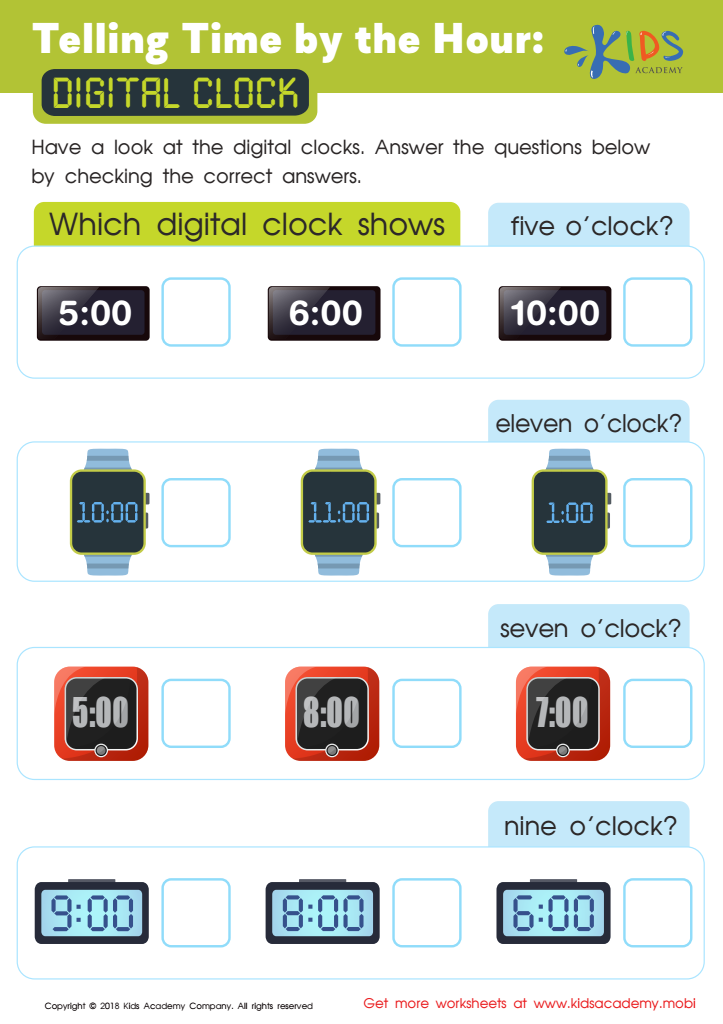
Telling Time by the Hour: Digital Clock Worksheet
Introduce your students to digital clocks. This worksheet will help them become familiar with them. Guide them through answering the questions - they're simple and stimulating. Encourage their young minds to explore the digital clocks in the exercise.
Telling Time by the Hour: Digital Clock Worksheet
Worksheet
Join Kids Academy for Free
Who is primarily going to use this learning content?



.jpg)




Parents and teachers should prioritize time reading skills for children aged 5-6 because these foundational abilities are crucial in developing overall literacy and cognitive growth. At this age, children begin to understand the concept of time—recognizing numbers on a clock, days of the week, and daily routines, which foster a sense of structure and responsibility. Learning to read time also enhances problem-solving skills as children engage with concepts of duration and sequencing.
Moreover, being able to read time aids in effective communication; children learn to understand and express concepts related to schedules, planning, and punctuality. This skill encourages independence, as children can manage their daily activities, such as recognizing when to eat, play, or sleep, thereby enhancing their self-regulation skills.
Furthermore, time reading skills can significantly support classroom learning. Students who grasp these concepts are better equipped to follow instructions, adhere to schedules, and participate actively in group activities. Overall, emphasizing time reading skills builds a strong foundation for continued learning, practical life skills, and academic success, making it essential for both parents and teachers to nurture these abilities at an early age.








