Letter recognition Easy Reading Worksheets for Ages 5-6
3 filtered results
Difficulty Level
Grade
Age
-
From - To
Subject
Activity
Standards
Discover engaging "Letter Recognition Easy Reading Worksheets" tailored for ages 5-6. These fun and educational worksheets from Kids Academy are designed to boost your child's letter recognition skills through interactive activities. Perfect for young learners, our printable resources offer a variety of exercises that make learning letters both enjoyable and effective. Build your child's confidence in reading and writing as they master each letter with ease. Ideal for classroom use or at-home practice, Kids Academy worksheets pave the way for early literacy success. Help your child embark on a delightful journey into the world of letters today!
Favorites
With answer key
Interactive
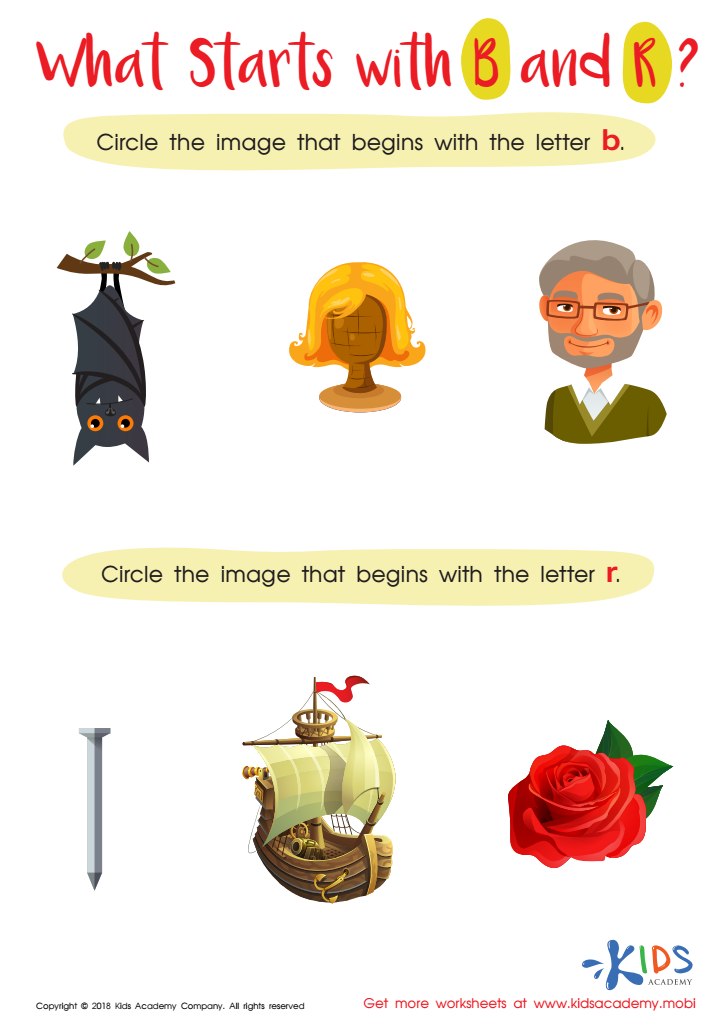
What Starts with B and R? Worksheet
Download this worksheet to help young readers practice visual and motor skills! They'll enjoy matching pictures with "B" and "R" letters while tracing the images. Bright and colorful, this engaging activity will help kids differentiate between words and have fun doing it.
 Assign to My Students
What Starts with B and R? Worksheet
Worksheet
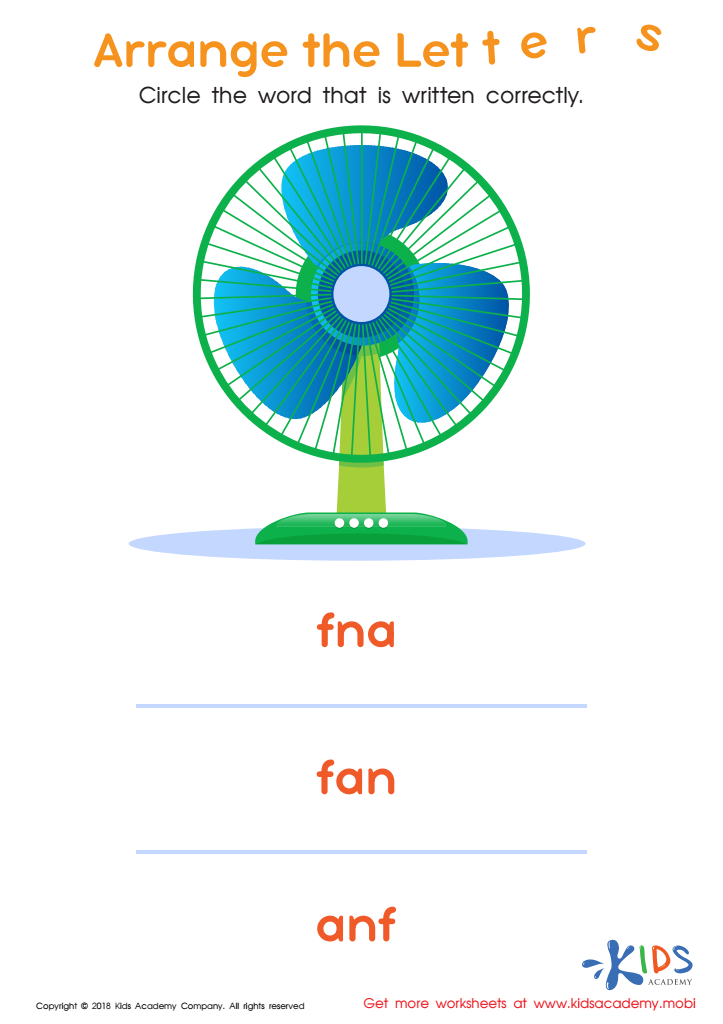
Arrange the Letters Worksheet
Test your kids' spelling skills with this worksheet! Show them the picture and ask what it stands for. Then, have them choose the correct spelling from the options given. Check their answer by circling the right one.
Arrange the Letters Worksheet
Worksheet
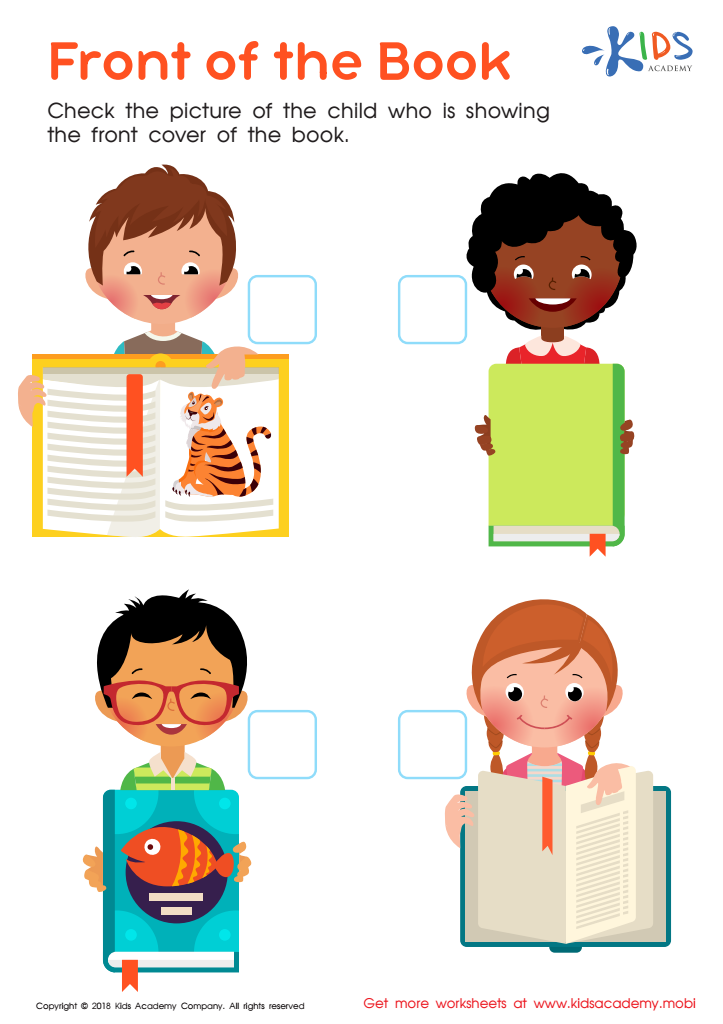
Front of the Book Worksheet
Help your child become a reader with this free worksheet! It's full of fun new friends and is designed to help kids understand concepts about the front of a book. They'll look at each picture and decide which friend is holding the book with the front cover, and check off the correct answer in the given boxes. Get your little one ready to be a reader!
Front of the Book Worksheet
Worksheet
Join Kids Academy for Free
Who is primarily going to use this learning content?








Letter recognition is a foundational skill critical for early reading success in children aged 5-6. Parents and teachers should prioritize this because it forms the cornerstone of literacy. Understanding and identifying letters is the first step toward phonemic awareness, where children learn the sounds associated with each letter. This, in turn, supports their ability to decode words, which is essential for reading and spelling.
Early letter recognition contributes to a child's confidence and enthusiasm for learning. When children can identify letters, they become more engaged in literacy activities, feeling a sense of achievement that encourages them to keep trying. This positive reinforcement can instill a lifelong love for reading.
Additionally, early proficiency in letter recognition can lead to greater overall academic success. Literacy skills are not only pivotal in language arts but also play a significant role in understanding subjects like math, science, and social studies, where reading is required.
Moreover, early letter recognition helps identify potential learning difficulties such as dyslexia. Early intervention can then provide targeted support to ensure these challenges are managed effectively.
In summary, focusing on letter recognition for 5-6 year-olds helps create a strong educational foundation, fosters positive attitudes toward learning, and can identify learning challenges early on.