Filters

6 filtered results

Clear all filters
Favorites
With answer key
Interactive

6 filtered results

Difficulty Level

Grade


Boost your child's vocabulary with our engaging Easy Writing Worksheets designed for ages 5-6! These vibrant and interactive worksheets are perfect for young learners, helping them explore new words and improve their language skills in a fun and playful manner. Each activity focuses on vocabulary enhancement through engaging prompts, word matching, and sentence building exercises. Watch your child’s confidence grow as they discover the joy of writing while enhancing their communication skills. Ideal for classroom use or at-home learning, these worksheets are a valuable resource for developing a strong foundation in vocabulary that will last a lifetime. Start the fun today!

Check out this FREE Trial Lesson on Writing for age 5-6!

Form Regular Plural Nouns

Favorites
With answer key
Interactive
  • 5-6
  • Vocabulary enhancement
  • Writing
  • Easy
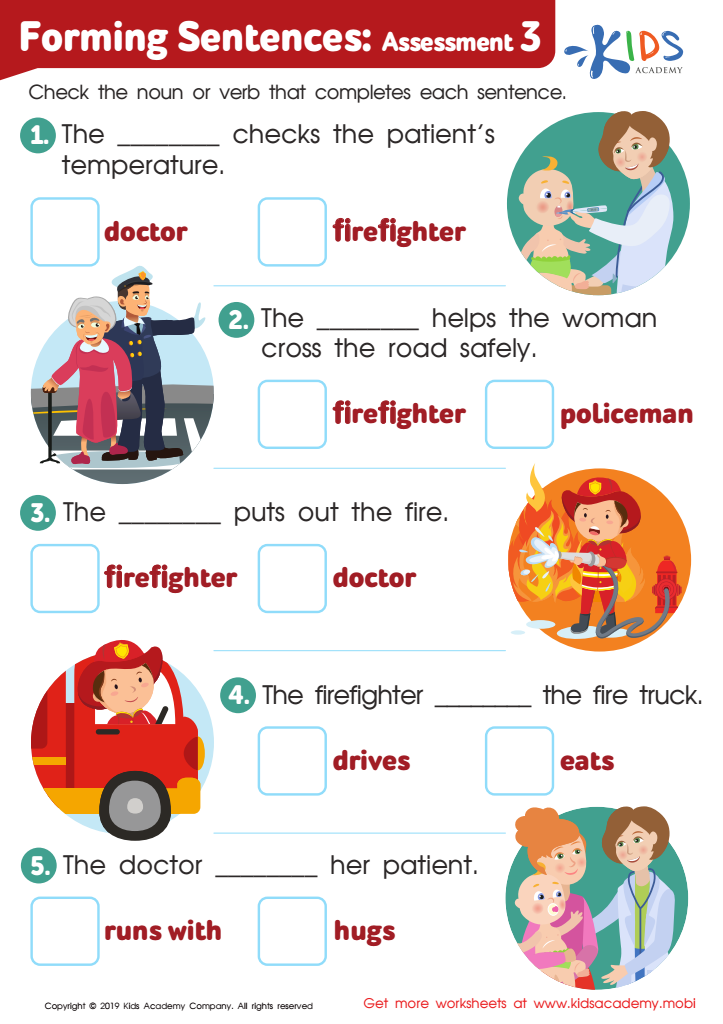
Forming Sentences: Assessment 3 Worksheet

Forming Sentences: Assessment 3 Worksheet

Students must master sentence formation to be successful English learners. After grasping the ABCs and basic words, the next step is to construct sentences using those words. Worksheets like this one can help teach kids how to make sentences; they need to look at the pictures and select the correct noun or verb to complete each sentence.
Forming Sentences: Assessment 3 Worksheet
Worksheet
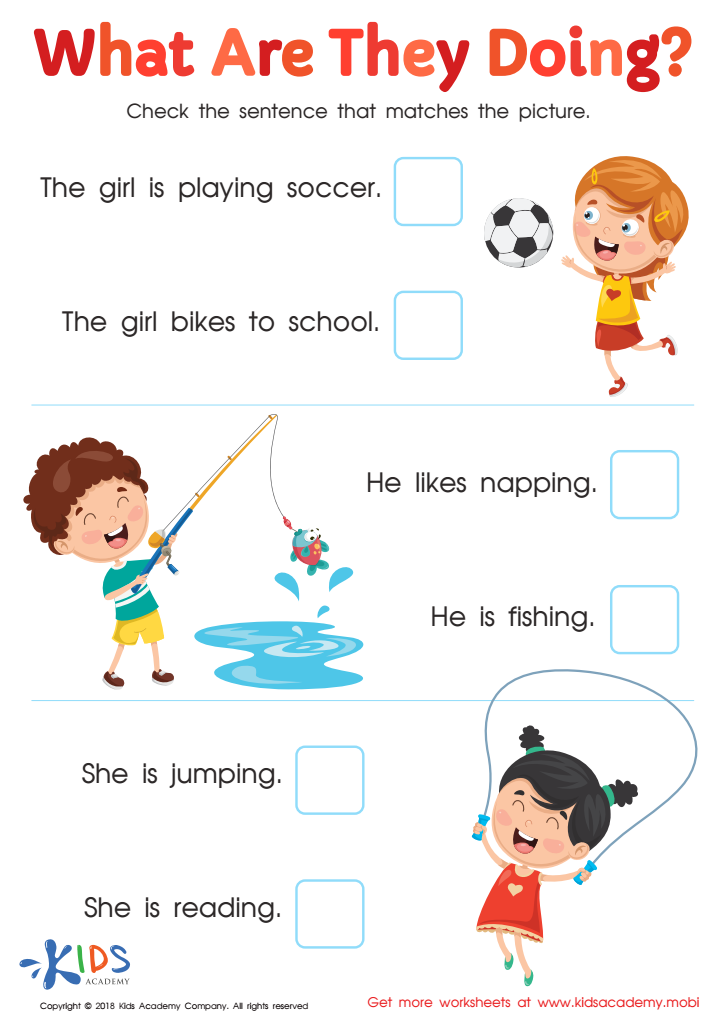
What Are They Doing? Worksheet

What Are They Doing? Worksheet

Look at the pdf with your child and ask which activities they like. Ask them to match the pictures with the sentences. Read the sentences aloud and help them check the right answers. Encourage them to talk about what they see in the pictures. It's a great way to help them learn.
What Are They Doing? Worksheet
Worksheet
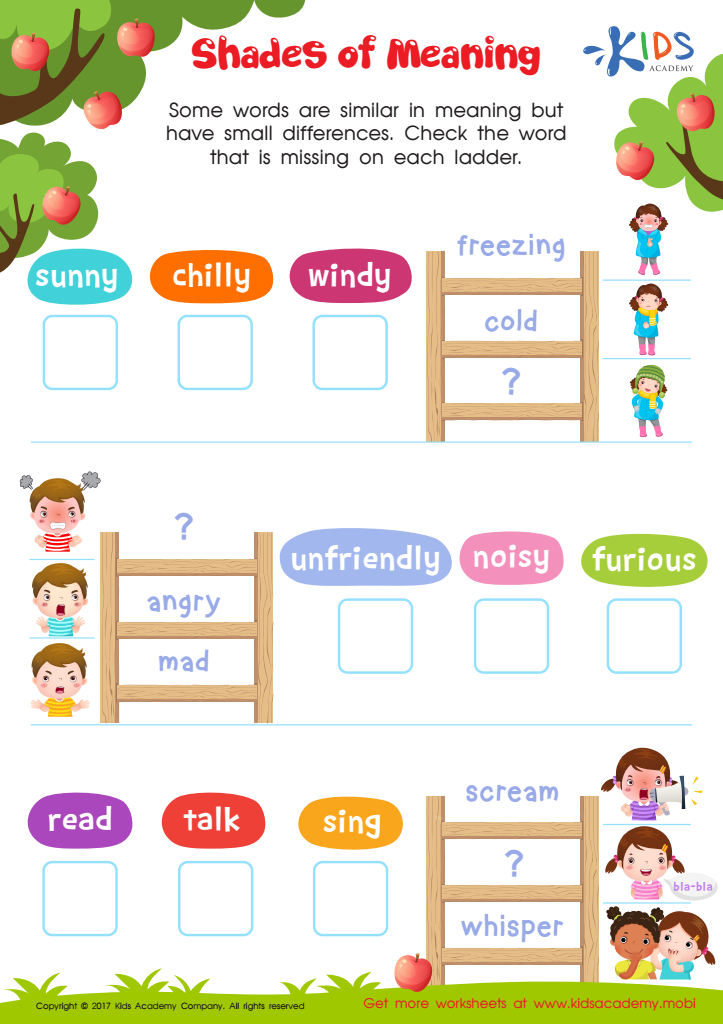
Shades of Meaning Worksheet

Shades of Meaning Worksheet

Your child can practice understanding similar words with this worksheet. They'll need to pick the word from the options that best fits the gap on each ladder, and learn to differentiate between words with similar meanings. For example, there are various terms for 'cold' that your child can learn. Try it out!
Shades of Meaning Worksheet
Worksheet
Make it Plural Worksheet

Make it Plural Worksheet

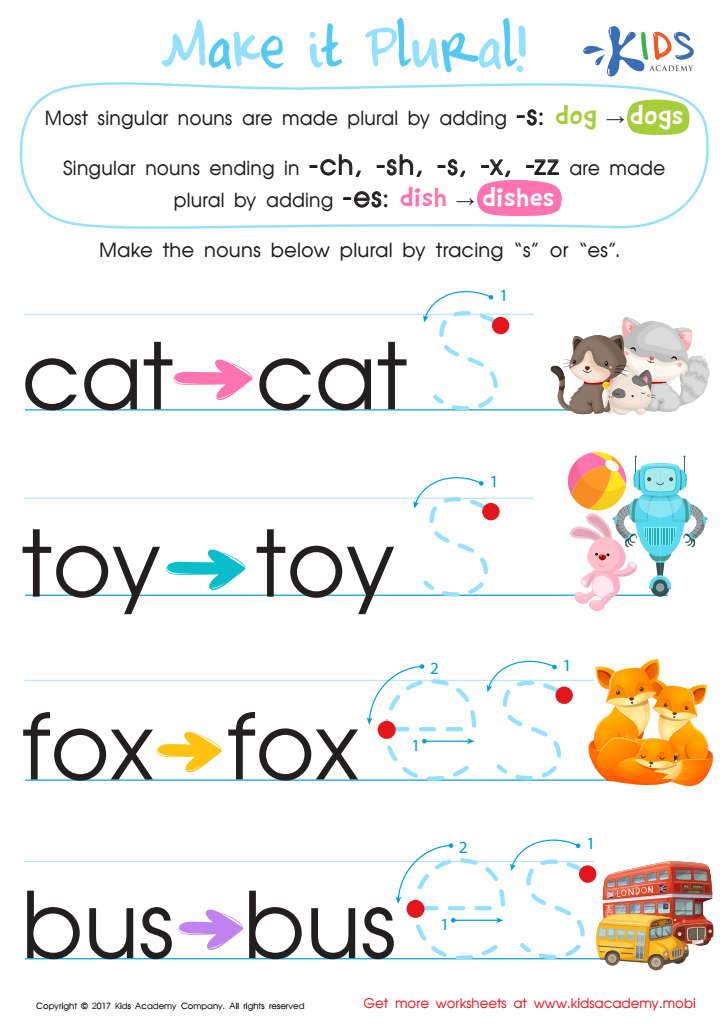
Changing words from singular to plural can be tricky as there are many word endings with special rules. Most words just need an -s, while endings like -ch, -sh, -s, -x or -zz need -es. This worksheet helps kids read words and trace the correct ending for each, making it easier to master these rules!
Make it Plural Worksheet
Worksheet
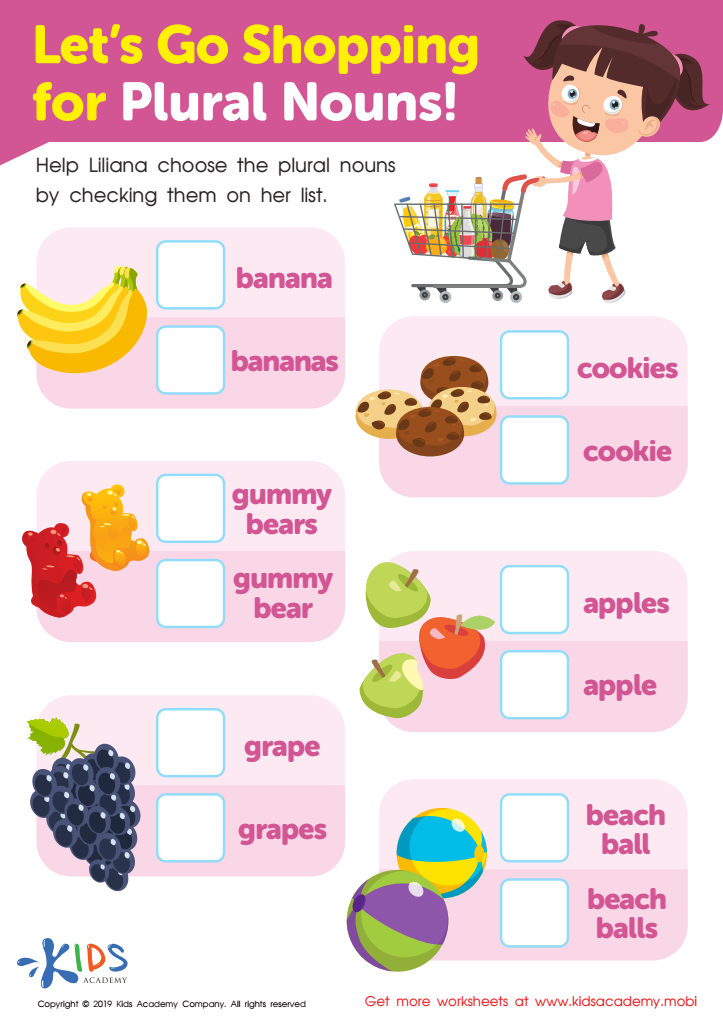
Let's Go Shopping for Plural Nouns! Worksheet

Let's Go Shopping for Plural Nouns! Worksheet

Help your students figure out the plural nouns in Lilliana's checklist. Look at the six objects in this PDF and add 's' to the nouns to make them plural. Show students how words can be tricky and explain how adding an 's' often changes the noun to its plural form.
Let's Go Shopping for Plural Nouns! Worksheet
Worksheet
Finish the Word Worksheet


Finish the Word Worksheet

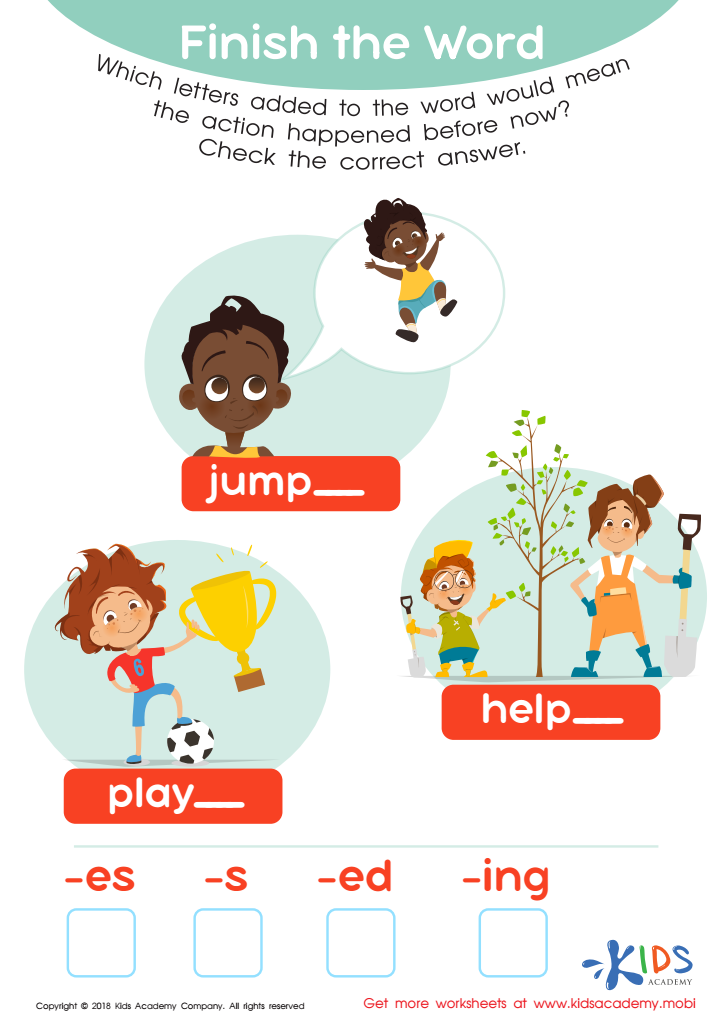
Does your kid know tenses? Listen to see if they are using words correctly. With this worksheet, your kids will learn to use the appropriate past tense forms. Ask them which letters added to words make the action past. Help them check the answers.
Finish the Word Worksheet
Worksheet


Vocabulary enhancement in young children, particularly those aged 5-6, is crucial for their overall language development and educational success. At this stage, children are rapidly acquiring language skills and expanding their ability to express themselves. By focusing on vocabulary, parents and teachers can help children develop stronger communication skills, which are essential for effective learning.

Enhanced vocabulary allows children to better understand instructions, engage in conversations, and express their thoughts and feelings. This foundational skill supports reading comprehension, writing proficiency, and critical thinking. When children have a rich vocabulary, they are more likely to enjoy reading and storytelling, fostering a lifelong love of literature.

Moreover, vocabulary enhancement supports social interactions, enabling children to build relationships with peers and adults. It can boost their confidence as they become more adept at expressing their needs and ideas.

Involving parents in this process can reinforce learning at home, creating a supportive environment for vocabulary growth. Teachers can incorporate engaging activities, such as games, storytelling, and discussions, to make vocabulary building fun and interactive. Ultimately, investing in vocabulary enhancement at this age lays the groundwork for academic achievement and effective communication skills in the future.