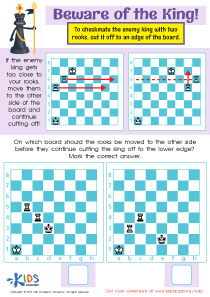
Chess strategy understanding Easy Chess Worksheets for Ages 5-7
3 filtered results
-
From - To
Discover the world of chess with our engaging and educational Easy Chess Worksheets designed specifically for children aged 5-7. These meticulously crafted resources help young learners develop essential chess strategies while fostering critical thinking and problem-solving skills. Each worksheet is filled with fun activities that explore basic concepts, like piece movement, controlling the board, and strategic thinking in a playful manner. Perfect for parents and educators looking to introduce chess to early learners, our worksheets promote cognitive development in an enjoyable way. Empower your child to think ahead and strategize with confidence. Start their chess journey today!
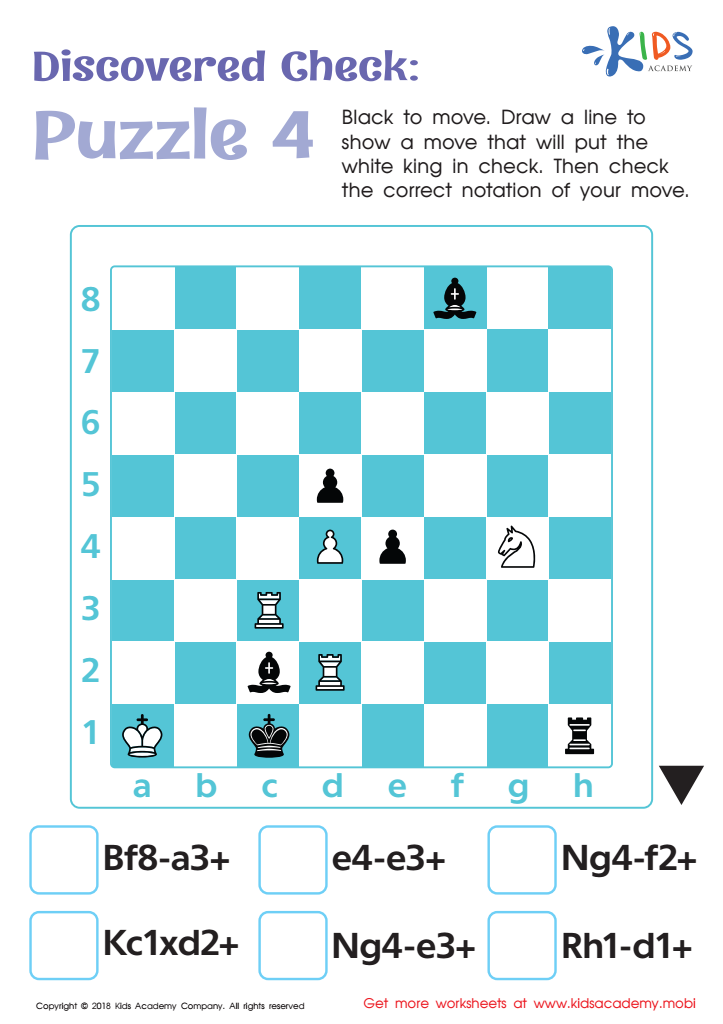
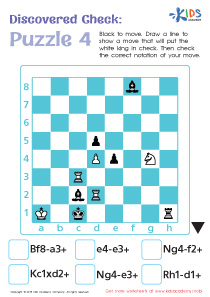
Discovered Check: Puzzle 4 Worksheet

Discovered Check: Puzzle 2 Worksheet
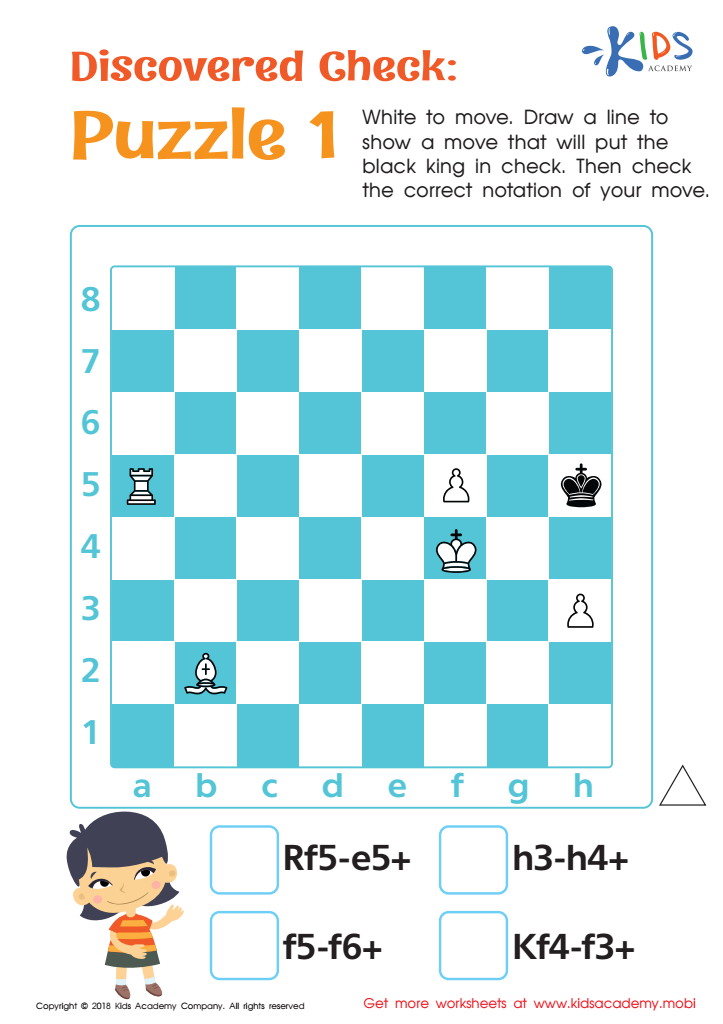
Discovered Check: Puzzle 1 Worksheet







Teaching chess to young children, particularly those aged 5-7, brings numerous cognitive and developmental benefits that both parents and teachers should value. At this age, children are in a critical stage of cognitive development, and engaging with chess can enhance their problem-solving skills, critical thinking, and concentration. Understanding the basic strategies of chess helps children learn to anticipate opponents' moves, fostering foresight and planning—skills that are transferable to other areas of life, including academics.
Moreover, chess introduces the concept of structured thinking, as players must evaluate multiple possibilities and consequences, which encourages patience and perseverance. These skills promote emotional intelligence by teaching children how to handle both victories and defeats gracefully, building resilience.
Additionally, chess is an avenue for social interaction, as it can be played with peers, family, or in schools, encouraging teamwork and sportsmanship. Decoding chess strategies in age-appropriate ways can transform the game from merely a pastime to a tool for holistic development. Ultimately, fostering an early understanding of chess strategies sets the groundwork for academic excellence, improves social skills, and instills a love for learning that extends far beyond the chessboard.