Easy Feelings and Emotions Worksheets for Ages 5-7
4 filtered results
-
From - To
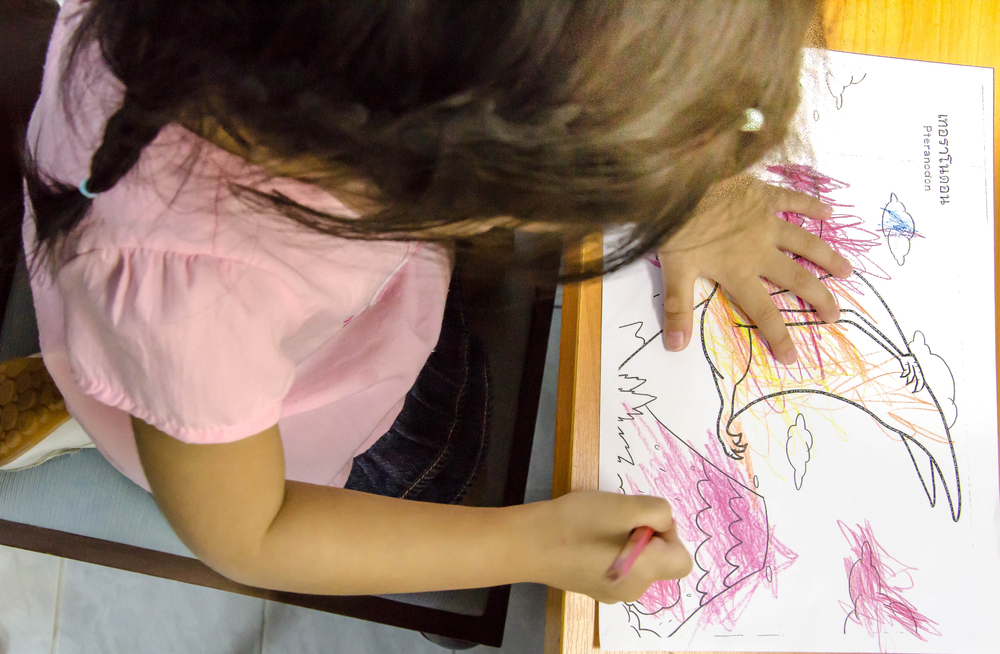
Discover a fun and engaging way to help children ages 5-7 explore their feelings and emotions with our Easy Feelings and Emotions Worksheets! Designed to promote emotional intelligence, these printable worksheets feature vibrant coloring pages that encourage self-expression and understanding of various emotions. From happy to sad, kids will learn to identify and articulate their feelings in a creative manner. Perfect for classroom activities or at-home learning, these worksheets empower young learners to recognize and manage their emotions, fostering a positive emotional foundation. Dive into a world of color and emotions today, making learning both enjoyable and meaningful!
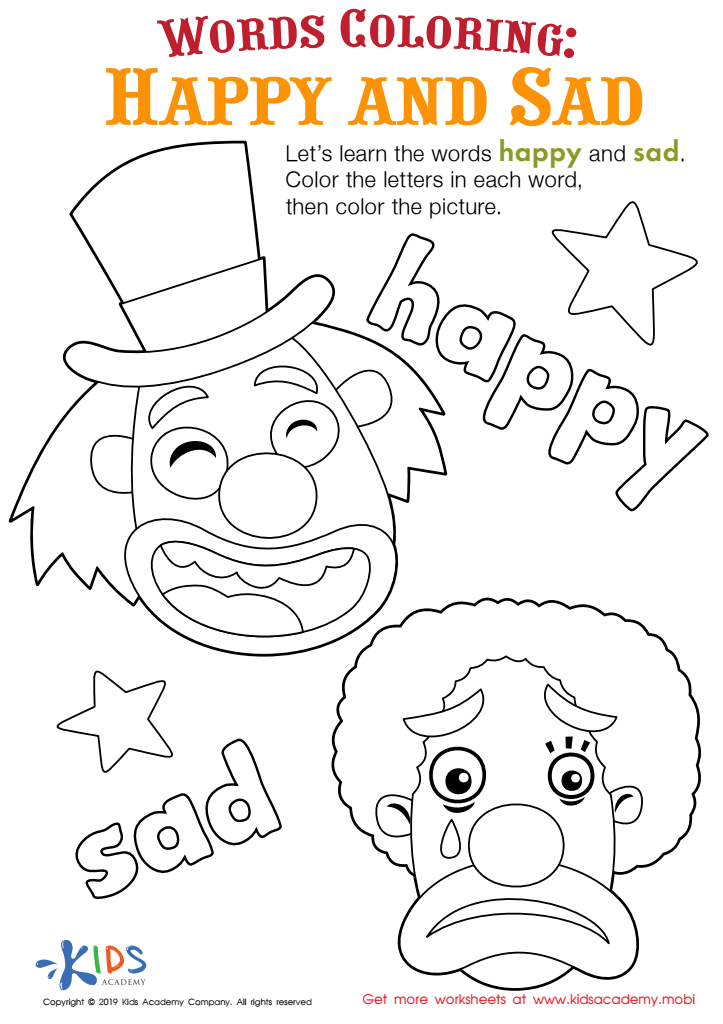
Happy and Sad Words Coloring Worksheet
 Assign to My Students
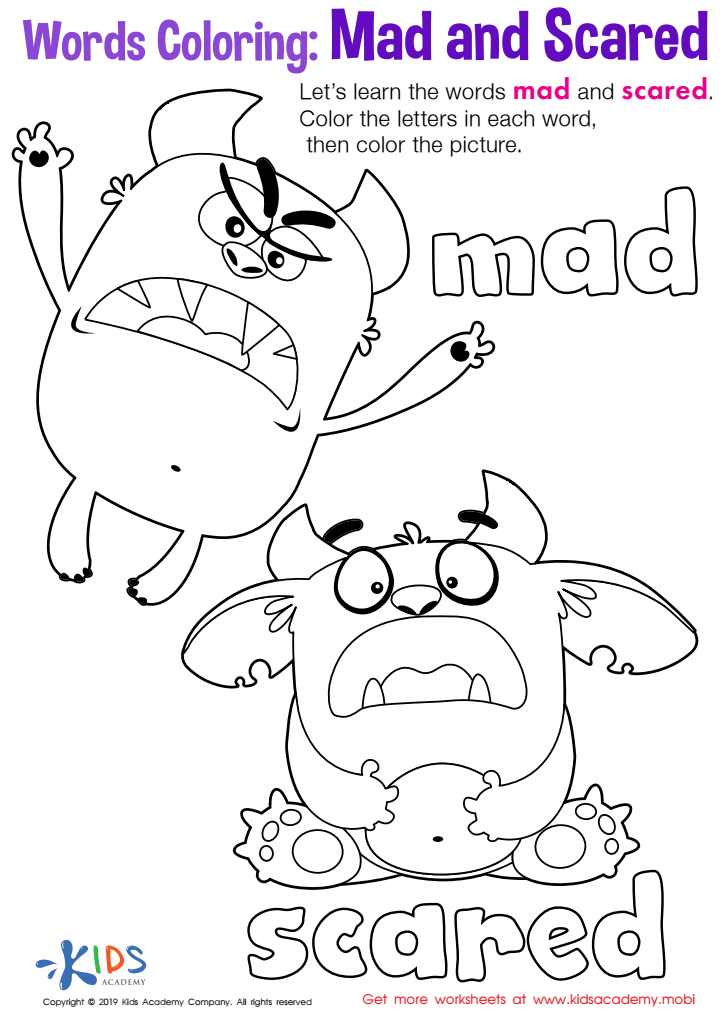
Mad and Scared Words Coloring Worksheet
Assign to My Students
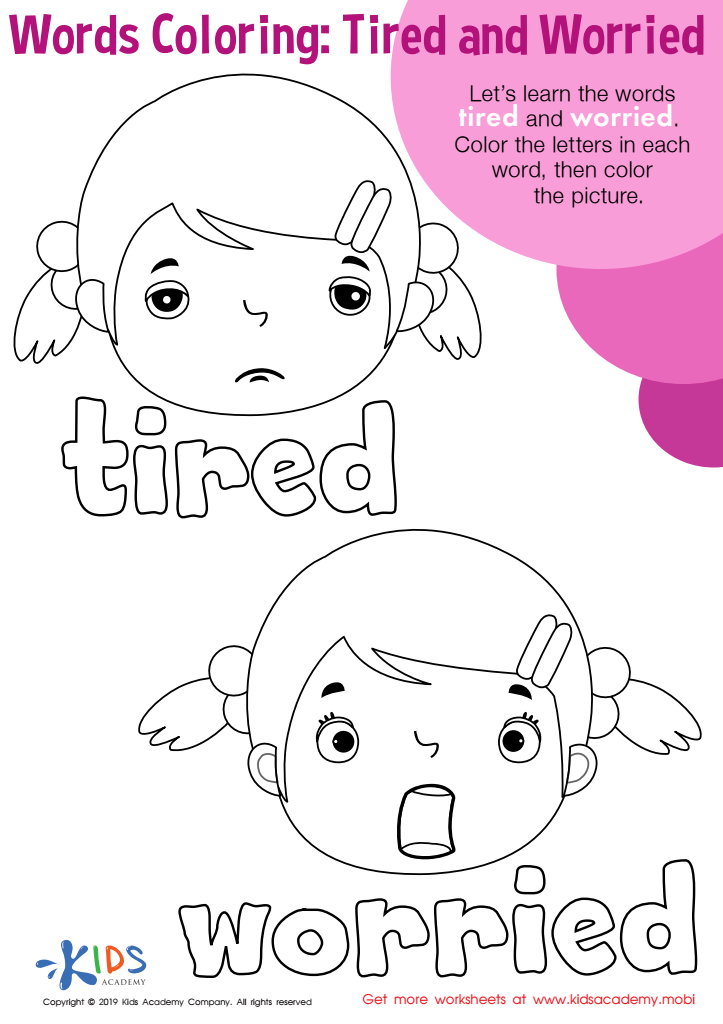
Tired and Worried Words Coloring Worksheet
Assign to My Students
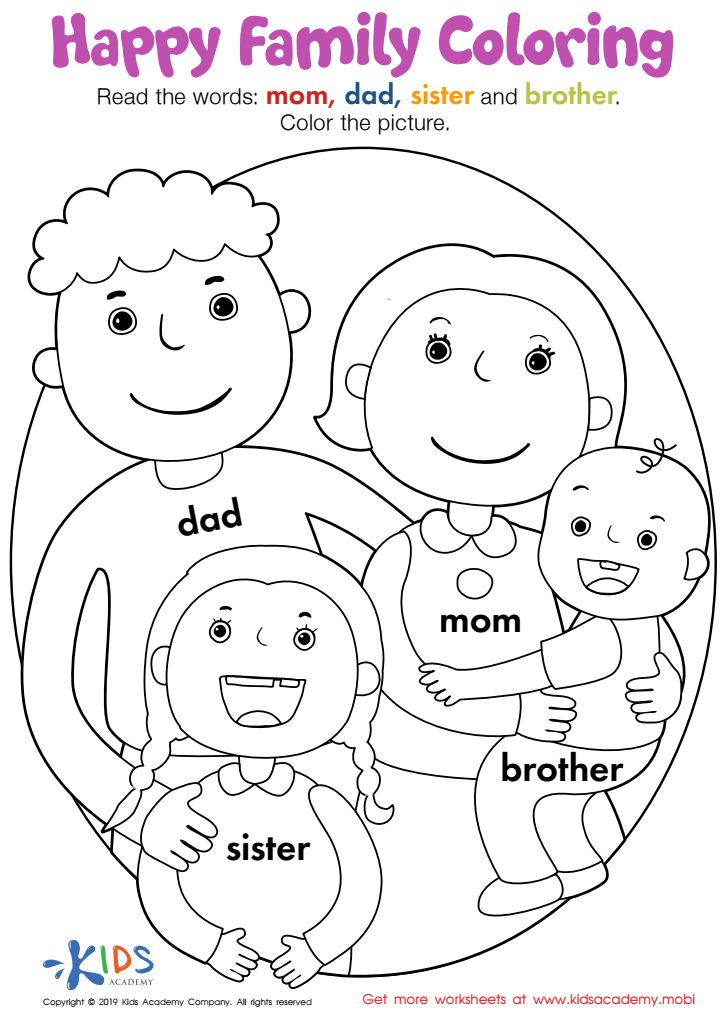
Happy Family Coloring Worksheet
Assign to My Students



Understanding the concept of feelings and emotions is crucial for children aged 5-7, as it lays the foundation for their emotional literacy, mental health, and social skills. Parents and teachers should care about programs like Easy Feelings and Emotions because they help children identify, express, and manage their emotions in a constructive manner. At this tender age, children are developing their self-awareness and learning to navigate interactions with peers and adults.
By introducing emotional vocabulary and concepts, caregivers can equip children with the tools to articulate their feelings, reducing the likelihood of misunderstandings or behavioral issues that stem from frustration or confusion. Additionally, fostering emotional intelligence at an early age can enhance empathy and compassion, cultivating better relationships among peers.
Moreover, early emotional education contributes to overall well-being and resilience. Children who can process and discuss emotions tend to experience lower levels of anxiety and stress, paving the way for healthier coping mechanisms as they grow. Engaging with programs that teach about feelings empowers children to take ownership of their emotional health, promoting lifelong skills that will serve them in education, relationships, and future challenges. In short, nurturing emotional understanding at this age is an investment in a child’s holistic development.