Chess strategy understanding Easy Worksheets for Ages 5-7
3 filtered results
-
From - To
Introduce young minds to the world of chess with our Chess Strategy Understanding Easy Worksheets for Ages 5-7. These engaging printables feature simple, fun, and interactive activities focused on basic chess strategies tailored to early learners. Our worksheets help develop critical thinking, strategic planning, and problem-solving skills through captivating exercises. Perfect for beginners, each worksheet is crafted to encourage a love for chess while bolstering fundamental learning skills. Start your child's chess journey today with our kid-friendly, thoughtfully designed resources, ensuring a smooth and enjoyable learning experience. Spark curiosity and strategic thinking with Kid's Academy's Chess Strategy Worksheets!
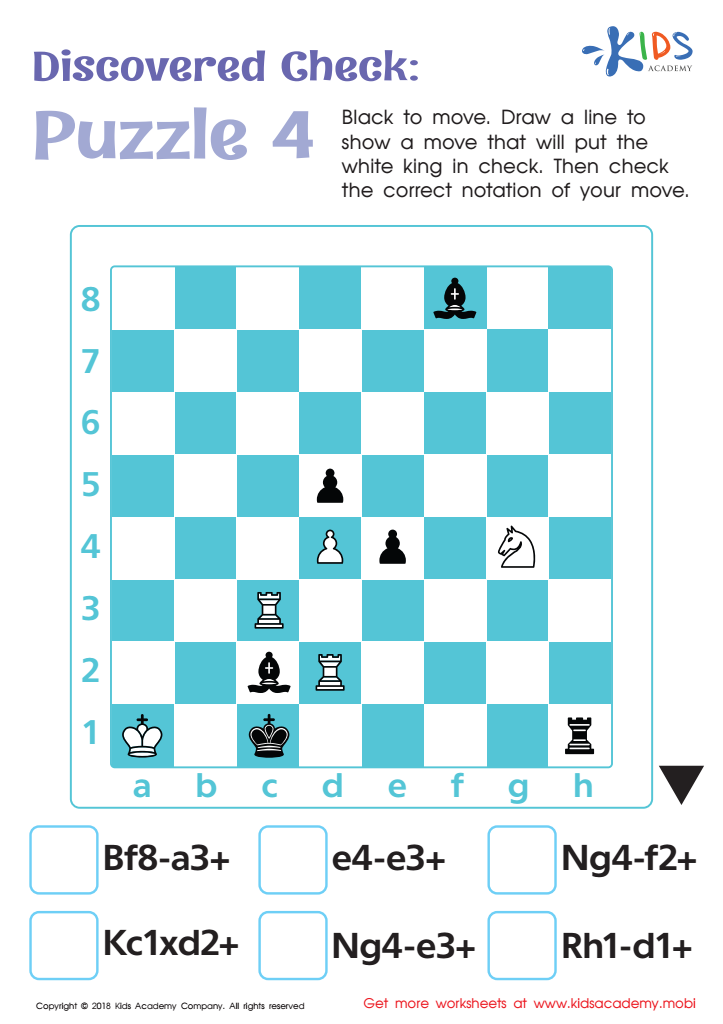
Discovered Check: Puzzle 4 Worksheet

Discovered Check: Puzzle 2 Worksheet
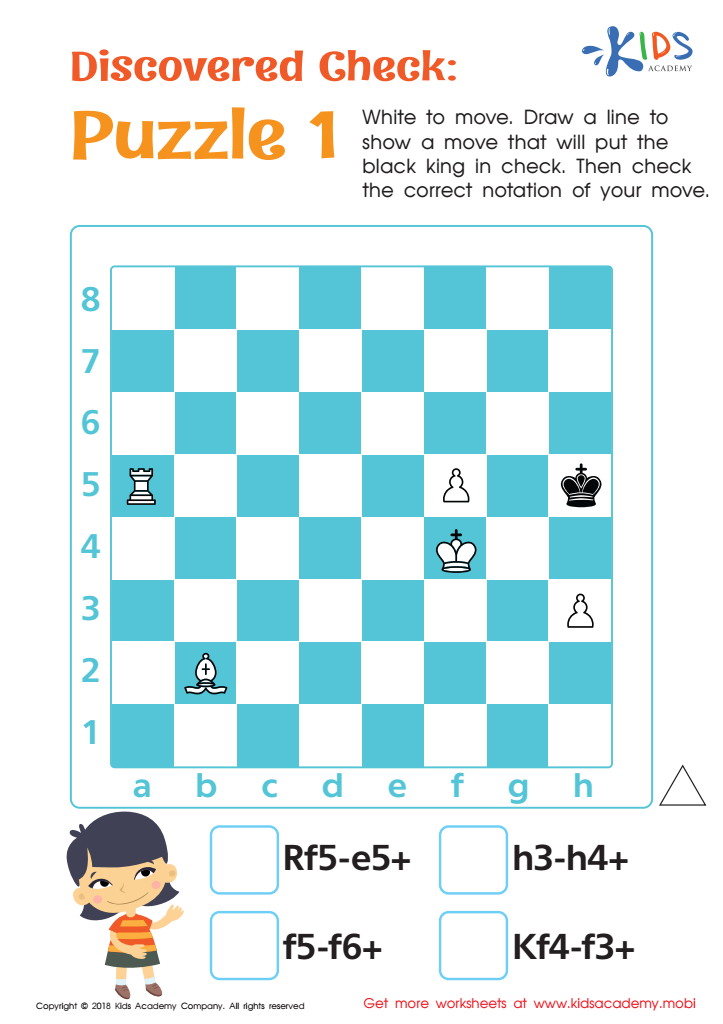
Discovered Check: Puzzle 1 Worksheet







Parents and teachers should care about introducing and building a basic understanding of chess strategies to children ages 5 to 7 because it provides multiple cognitive and developmental benefits. Chess is not just a game; it is a powerful educational tool that enhances critical thinking, problem-solving, and concentration. When young children engage in chess, they learn to plan ahead, anticipate the consequences of their actions, and think through their moves methodically. These are essential skills that translate well beyond the chessboard, aiding in academia and daily life.
Moreover, chess helps build patience and resilience. Young children are naturally impulsive, and playing chess requires them to slow down and think carefully about their decisions. It teaches them the value of perseverance, as learning and improving in chess is a gradual process that requires repeated practice and overcoming mistakes.
Socially, chess also offers children an opportunity to interact respectfully with peers and adults, learn sportsmanship, and develop communication skills.
By making chess fun and teaching its strategies in an accessible way, parents and teachers can foster a lifelong appreciation that supports children's mental and emotional growth during their formative years. Encouraging an early interest in chess opens doors to both short-term developmental advantages and long-term intellectual enrichment.








