Mathematical reasoning Easy Worksheets for Ages 5-7
3 filtered results
-
From - To
Discover our engaging "Mathematical Reasoning Easy Worksheets" designed specifically for children aged 5-7. These worksheets provide young learners with fun and interactive activities that promote critical thinking, problem-solving, and foundational math skills. Tailored to capture the interest of early learners, our materials encompass a variety of topics, such as number recognition, simple addition and subtraction, patterns, and shapes. Each worksheet is crafted to make mathematical reasoning enjoyable and accessible, helping kids build confidence in their abilities while mastering essential concepts. Ideal for home or school use, these worksheets set the stage for a lifelong love of learning in math!
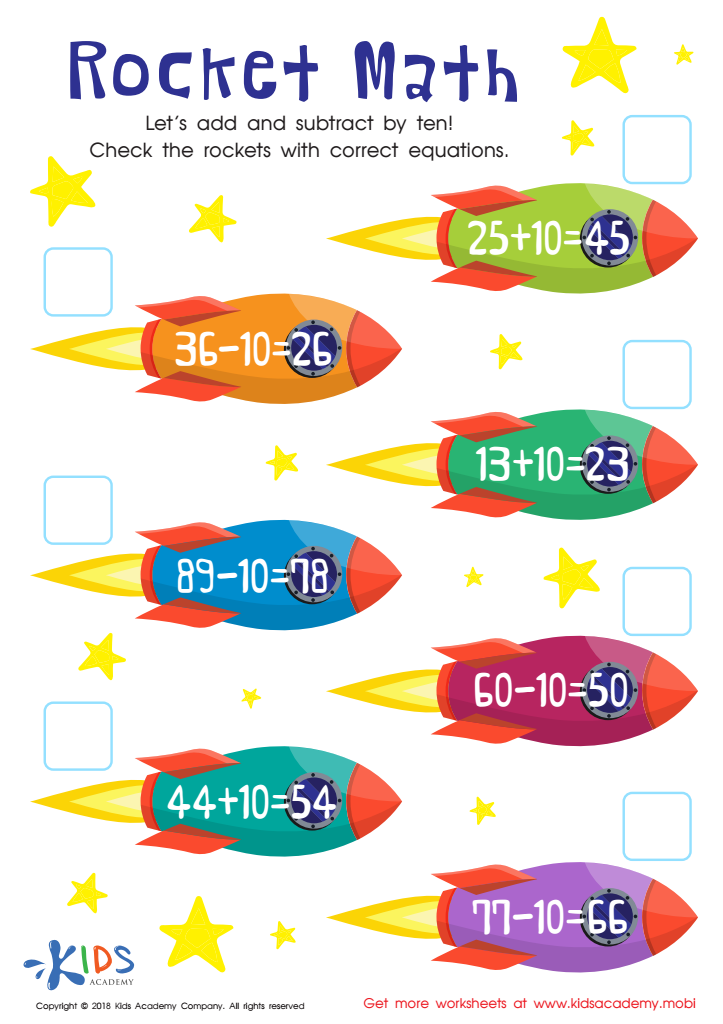
Rocket Math Worksheet
 Assign to My Students
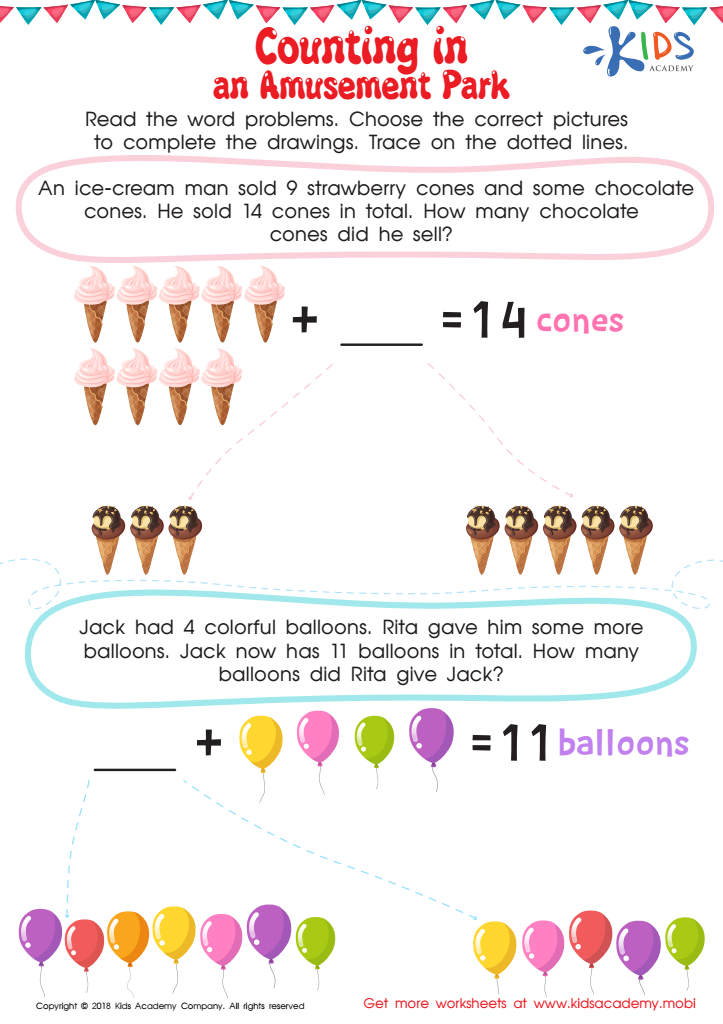
Counting in an Amusement Park Worksheet
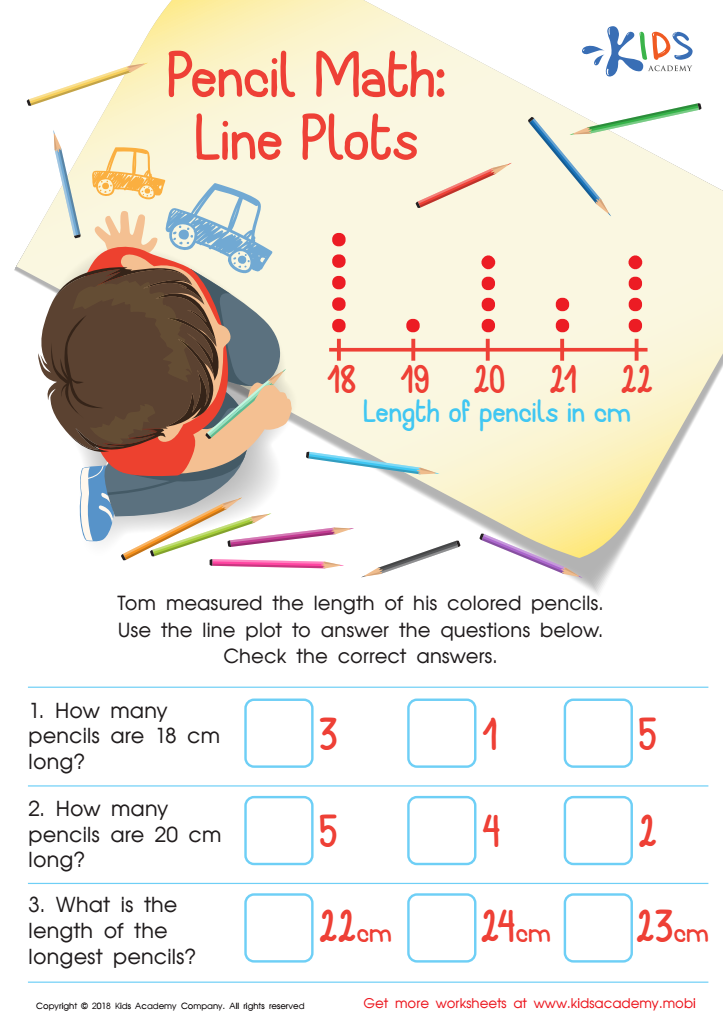
Pencil Math: Line Plots Worksheet







Mathematical reasoning is essential for young learners aged 5-7 because it lays the foundation for critical thinking and problem-solving skills. At this stage, children are developing their ability to understand concepts and relationships between numbers, which are key components of effective reasoning. When parents and teachers foster mathematical reasoning, they encourage children to explore, question, and discover patterns, enhancing their engagement and confidence in math.
Moreover, strong reasoning abilities help children make sense of mathematical concepts in real-world scenarios, such as sharing snacks or measuring ingredients for a recipe. This practical application reinforces their learning and demonstrates the relevance of math in everyday life.
Additionally, nurturing mathematical reasoning at an early age builds a growth mindset. Children learn that making mistakes is part of the learning process and that perseverance can lead to understanding. Supporting math reasoning also promotes social skills through discussions and collaborative problem-solving.
Ultimately, when parents and teachers prioritize mathematical reasoning, they empower children to become independent thinkers and lifelong learners, setting them up for success in more advanced mathematics and other subjects in the future. By investing in this crucial skill, adults can help create a generation that views math not just as a subject, but as a valuable tool for interpreting the world around them.








