Comparing numbers Easy Measurement Worksheets for Ages 5-7
3 filtered results
-
From - To
Introduce your child to the basics of number comparison with our fun and engaging "Comparing Numbers Easy Measurement Worksheets for Ages 5-7." These thoughtfully designed worksheets help young learners grasp essential math skills such as comparing values using visually appealing exercises. Featuring eye-catching illustrations and age-appropriate content, our printable materials transform learning into an enjoyable experience. Perfect for use in the classroom or at home, our worksheets boost confidence and foster a love for math. Watch your children's understanding and enthusiasm for numbers soar with Kids Academy’s expertly crafted resources tailored specifically for early learners.
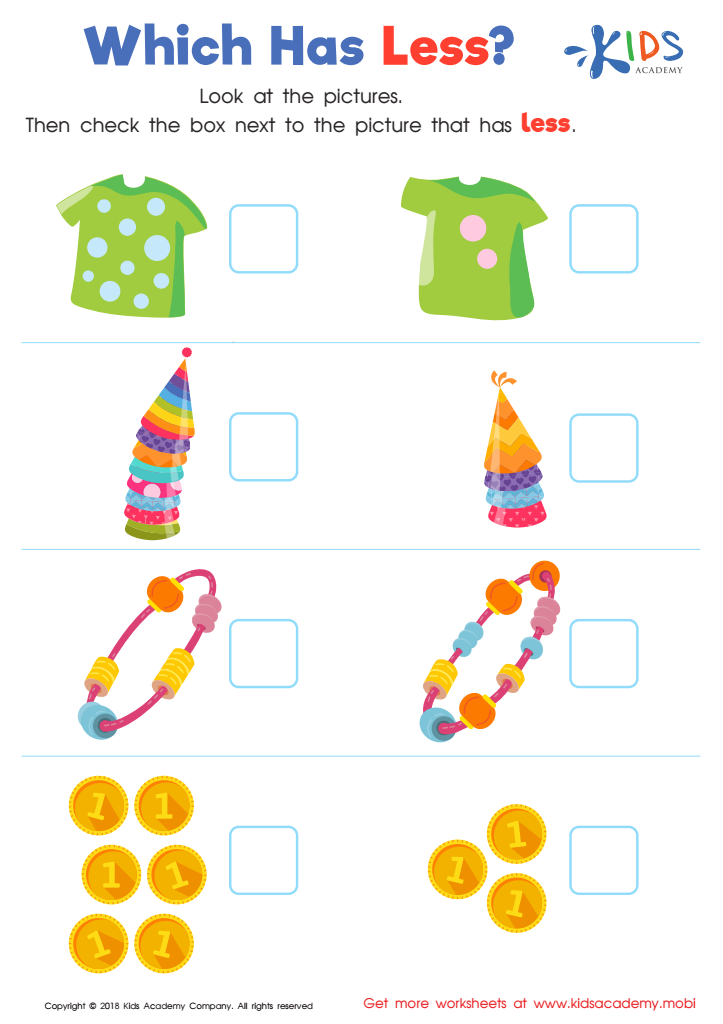
Which Has Less? Worksheet
 Assign to My Students
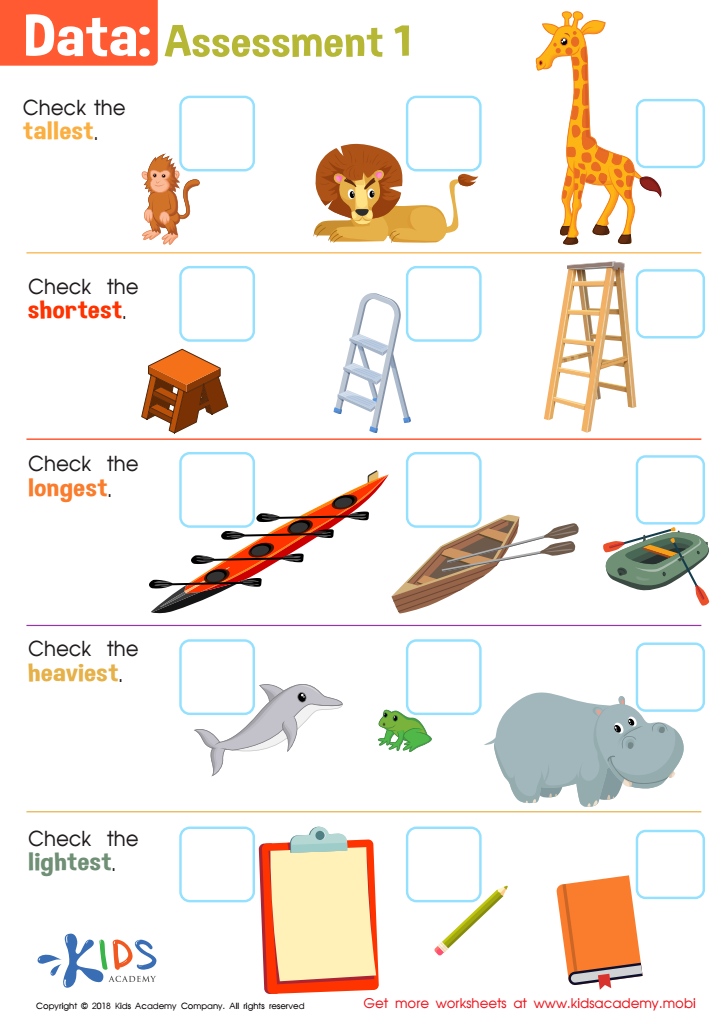
Data: Assessment 1 Worksheet
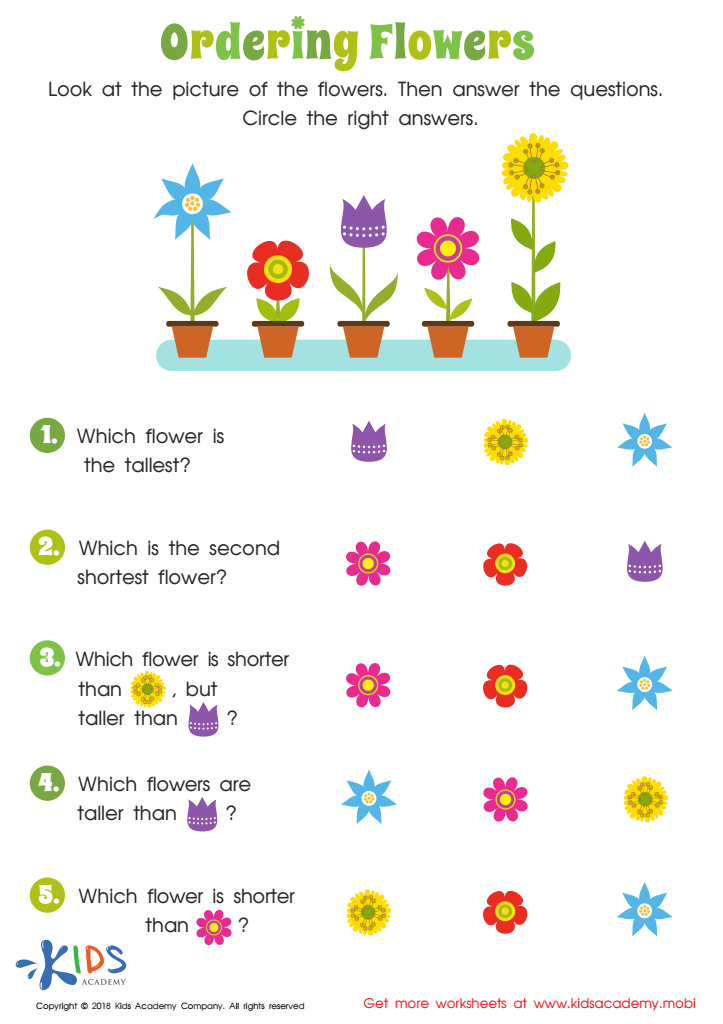
Ordering Flowers Worksheet








Parents and teachers should prioritize activities focused on comparing numbers and easy measurement for children aged 5-7 because these skills form the foundation of critical mathematical understanding and cognitive development. At this formative stage, children are encountering math concepts that are not just about counting, but understanding relationships between quantities, such as which number is greater or smaller and by how much. These comparisons help develop logical thinking and reasoning which are indispensable skills in everyday problem solving.
Moreover, measuring items is among the first ways children interact with their physical world in a quantifiable manner, promoting their spatial awareness and their ability to judge dimensions like length, height, and volume. Measurement activities often encourage a hands-on approach, stimulating interest and engagement through practical experiences.
Introducing these concepts in simple, enjoyable practices nurtures a child’s confidence and positive disposition towards math. It sets a solid groundwork for more advanced topics such as addition, subtraction, and more complicated measurements they will encounter later in their education. Through early mastery of these fundamental skills, children are better prepared for academic challenges ahead, fostering their academic success and sparking a lifelong appreciation for learning and mathematics.








