Hand-eye Coordination Easy Numbers 11–20 Worksheets for Ages 5-7
3 filtered results
Difficulty Level
Grade
Age
-
From - To
Subject
Activity
Standards
Enhance your child’s learning experience with our "Hand-eye Coordination Easy Numbers 11–20 Worksheets" designed for ages 5-7! These engaging worksheets aim to strengthen fine motor skills while reinforcing number recognition from 11 to 20. Through fun activities like tracing, matching, and counting, children will improve their hand-eye coordination and develop essential math skills. Perfect for both classroom and at-home learning, these worksheets blend education and play, ensuring an enjoyable and effective learning process. Download now to give your child a head start on their math journey while boosting their dexterity and confidence! Ideal for young learners eager to explore numbers!
Favorites
With answer key
Interactive
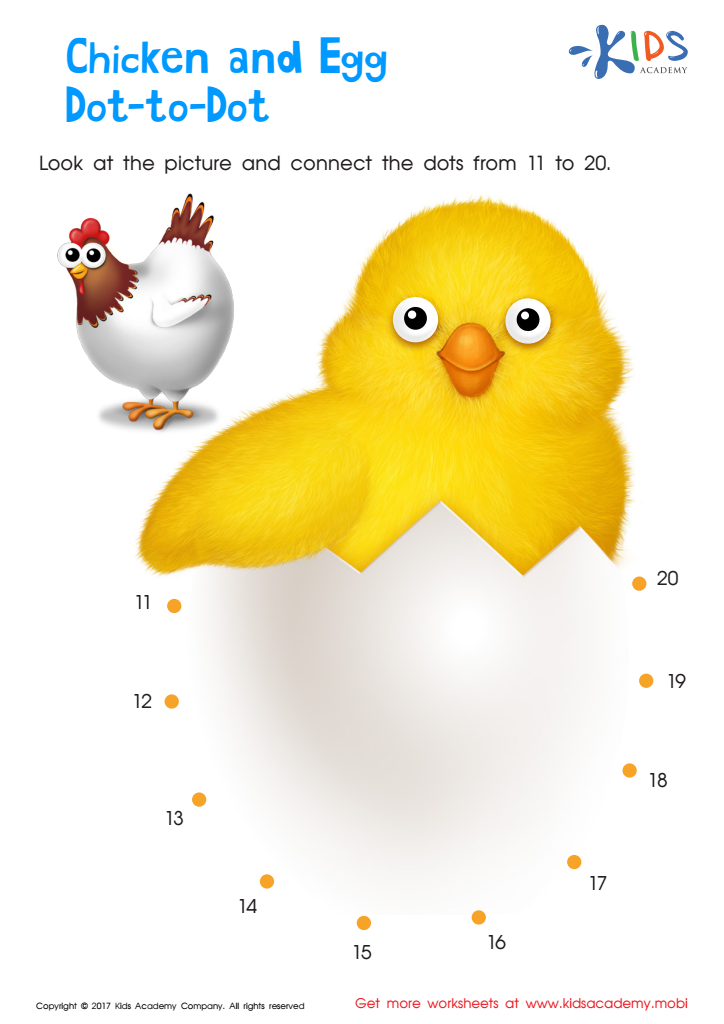
Ordering 11–20: Chicken & Egg Dot–to–dot Worksheet
Help your child hatch the chick and practice their counting skills with this dot to dot worksheet – the chicken came first! Connect the dots 11-20 to have fun and learn at the same time. Experience meaningful practice and gain confidence while drawing great pictures.
 Assign to My Students
Ordering 11–20: Chicken & Egg Dot–to–dot Worksheet
Worksheet
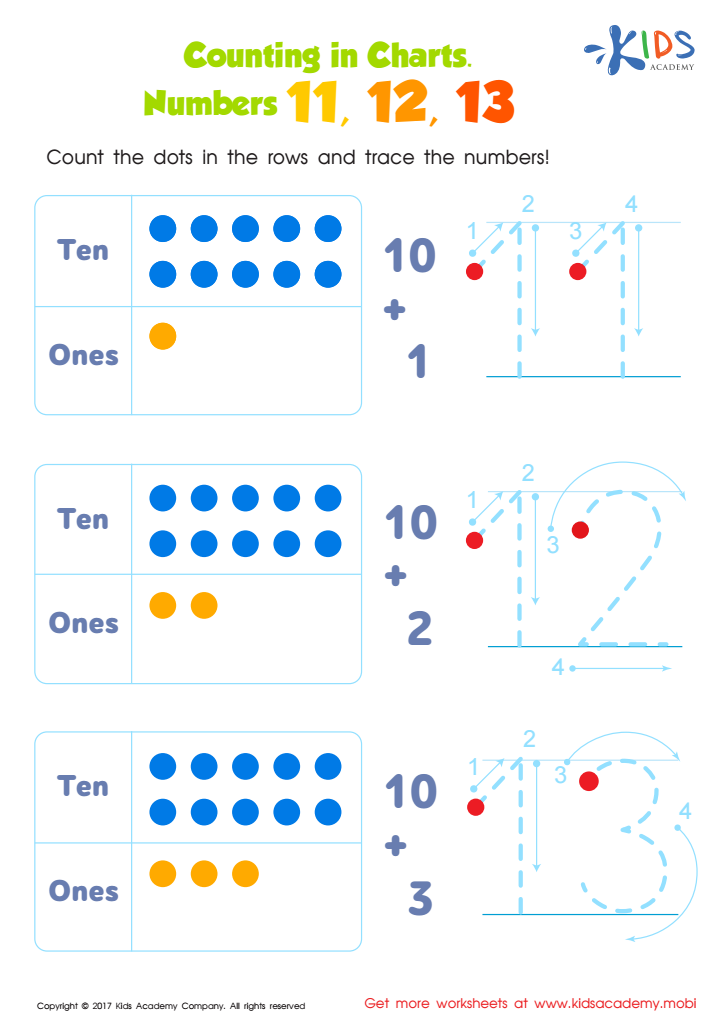
Number Tracing Worksheet For Kindergarten
Help your child develop addition skills and improve number recognition with this easy-to-use worksheet. Have them count the dots and add to solve each problem. Then, trace over the number to complete each row! It's a fun and simple way for kindergarteners to practice their math skills.
Number Tracing Worksheet For Kindergarten
Worksheet
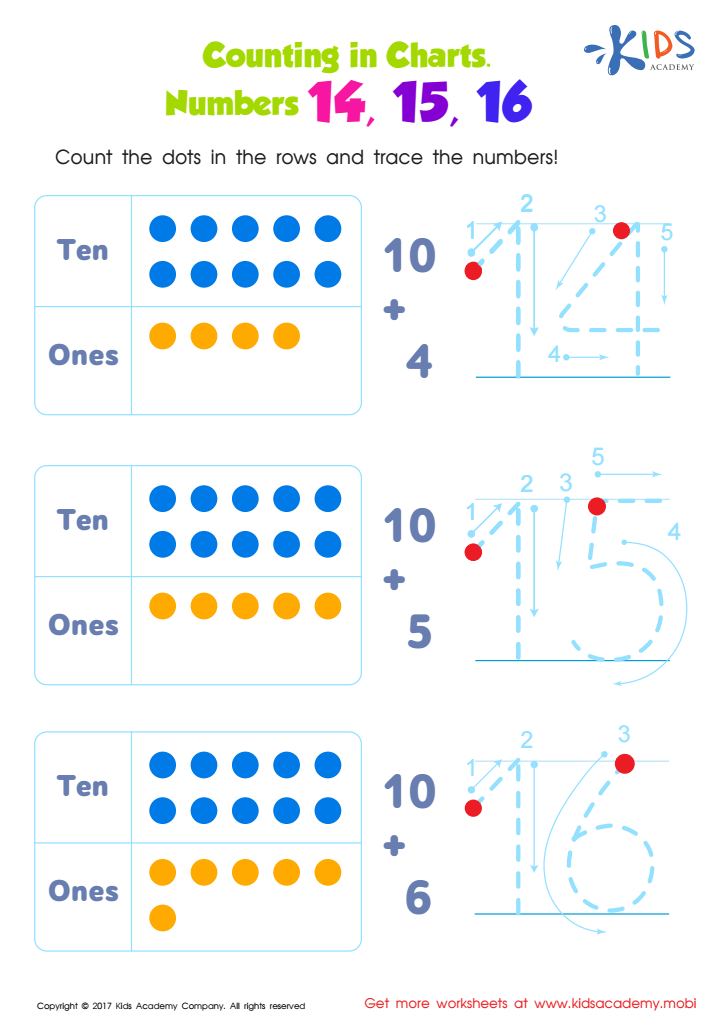
Number Tracing Worksheet
Kids learn math with counters and place value! This handy worksheet helps form a foundation for math skills and number sense! Have your child count the dots and trace the answers to the addition problems. It's a great way to support their math skills!
Number Tracing Worksheet
Worksheet
Join Kids Academy for Free
Who is primarily going to use this learning content?



Hand-eye coordination is a crucial developmental skill for children aged 5-7, especially when learning numbers 11-20. It significantly affects their ability to engage in numerous daily activities, such as writing, drawing, and even sports, which foster overall physical development and social skills.
Teaching easy numbers 11-20 through activities that enhance hand-eye coordination helps students better grasp numeracy concepts. Engaging activities, such as counting and sorting objects, using manipulatives, or playing interactive number games, reinforce their numerical understanding while their motor skills improve. This hands-on approach prevents learning from becoming overly abstract, providing tangible experiences that promote retention.
Furthermore, fostering these skills encourages children to develop patience and concentration, vital traits as they progress in their education. When parents and teachers actively focus on exercises that integrate hand-eye coordination with learning numbers, they support holistic growth, preparing children for future academic challenges.
By cultivating hand-eye coordination during these formative years, adults set the foundation for improved academic performance and enhance children’s confidence, which is essential for lifelong learning and success. In short, nurturing this skill contributes significantly to a child’s overall cognitive and physical abilities.