Letter recognition Easy Phonics Worksheets for Ages 5-8
4 filtered results
Difficulty Level
Grade
Age
-
From - To
Subject
Activity
Standards
Discover our engaging Letter Recognition Easy Phonics Worksheets designed specifically for children ages 5-8! These interactive resources help young learners master the foundation of literacy through fun activities that reinforce letter recognition skills. Our worksheets incorporate vibrant illustrations and hands-on exercises that captivate students’ attention while enhancing their understanding of phonetics. Whether at home or in the classroom, these worksheets provide a perfect blend of education and entertainment, making learning to read an enjoyable experience. Equip your child with essential literacy skills early on and set them on the path to reading success! Explore our collection today!
Favorites
With answer key
Interactive
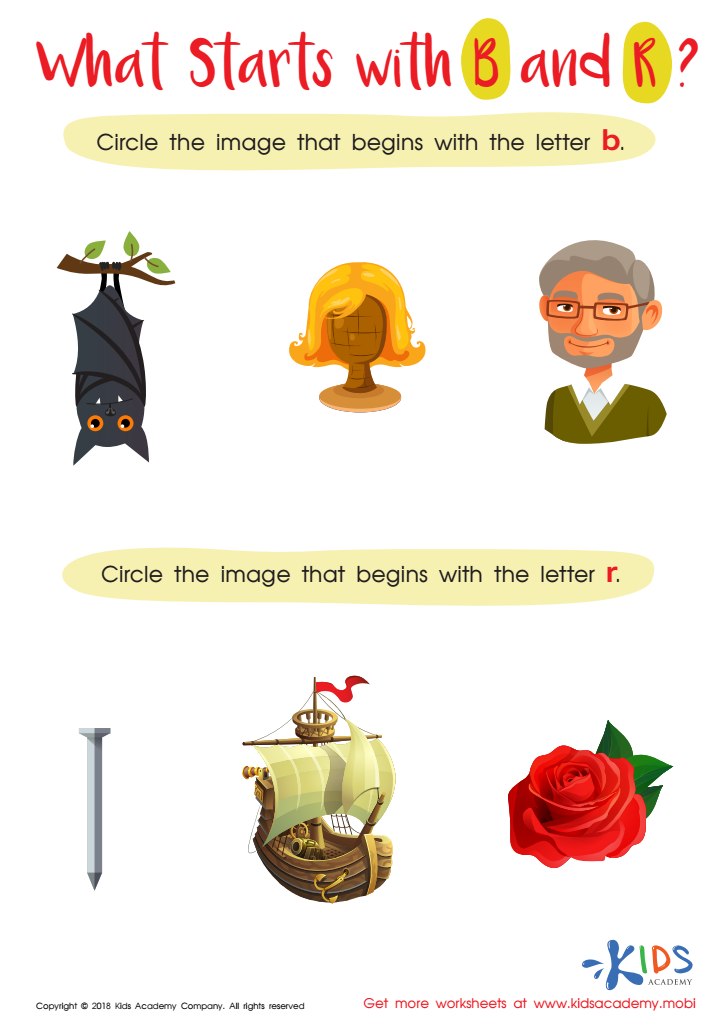
What Starts with B and R? Worksheet
Download this worksheet to help young readers practice visual and motor skills! They'll enjoy matching pictures with "B" and "R" letters while tracing the images. Bright and colorful, this engaging activity will help kids differentiate between words and have fun doing it.
 Assign to My Students
What Starts with B and R? Worksheet
Worksheet
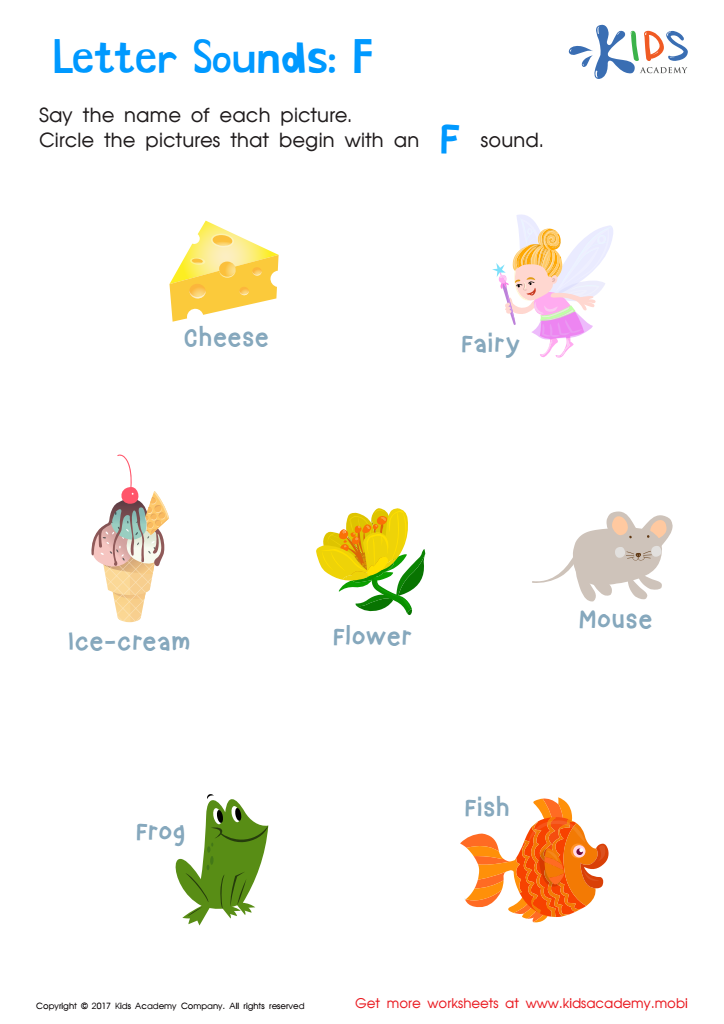
Letter F Sounds Worksheet
Kids will practice identifying 'f' words, tracing, and coloring the letter F for a great way to learn phonics.
Help your child discover the wonders of the letter 'F' with this fun worksheet! Kids will practice identifying 'F' words, tracing and coloring the letter, and building early reading skills. Stimulate their learning and let them connect letter sounds to words they know. An enjoyable way to practice phonics!
Letter F Sounds Worksheet
Worksheet
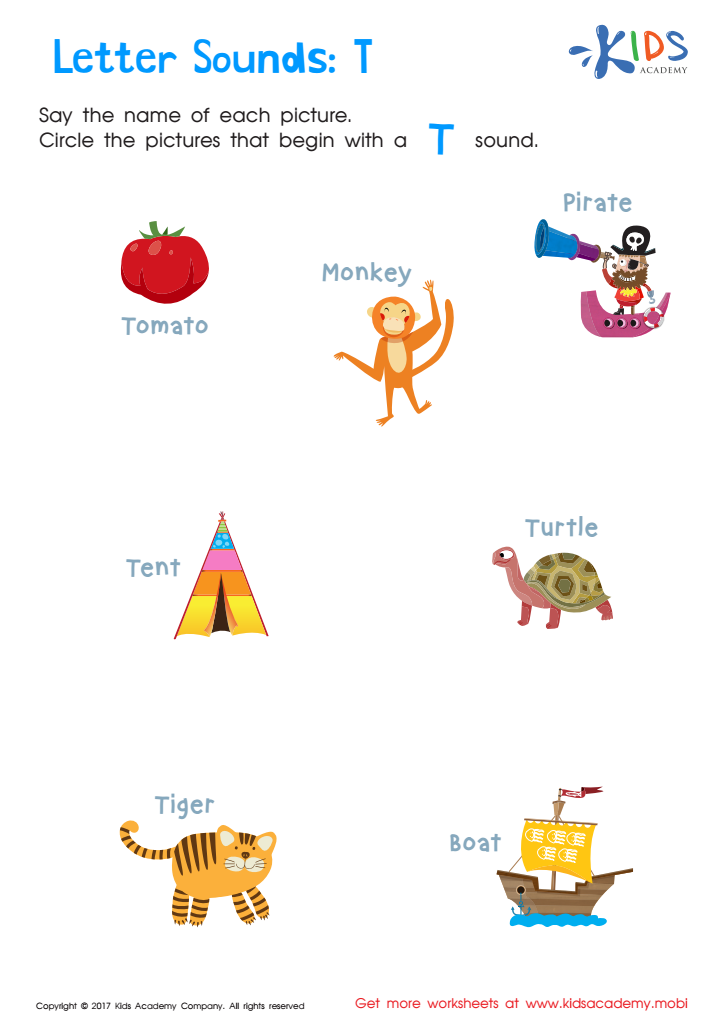
Letter T Sounds Worksheet
This worksheet is a fun way to help kids learn the t sound. It has familiar pictures and an easy-to-follow format, so kids can quickly recognize and learn the letter t.
Letter T Sounds Worksheet
Worksheet
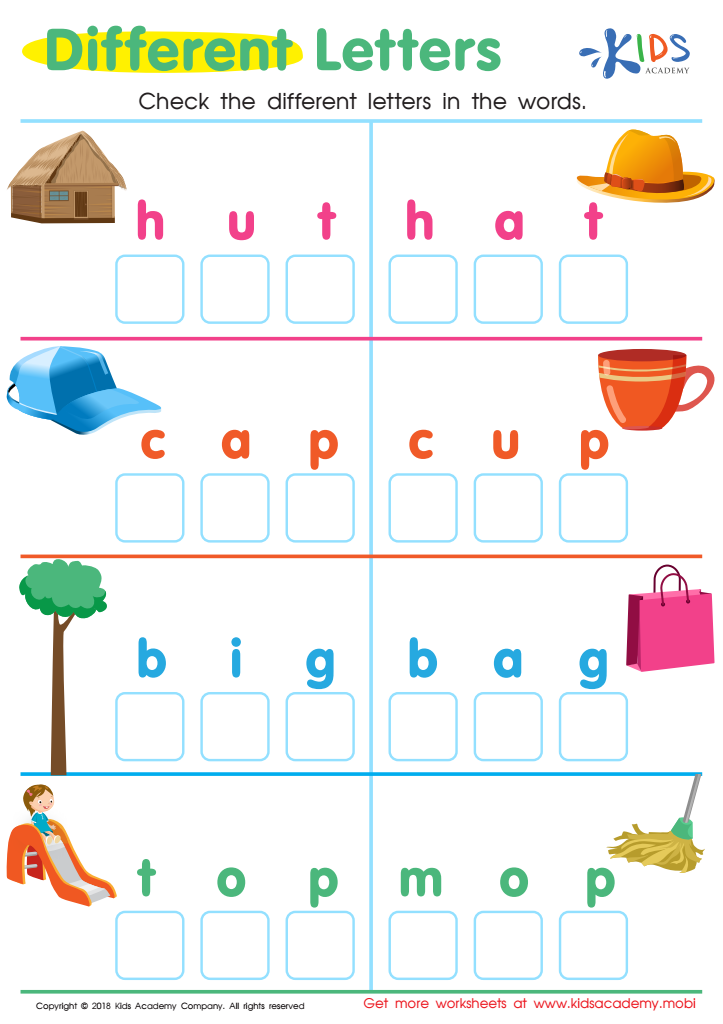
Different Letters Reading Worksheet
Download our phonics worksheet to help kids understand letter sounds. Have them sound out letters and join them to form words. Colorful pictures assist in recognition, making it perfect for kindergarteners. A great intro to phonics!
Different Letters Reading Worksheet
Worksheet
Join Kids Academy for Free
Who is primarily going to use this learning content?








Letter recognition is a fundamental skill for children aged 5-8, serving as the cornerstone for literacy development. Parents and teachers should care deeply about promoting Easy Phonics during this crucial stage for several reasons.
Firstly, recognizing letters is essential for reading and writing. Children who master this skill are more likely to succeed in understanding words and sentences, paving the way for overall academic achievement. Phonics helps them connect sounds with letters, easing the transition from spoken language to written text.
Secondly, strong letter recognition builds confidence. When children can easily identify letters, they feel empowered to participate in reading activities, contributing to a positive learning environment. This confidence fosters a love for reading, enhancing cognitive development and creativity.
Moreover, early phonics instruction strengthens language skills, improving vocabulary, spelling, and comprehension. This enriched language capability positively impacts communication skills.
Finally, children benefit from collaborative learning experiences between home and school. Engaged parents support their children's literacy endeavors through fun activities like reading together or playing letter-based games.
In summary, letter recognition and Easy Phonics are crucial for academic success, confidence, and language development, making it essential for parents and teachers to prioritize these skills in early education.