Problem-Solving Skills Easy Addition & Subtraction Worksheets for Ages 5-8 - Page 2
29 filtered results
-
From - To
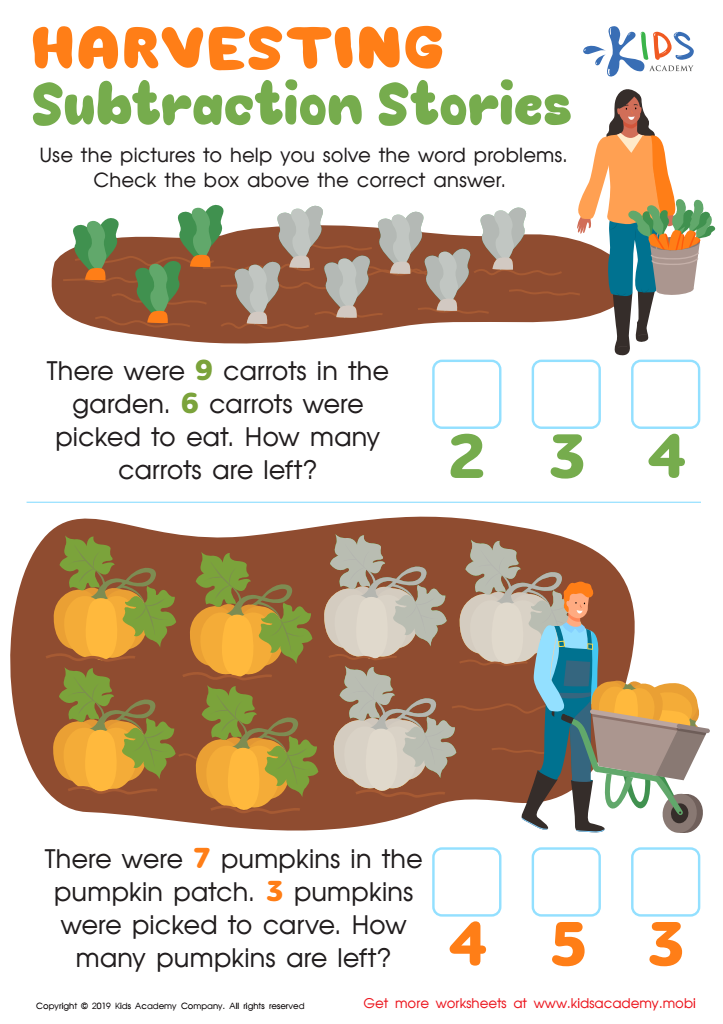
Harvesting Subtraction Stories Worksheet
 Assign to My Students
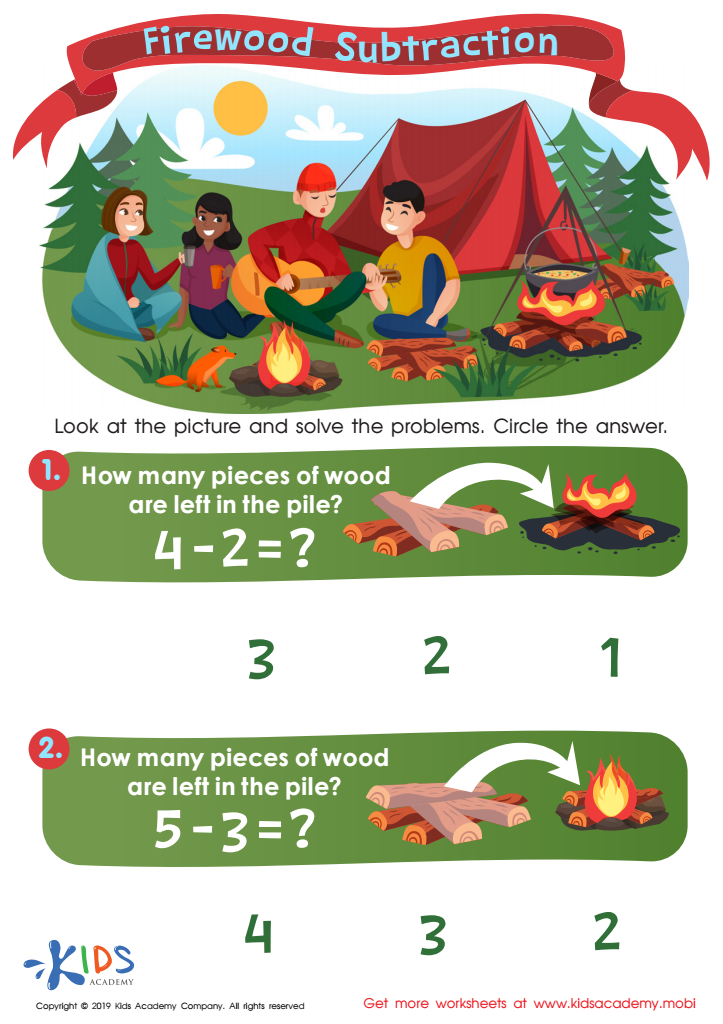
Firewood Subtraction Worksheet
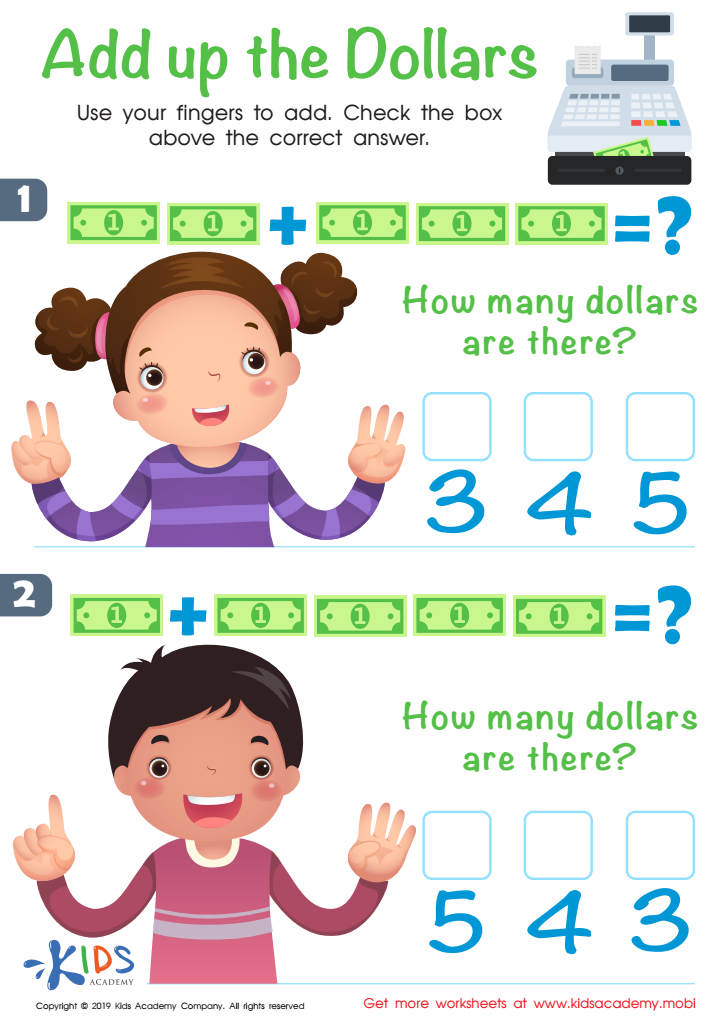
Add up the Dollars Worksheet
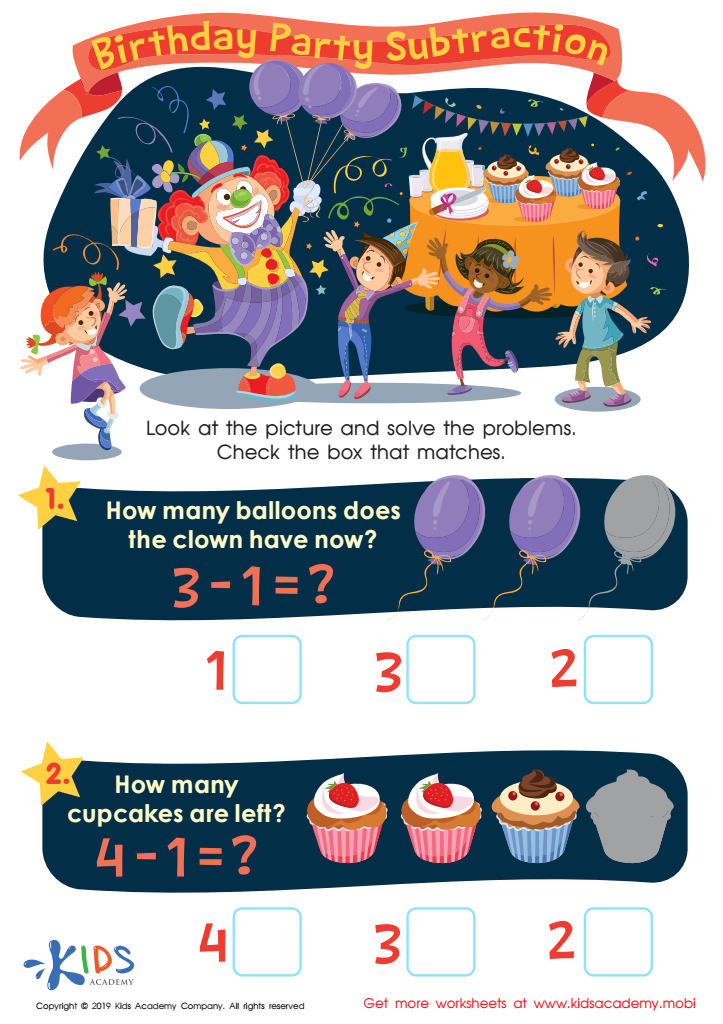
Birthday Party Subtraction Worksheet
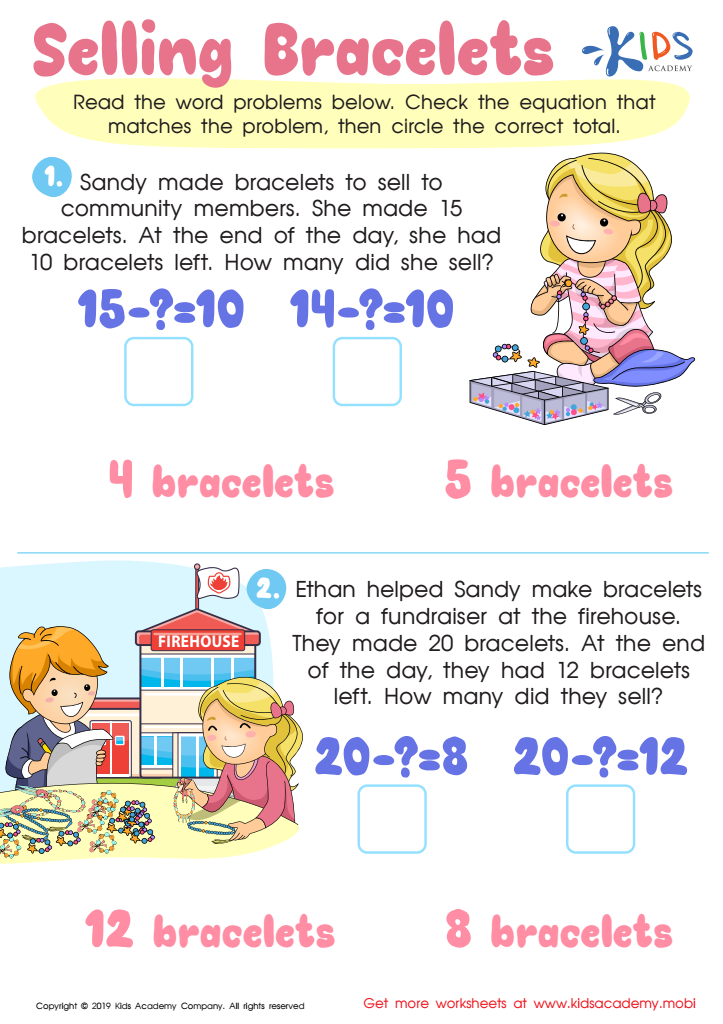
Selling the Bracelets Worksheet








Problem-solving skills, particularly in easy addition and subtraction, are foundational for children ages 5-8. These skills are essential not just for academic success in mathematics but for developing critical thinking and reasoning abilities that are vital in everyday life. When children learn to solve problems involving numbers, they also learn to analyze situations, think logically, and make decisions. These skills foster confidence and independence, allowing children to tackle challenges both in and out of the classroom.
Furthermore, strong early math skills set the stage for more complex concepts in later grades, helping to avoid learning gaps that can occur without a solid foundation. Engaging parents in this process also reinforces learning. When parents take an active role in their child's education by practicing easy addition and subtraction at home, it strengthens the parent-child bond and makes learning enjoyable.
Moreover, developing problem-solving skills at a young age enhances attention and persistence. Children learn to approach tasks systematically, making connections between ideas and applying strategies to find solutions. By prioritizing problem-solving skills in mathematics, parents and teachers prepare children not only for academic excellence but also for real-world scenarios, nurturing lifelong learners equipped to face future challenges.








