Understanding fractions Easy Numbers Worksheets for Ages 5-8
3 filtered results
-
From - To
"Understanding Fractions Easy Numbers Worksheets for Ages 5-8" are designed to introduce young learners to the world of fractions in a fun and engaging way. These colorful and interactive worksheets transform complex concepts into simple, easy-to-follow activities that excite kids about learning. Catering specifically to children aged 5-8, these resources cover the basics of fractions using visually appealing graphics and relatable examples. By breaking down learning into manageable steps, our worksheets help build a solid foundation in math, ensuring children develop confidence and proficiency with fractions from an early age. Perfect for both classroom and home use!
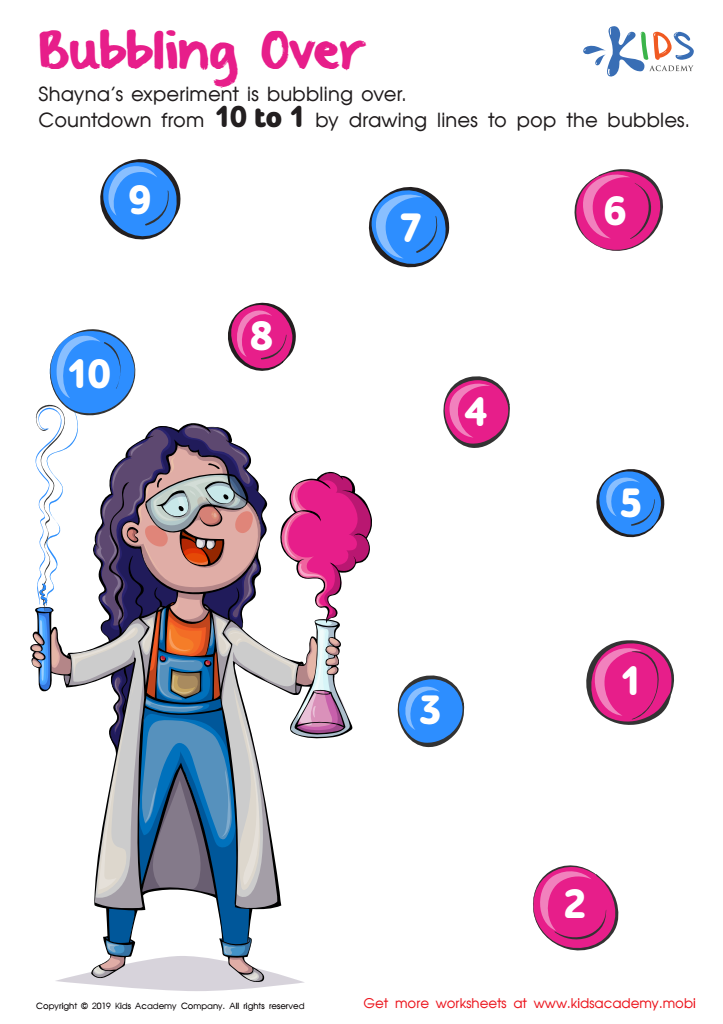
Bubbling Over Worksheet
 Assign to My Students
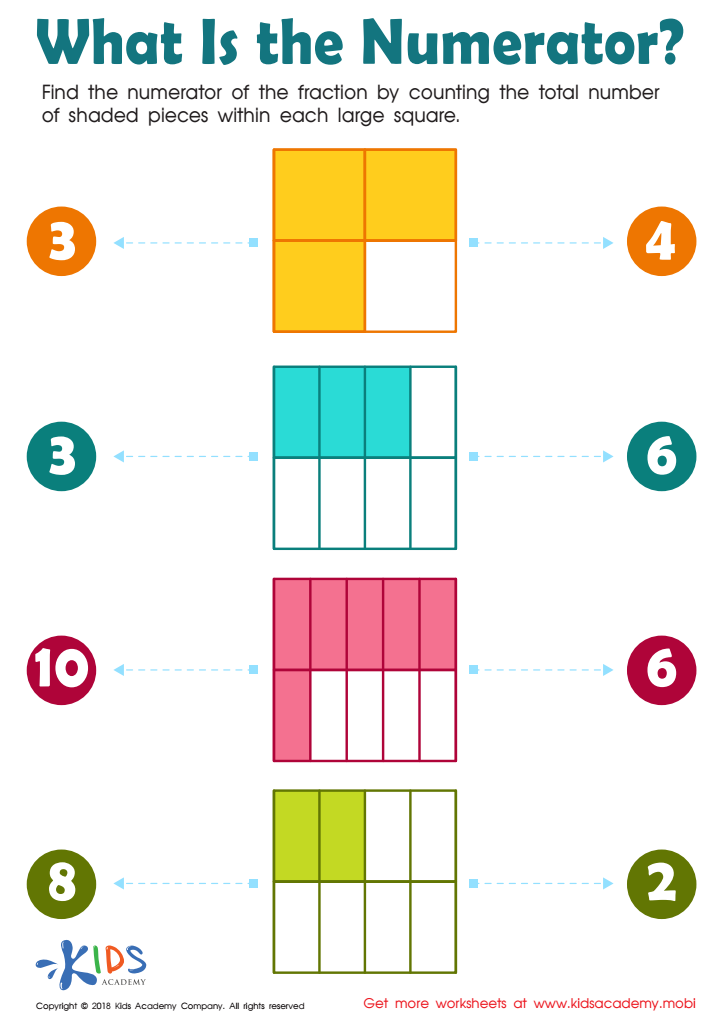
What Is the Numerator? Worksheet
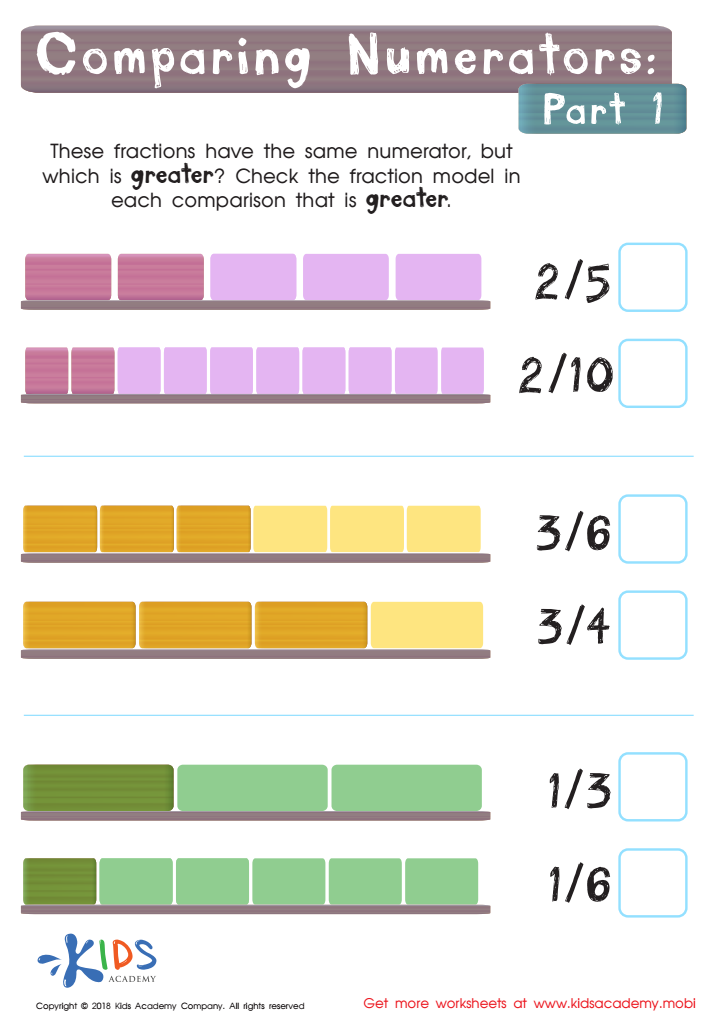
Comparing Numerators Part 1 Worksheet








Understanding fractions is vital for young learners aged 5-8 because it lays the foundation for more complex mathematical concepts. At this age, children are at a developmental stage where they grasp basic numeracy and can start appreciating the value of dividing wholes into parts. Early familiarity with fractions can demystify later, more advanced topics like decimals, percentages, and ratios.
One key advantage is enhanced problem-solving skills. By grasping fractions early on, children learn to approach problems from different angles, fostering analytical thinking. For instance, understanding that 1/2 and 2/4 represent the same amount helps them see the equivalencies and relationships essential in math.
Moreover, mastering fractions helps in real-life situations. From sharing food equally to measuring ingredients in recipes, knowing how to divide and interpret parts of a whole is practical knowledge that serves them well outside the classroom.
Lastly, starting with easy numbers in early grades instills confidence. If children can comfortably manipulate simple fractions like 1/2, 1/3, or 1/4, they are less likely to be intimidated by more complex math tasks later. Hence, ensuring young children understand fractions helps develop a solid mathematical foundation, critical thinking, and practical problem-solving skills.








