
Visual discrimination skills Easy Math Worksheets for Ages 5-8
3 filtered results
Difficulty Level
Grade
Age
-
From - To
Subject
Activity
Standards
Boost your child's math success with our engaging Visual Discrimination Skills Easy Math Worksheets, specially designed for ages 5-8. These expertly crafted activities help young learners enhance critical visual discrimination abilities, crucial for identifying differences and patterns in math. With fun, colorful images and a variety of exercises, kids will stay motivated while refining their skills in counting, comparing, and sequencing. Perfect for classroom or home use, these worksheets support foundational math learning through interactive play. Empower your child to excel in math with our comprehensive collection and watch their confidence soar!
Favorites
With answer key
Interactive
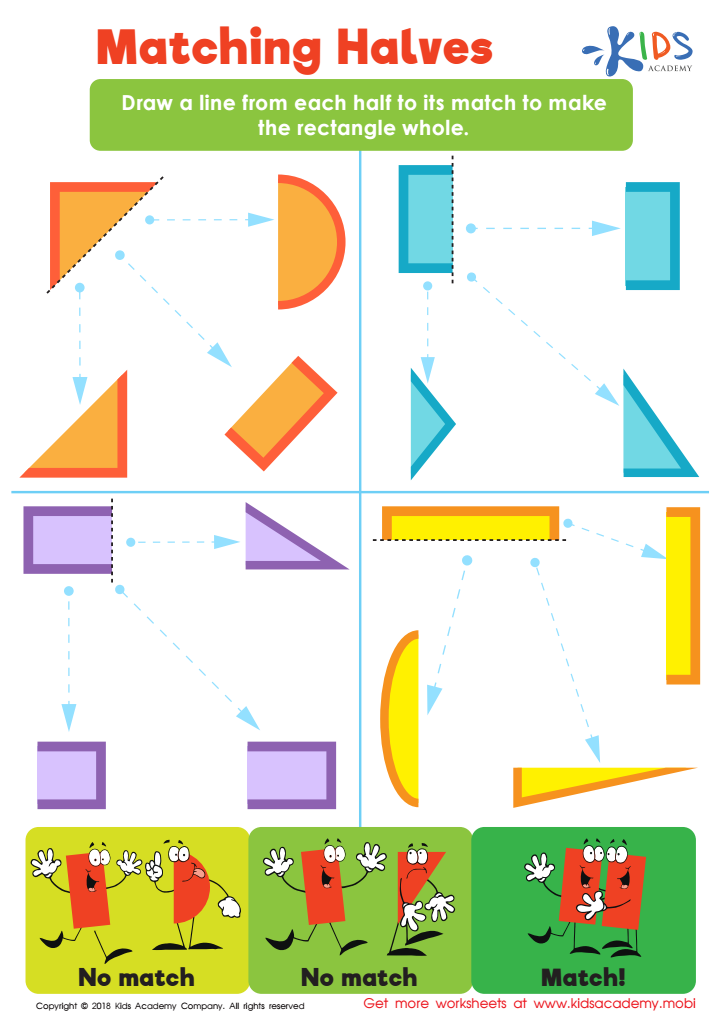
Matching Halves Worksheet
See how your child fares in matching two halves to form a complete rectangle. Provide them with four options, and ask them to draw a line connecting the two correct halves. Put their shape knowledge to the test with this simple worksheet!
 Assign to My Students
Matching Halves Worksheet
Worksheet
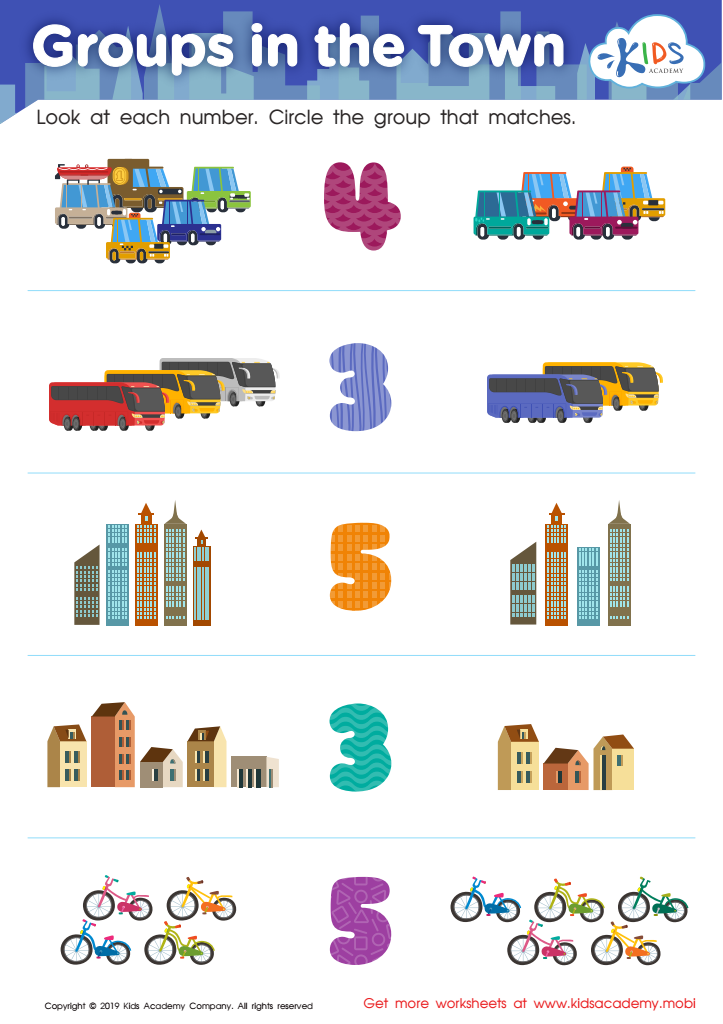
Groups in the Town Worksheet
Help your kids learn to count with this worksheet! Look at each number of objects and circle the group that matches. This simple activity can give them extra practice to support what they learn in school. Learning doesn't have to be a struggle; make it fun and interactive with this worksheet.
Groups in the Town Worksheet
Worksheet
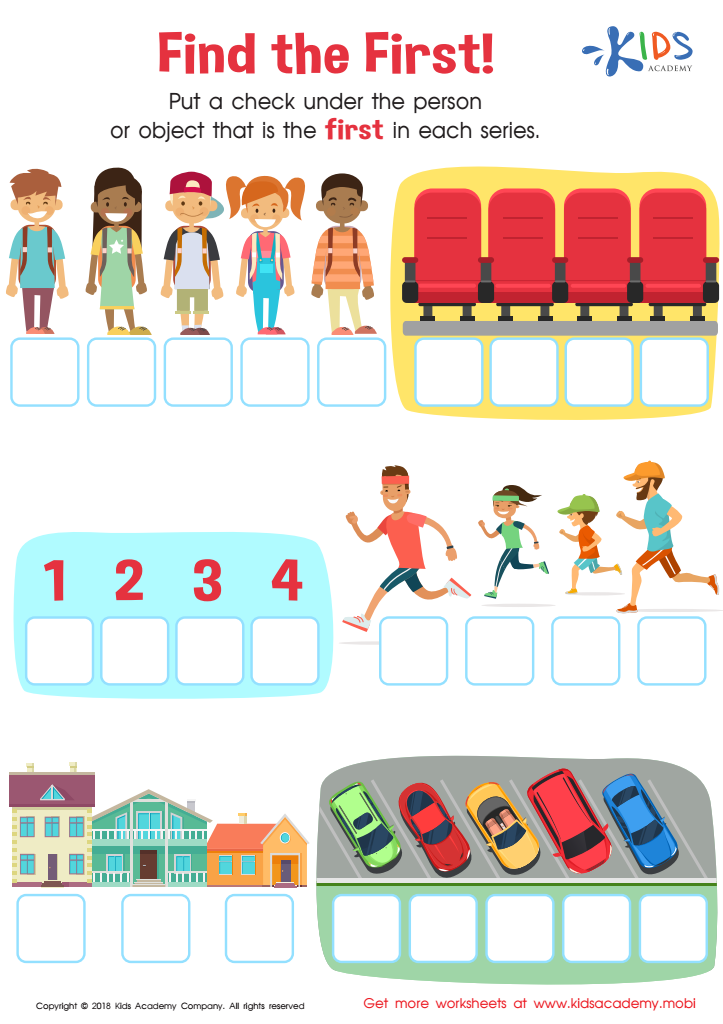
Find the First! Worksheet
Have your young students discuss what it means to be first in line, row, or a race. This free worksheet helps clarify their understanding of "first". View each group of people/objects and choose the first one. Follow up with hands-on activities like lining up students/toys or acting out a sequence of movements. Students can tell what happened first. Enjoy this printout for a fun math lesson!
Find the First! Worksheet
Worksheet
Join Kids Academy for Free
Who is primarily going to use this learning content?








Visual discrimination skills are crucial for children, particularly in the ages 5-8 range. These skills involve the ability to notice and compare the features of different objects, letters, shapes, or numbers and to recognize and understand the differences between them. Parents and teachers should prioritize nurturing these abilities for several compelling reasons.
Firstly, visual discrimination is foundational for reading and writing. Children with well-developed visual discrimination can differentiate between similar-looking letters like 'b' and 'd' or numbers such as '6' and '9'. This competence prevents common reading difficulties and promotes smoother literacy development.
Secondly, visual discrimination aids in mathematical learning. Recognizing shapes, patterns, and simple arithmetic visuals helps children comprehend and solve problems efficiently. For many young learners, mathematics involves understanding visual patterns, so enhancement of these skills translates directly to better math performance.
Lastly, strong visual discrimination skills contribute to daily living tasks and overall cognitive development. Children use these skills to interpret visual instructions, organize their environment, and develop spatial awareness, all of which are vital for their independent functioning and self-confidence.
By focusing on enhancing visual discrimination skills, parents and teachers can ensure children develop essential cognitive tools that support both academic achievement and everyday life skills.








