Comparing heights Easy Measurement Worksheets for Ages 5-8
3 filtered results
-
From - To
Discover our engaging Comparing Heights Easy Measurement Worksheets designed specifically for kids aged 5-8! These worksheets provide a fun and interactive way for young learners to explore measurement concepts through hands-on activities. Children will compare heights using visual aids, simple measurements, and real-life examples, enhancing their understanding of size differences in a playful manner. With colorful illustrations and age-appropriate challenges, these resources promote critical thinking and strengthen foundational math skills. Perfect for classroom use or at-home learning, our easy measurement worksheets make mastering comparison skills enjoyable and accessible. Foster a love for learning in your child today!
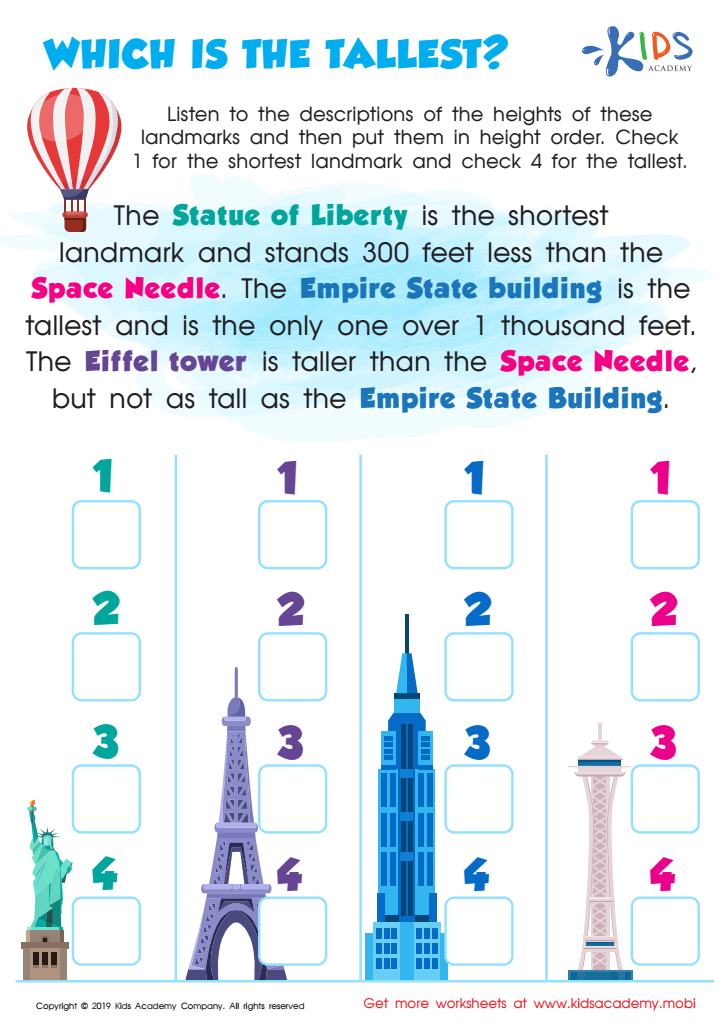
Which is the Tallest? Worksheet
 Assign to My Students
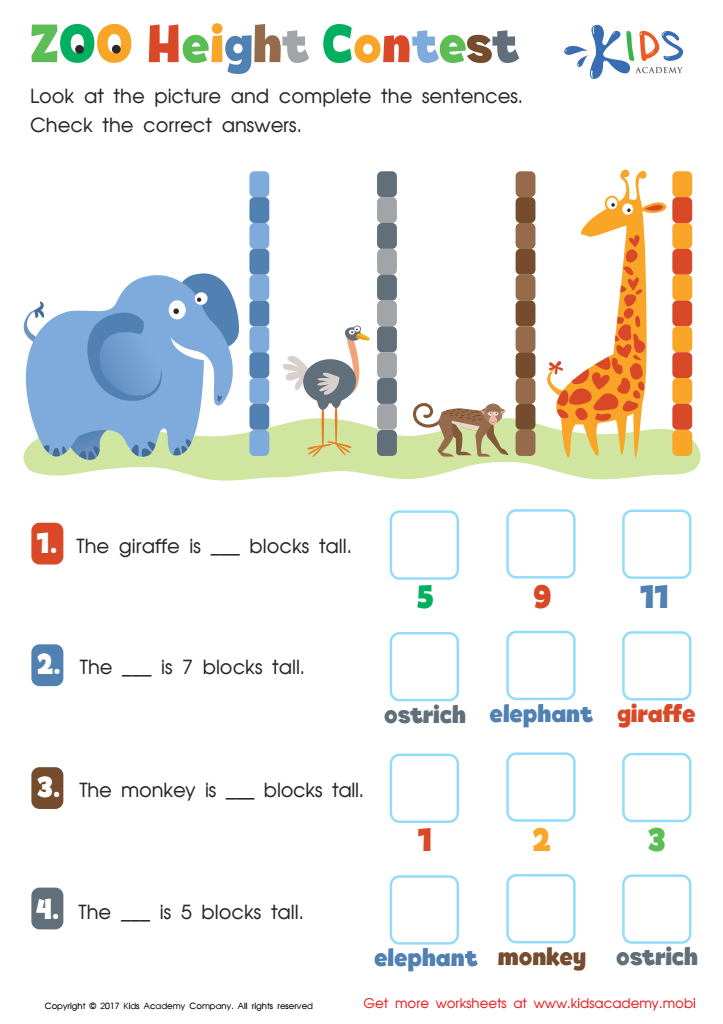
Zoo Height Contest Worksheet
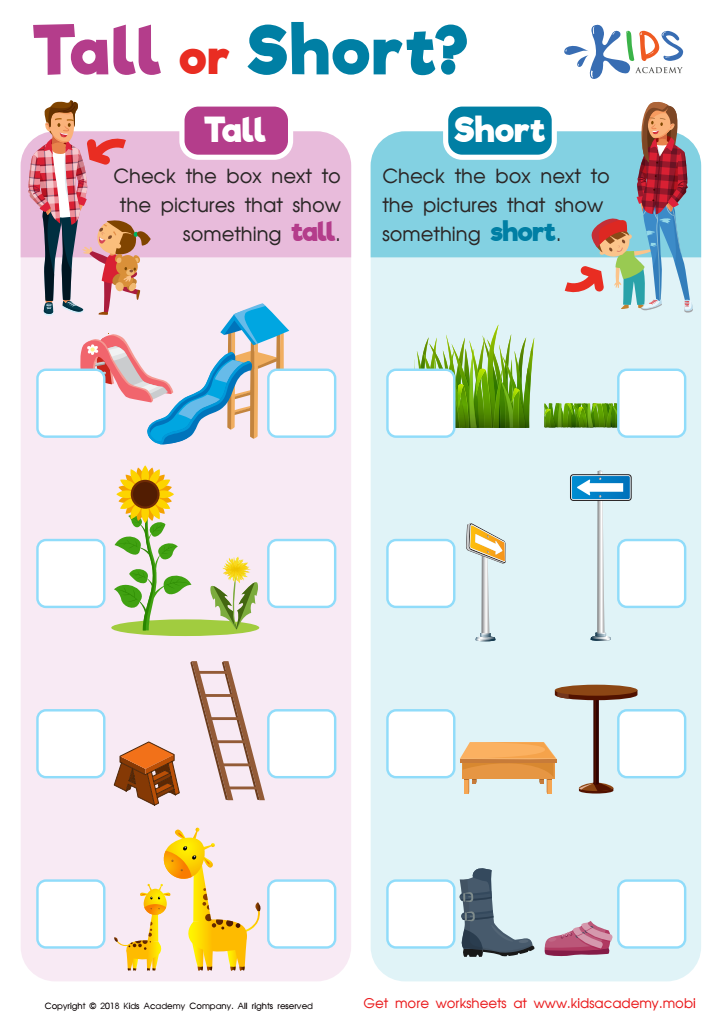
Tall or Short? Worksheet








Comparing heights is an important activity for children aged 5-8 as it promotes essential skills and concepts in both mathematics and social-emotional development. This simple yet engaging measurement activity helps children understand measurement principles, fostering early mathematical skills such as comparison, estimation, and the use of non-standard units (like hands or blocks). By comparing their heights with peers, children begin to grasp the concept of size, develop their spatial awareness, and learn the basics of data gathering and representation.
Moreover, this activity plays a vital role in social and emotional growth. It encourages collaboration as children measure each other and share their findings, promoting teamwork and communication skills. Discussions about height can also help children feel comfortable with differences, fostering inclusivity and reducing the chances of feeling self-conscious about their own stature.
For parents and teachers, facilitating this hands-on experience complements academic learning while also building confidence and encouraging respect for diversity among peers. Incorporating height comparisons into lessons helps create a fun and approachable learning environment, making education more relevant and enjoyable for young learners. Overall, it’s a meaningful intersection of math, social learning, and physical development.








