Understanding patterns Easy Multiplication Worksheets for Ages 5-8
4 filtered results
-
From - To
Unlock your child's mathematical potential with our "Understanding Patterns Easy Multiplication Worksheets" designed for ages 5-8! These engaging, printable worksheets introduce young learners to the concept of multiplication through the exploration of patterns, making math both fun and accessible. By recognizing and applying patterns, children will enhance their problem-solving skills and build a solid foundation for future math concepts. Each worksheet comes with colorful illustrations and interactive exercises that capture the interest of young minds. Foster a love for learning while helping your child gain confidence in multiplication. Explore our collection today and watch them thrive in their mathematical journey!
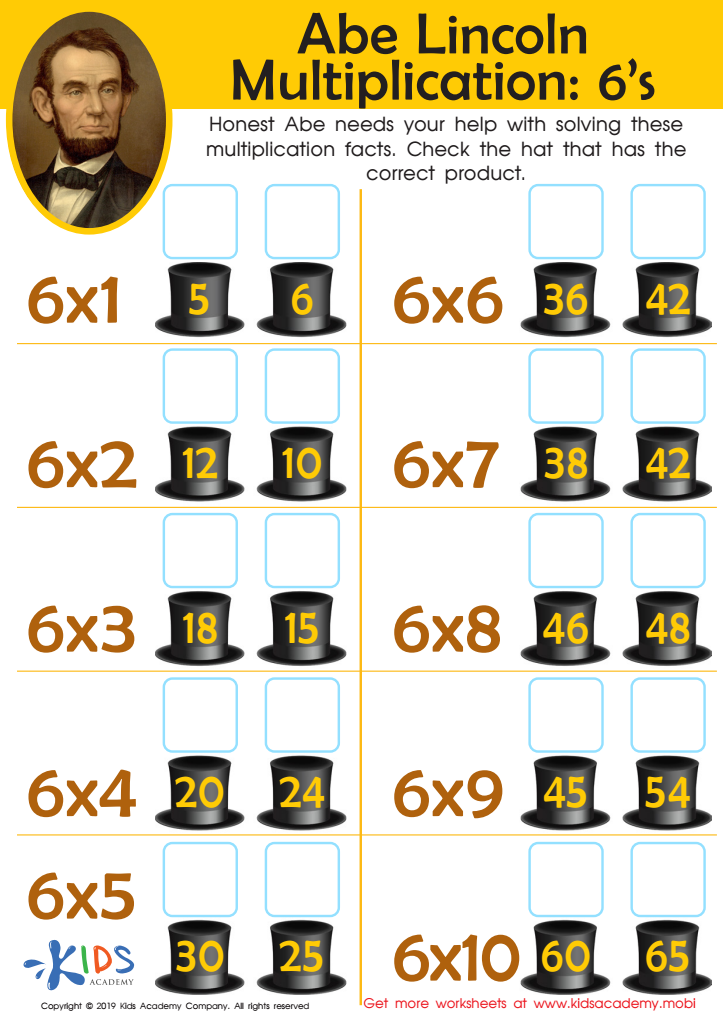
Abe Lincoln Multiplication: 6’s Worksheet
 Assign to My Students
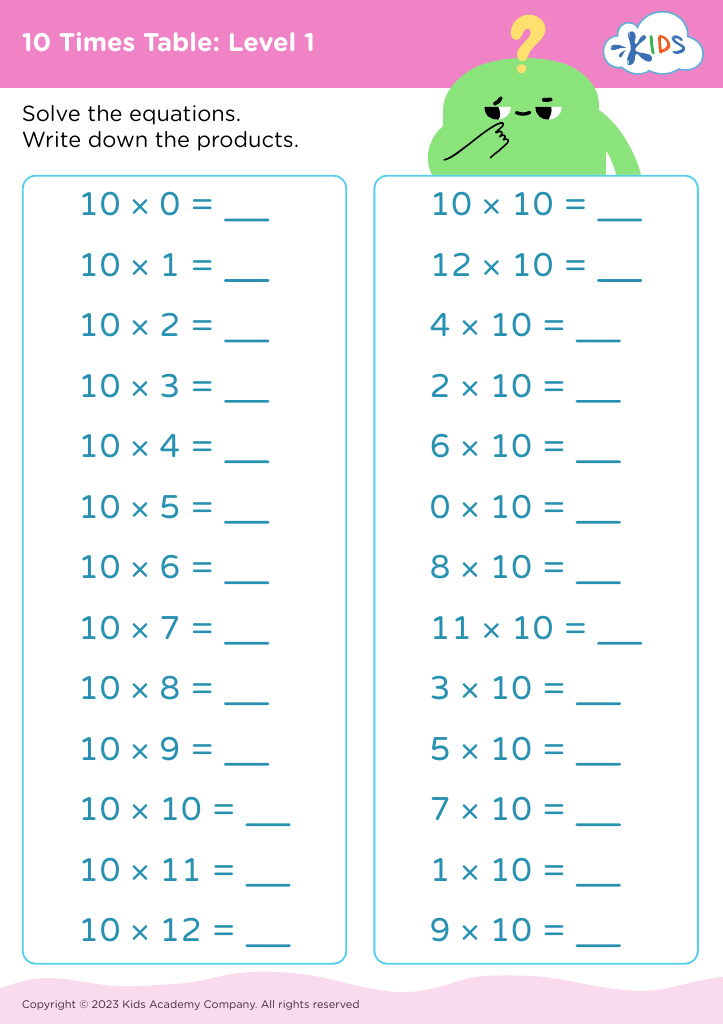
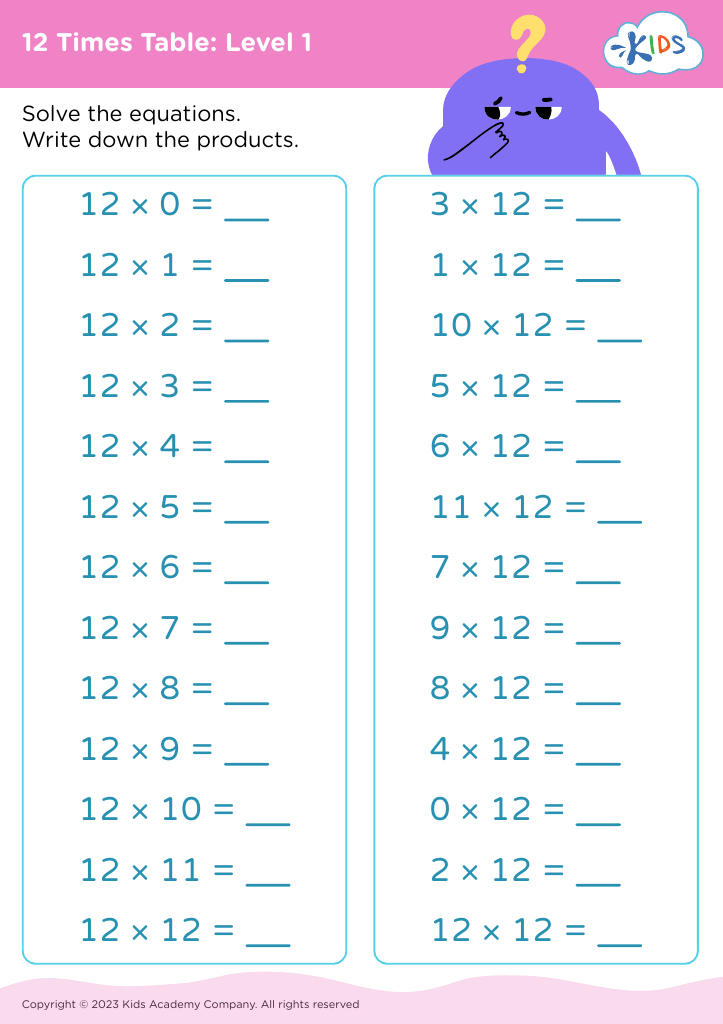
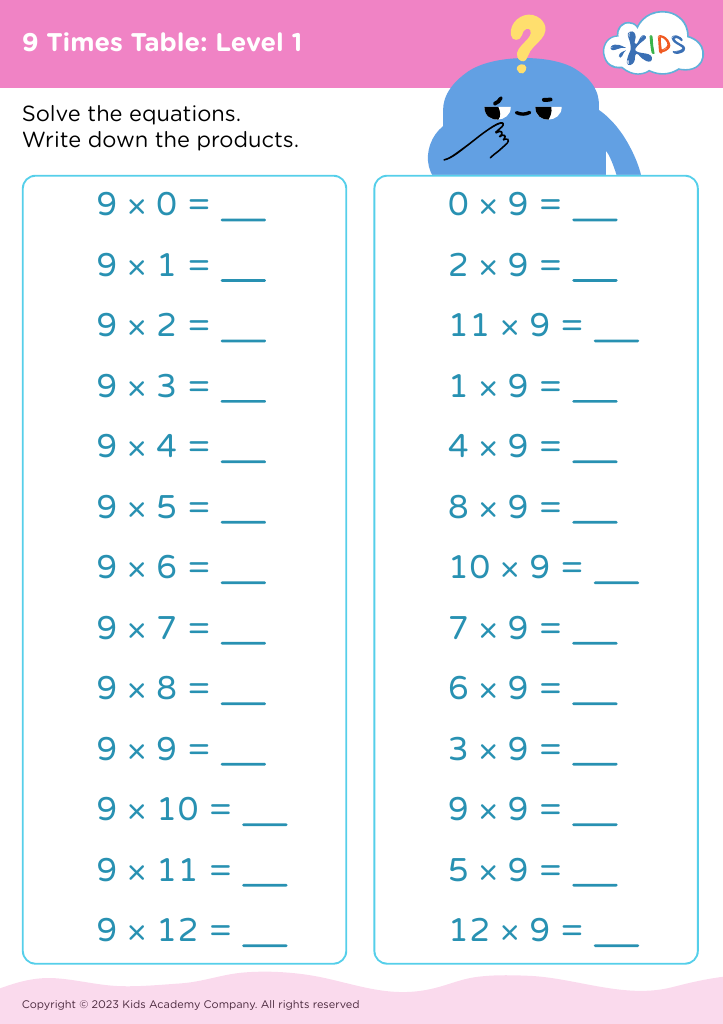








Understanding patterns and mastering easy multiplication is crucial for children aged 5-8 as it lays a solid foundation for their mathematical development. At this age, children can grasp basic concepts such as grouping and repetition, which are vital for recognizing patterns. When parents and teachers emphasize these concepts, they enable students to develop critical thinking and problem-solving skills early on.
Easy multiplication, often introduced through visual aids like groups of objects or number lines, makes abstract concepts more tangible. This helps children understand the idea of numbers working together, which is essential for future activities like addition and division. Additionally, recognizing patterns fosters spatial awareness and enhances cognitive skills, enabling students to predict outcomes and make connections between various mathematical concepts.
By investing time and resources into teaching pattern recognition and multiplication, parents and teachers not only help students boost their early math performance but also instill a love for learning. Early success in mathematics encourages confidence and builds resilience, setting the stage for a positive attitude towards more complex math as children progress in their education. Ultimately, nurturing these foundational skills equips children with the tools they need for lifelong success in mathematics and beyond.








