Number Recognition Easy Numbers 11–20 Worksheets for Ages 5-8
6 filtered results
Difficulty Level
Grade
Age
-
From - To
Subject
Activity
Standards
Introduce your young learner to number recognition with our engaging "Number Recognition Easy Numbers 11–20 Worksheets," designed specifically for ages 5-8. These worksheets provide a fun and interactive way for children to gain confidence in recognizing, writing, and understanding numbers ranging from 11 to 20. Packed with colorful visuals, creative exercises, and stimulating activities, they cater to different learning styles, ensuring every child stays engaged. Perfect for home or classroom use, these worksheets help lay a strong mathematical foundation while promoting essential skills like counting and numeral identification. Download today and make learning numbers an exciting adventure!
Favorites
With answer key
Interactive
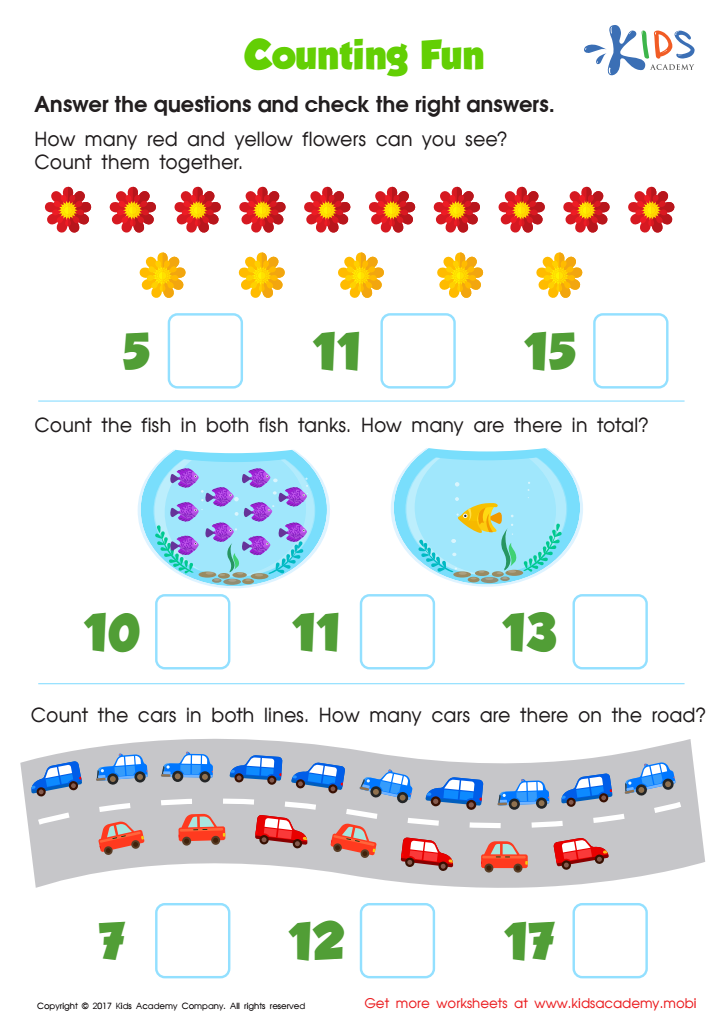
Counting Fun Worksheet
Math and fun can go hand-in-hand with this free PDF worksheet! Bright, colourful illustrations will activate your child's brain, as they count the red and yellow flowers. How many can you see? Count together and write down the total. Make learning and counting fun for your little ones!
 Assign to My Students
Counting Fun Worksheet
Worksheet
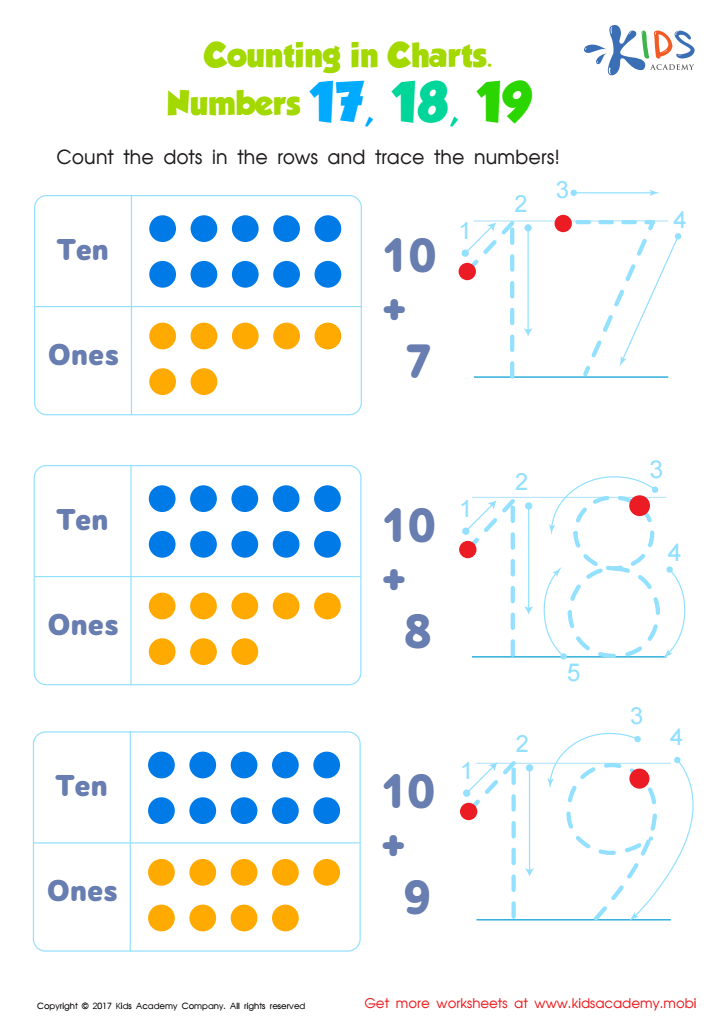
Kindergarten Number Tracing: Counting in Charts Worksheet
Little learners can find big numbers tricky! Help them practice counting and build early math skills, like place value and addition, with this kindergarten number tracing PDF worksheet. Count the dots to solve the problem and trace each answer!
Kindergarten Number Tracing: Counting in Charts Worksheet
Worksheet
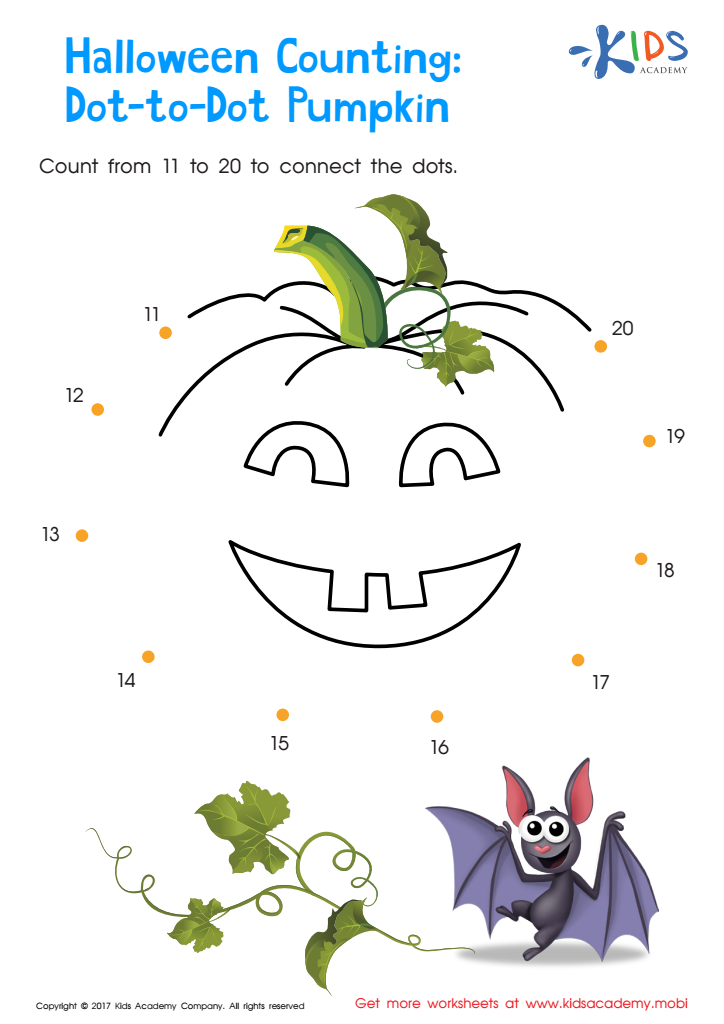
Ordering 11–20: Halloween Counting Worksheet
No matter the time of year, help your child get ready for Halloween with this worksheet. They'll practice counting from 11 to 20, recognizing numbers, and using a pencil to draw. By connecting the dots, they'll create a pumpkin picture, while unknowingly strengthening their early math skills. Print it today for an educational and fun experience!
Ordering 11–20: Halloween Counting Worksheet
Worksheet
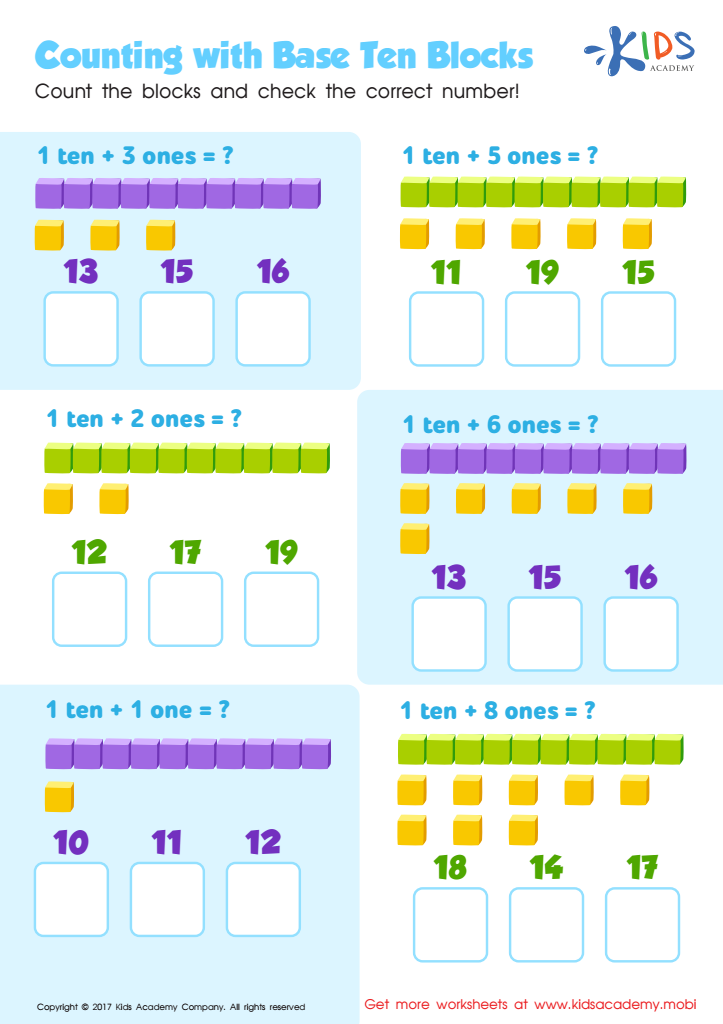
Counting with Base Ten Blocks Worksheet
Math has different levels and gets harder as your child progresses. Don't be surprised when they bring home an algebra worksheet! In this one, they will add 1 tens to varying numbers and fill in the total. This builds their understanding of base tens.
Counting with Base Ten Blocks Worksheet
Worksheet
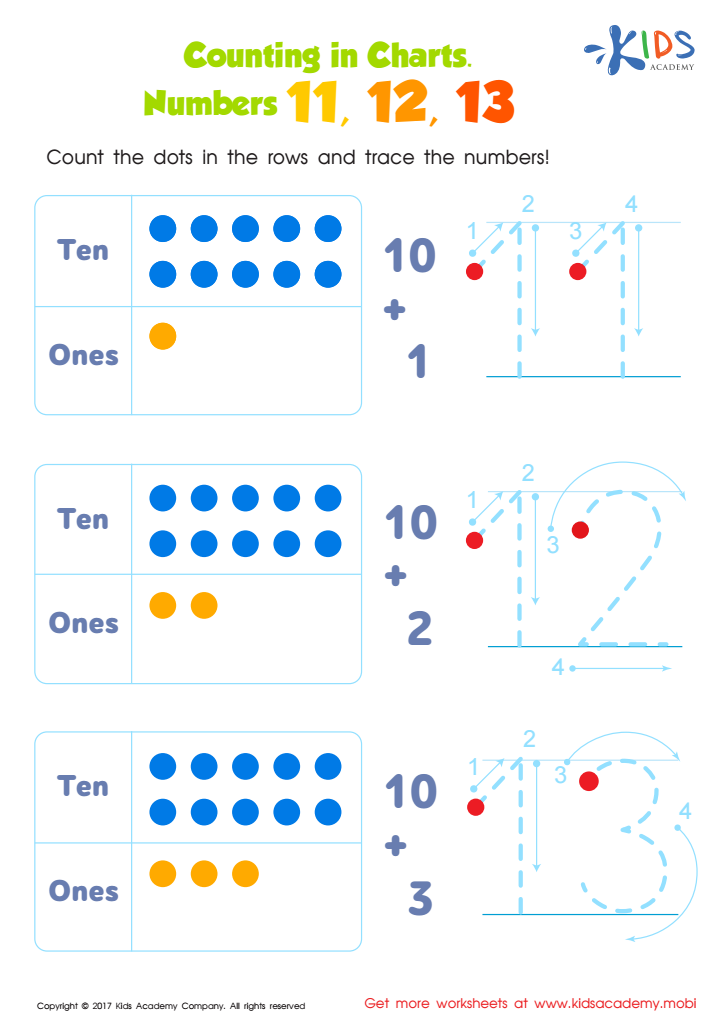
Number Tracing Worksheet For Kindergarten
Help your child develop addition skills and improve number recognition with this easy-to-use worksheet. Have them count the dots and add to solve each problem. Then, trace over the number to complete each row! It's a fun and simple way for kindergarteners to practice their math skills.
Number Tracing Worksheet For Kindergarten
Worksheet
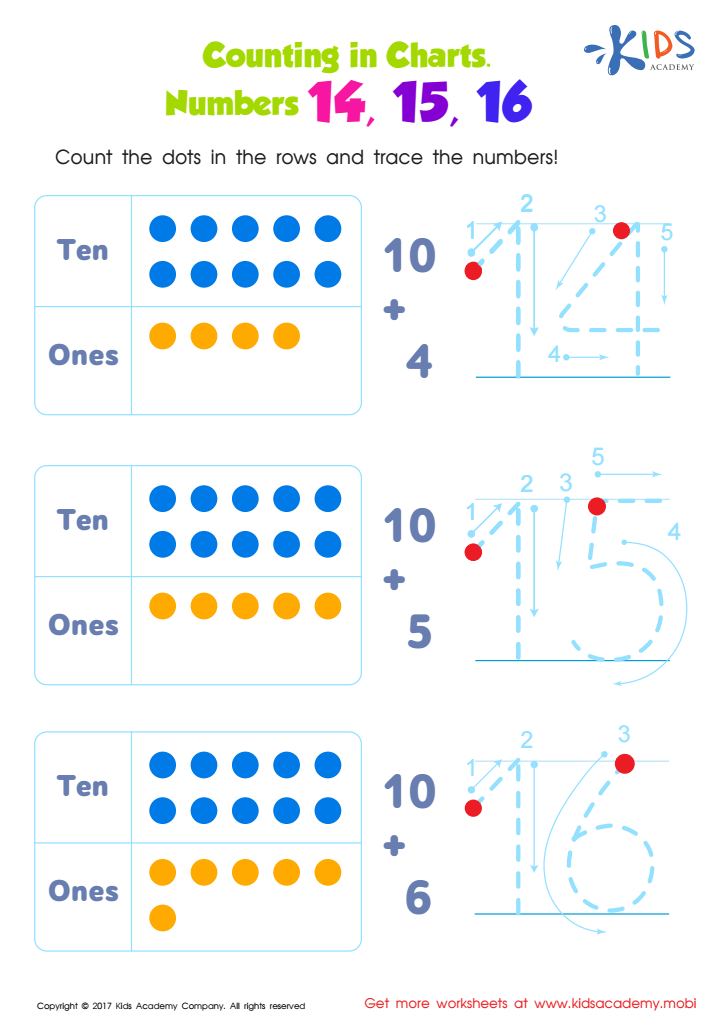
Number Tracing Worksheet
Kids learn math with counters and place value! This handy worksheet helps form a foundation for math skills and number sense! Have your child count the dots and trace the answers to the addition problems. It's a great way to support their math skills!
Number Tracing Worksheet
Worksheet
Join Kids Academy for Free
Who is primarily going to use this learning content?



Number recognition is a foundational skill crucial for young learners, particularly for children aged 5-8. At this developmental stage, recognizing numbers 11-20 serves as a bridge between basic counting and complex mathematical concepts. Parents and teachers should prioritize this skill for several reasons.
Firstly, mastering these numbers enhances children's confidence in their numerical abilities. Recognizing numbers helps children to process information quickly and lays the groundwork for addition, subtraction, and other math skills they will encounter later. It also supports their understanding of patterns, sequences, and basic operations, which are vital in everyday problem-solving situations.
Secondly, number recognition in this range introduces the concept of 'teen numbers,' which can be particularly challenging for young learners due to their unique spelling and pronunciation. By focusing on these numbers, educators can equip children with strategies to decode and work with teen numbers more effectively.
Lastly, fostering number recognition can also positively impact children's literacy skills. Numbers often appear in reading scenarios, such as in storybooks or educational games. Overall, supporting number recognition not only aids in academic success but also promotes critical thinking and encourages a lifelong love for learning. Both parents and teachers play an essential role in nurturing these skills.