Counting skills Easy Word Problems Worksheets for Ages 5-8
6 filtered results
-
From - To
Enhance your child's counting skills with our Easy Word Problems Worksheets, specially designed for ages 5-8. These engaging worksheets make learning fun, introducing young learners to basic mathematics through relatable scenarios. Each problem promotes critical thinking and problem-solving abilities while reinforcing counting concepts in a playful, interactive way. Perfect for classroom or at-home practice, our worksheets cater to varying skill levels, ensuring every child can gain confidence in their math abilities. Encourage early numeracy with captivating illustrations and clear instructions that make learning enjoyable, helping children develop a strong foundation in math as they embark on their educational journey!
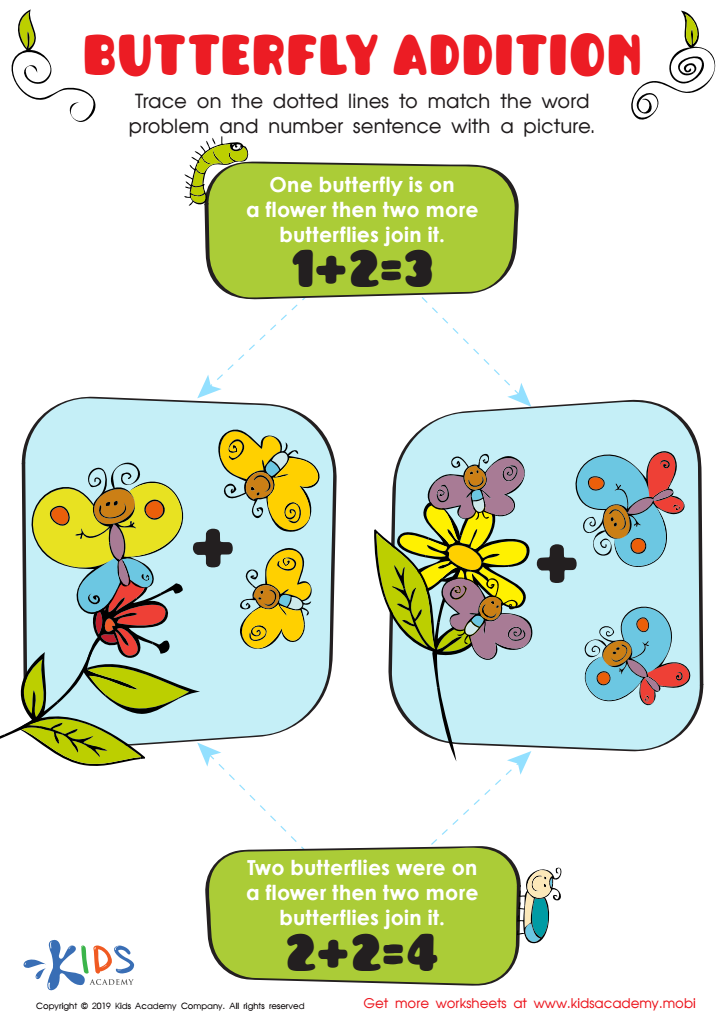
Butterfly Addition Worksheet
 Assign to My Students
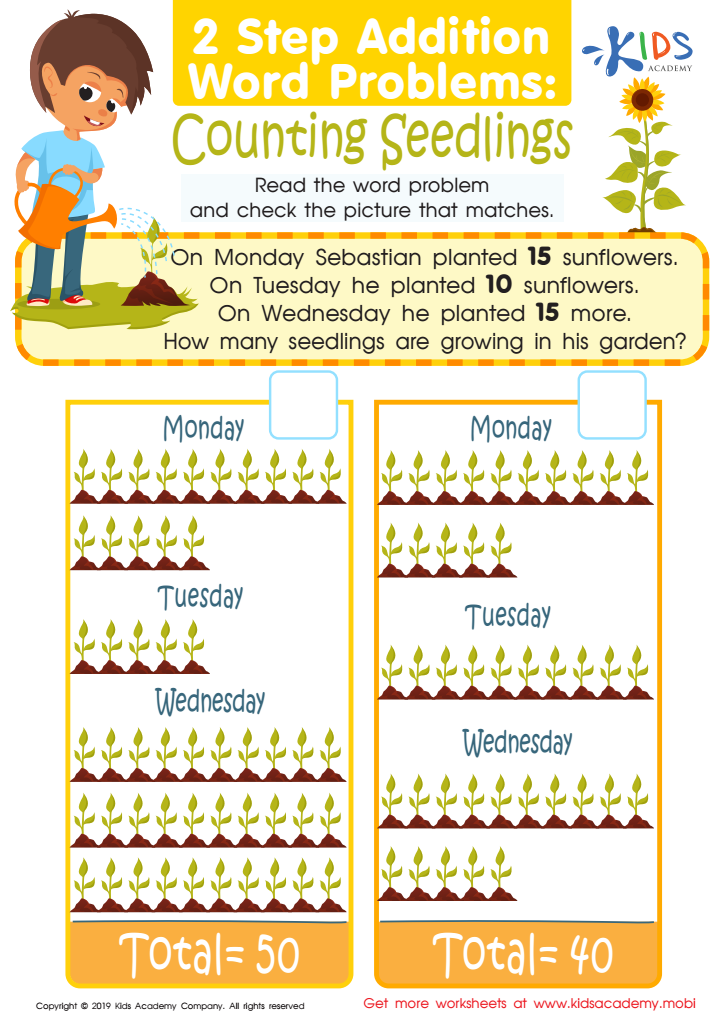
Counting Seedlings Worksheet
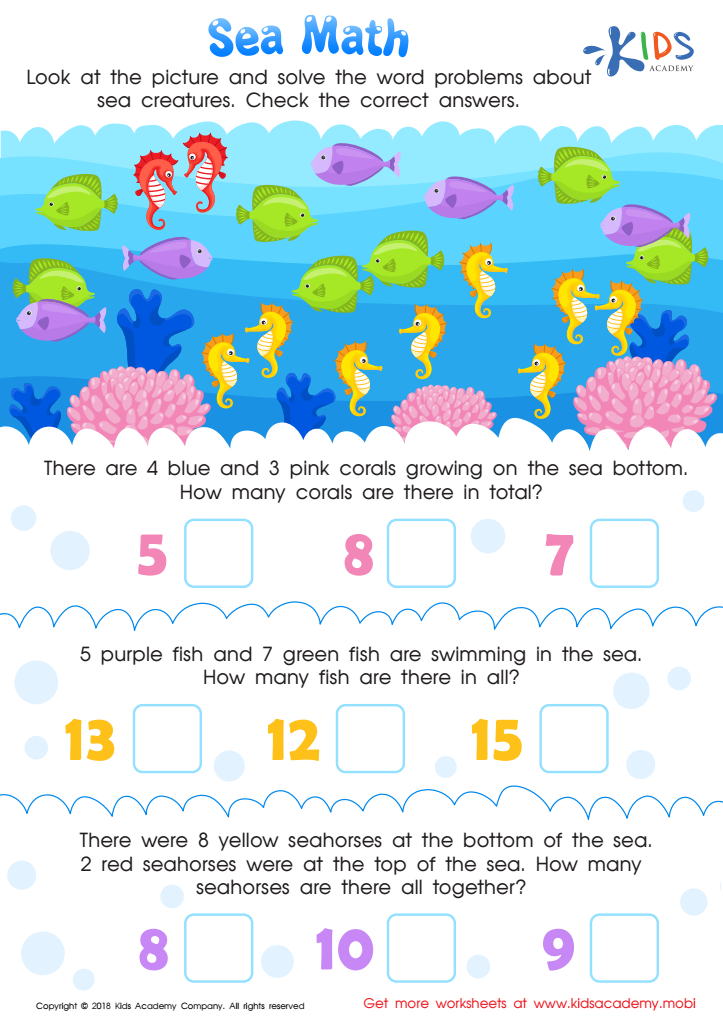
Sea Math Worksheet
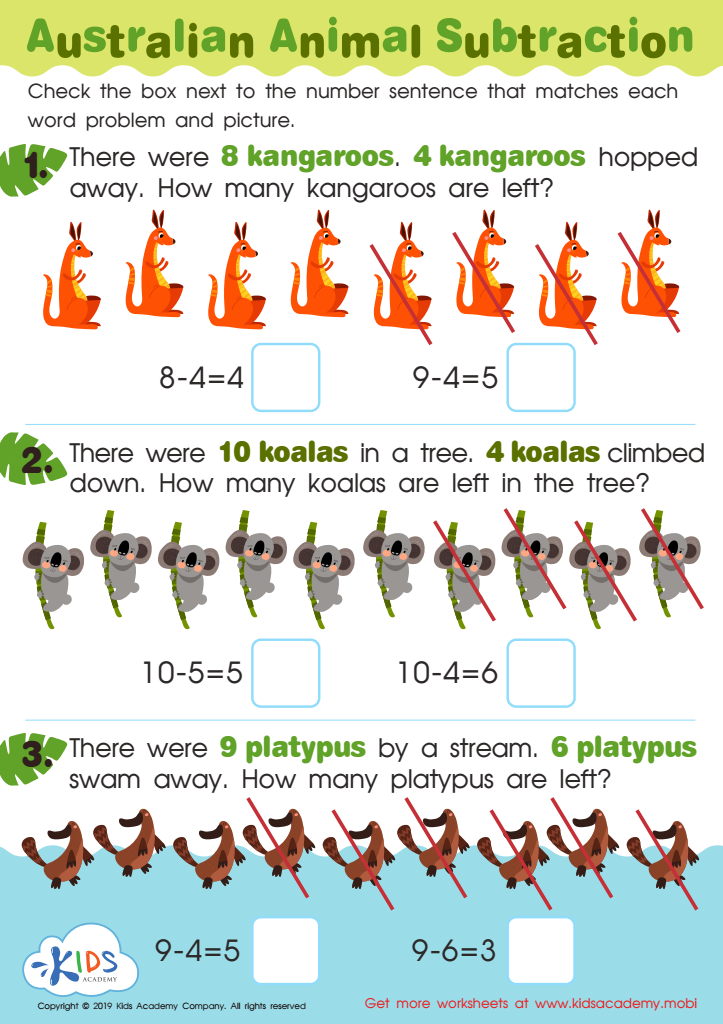
Australian Animal Subtraction Worksheet
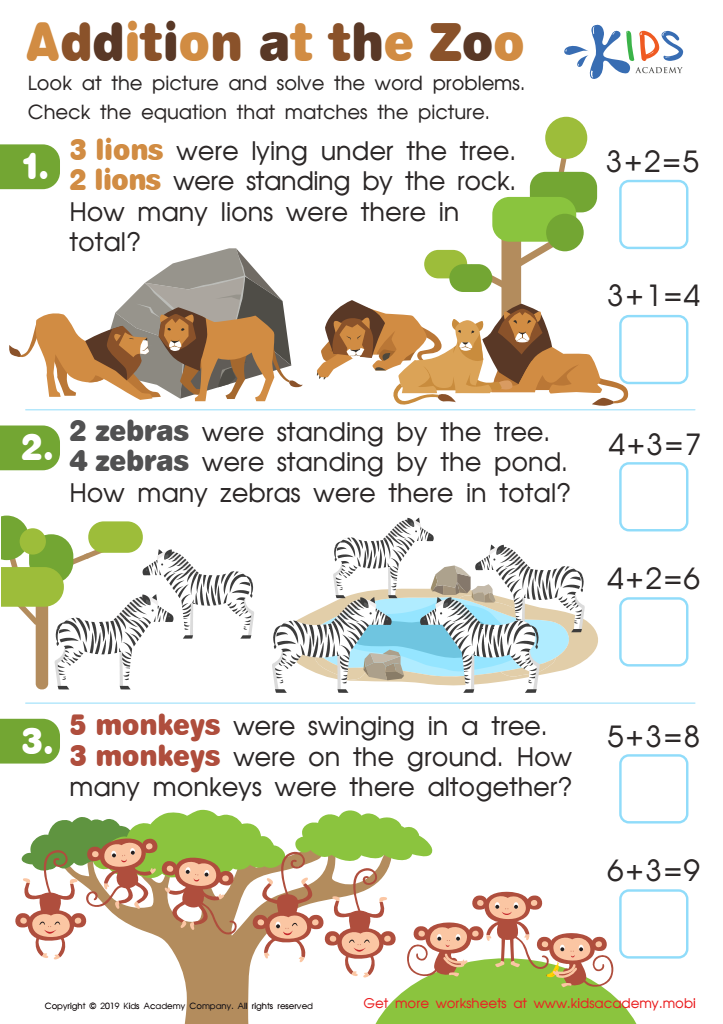
Addition at the Zoo Worksheet
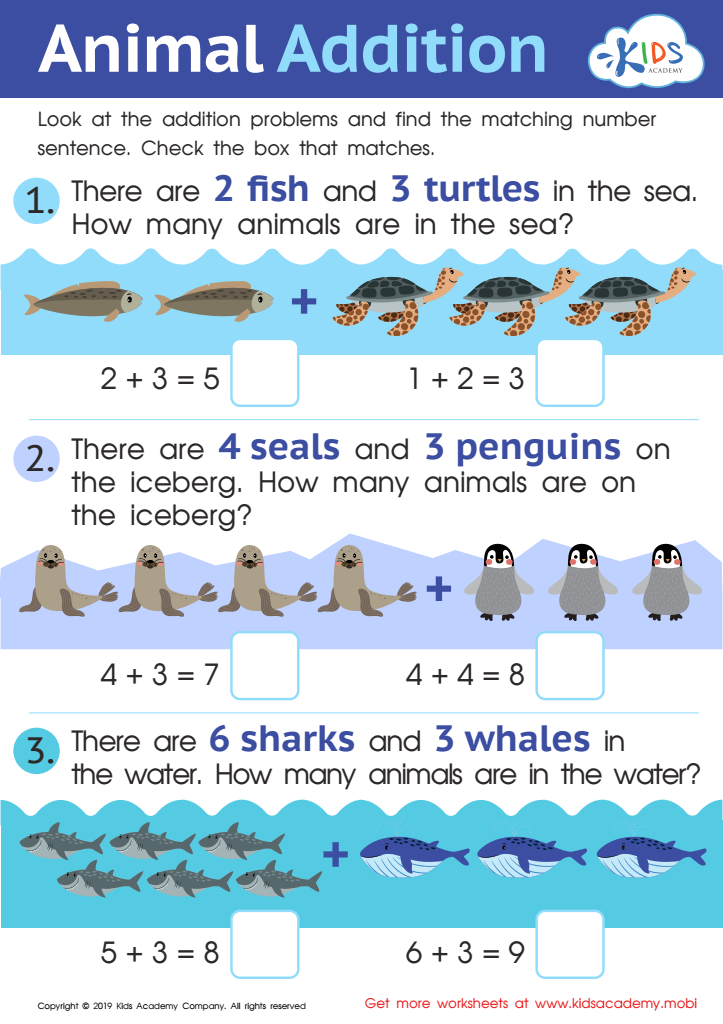
Animal Addition Worksheet








Counting skills are foundational for young children, forming the basis for a wide range of mathematical concepts. For ages 5-8, easy word problems help develop critical thinking, problem-solving abilities, and numerical understanding. Parents and teachers should care about fostering these skills because they set the stage for future academic success.
Word problems encourage children to apply counting in real-life contexts, making mathematics relevant and engaging. When children encounter simple scenarios requiring them to count objects, add or subtract, or solve basic problems, they gain confidence in their abilities. These activities promote not just rote memorization but also comprehension and application.
Furthermore, counting skills support cognitive development by helping children learn to categorize, sequence, and make comparisons, contributing to their overall problem-solving strategies. Encouragement in this area fosters a positive attitude towards math, mitigating common anxieties surrounding the subject as they advance through their education.
Lastly, parents and teachers play crucial roles in creating supportive environments that nurture these skills through playful activities, games, and real-life applications, laying a strong foundation for future learning and success in mathematics. Therefore, investing time and resources in counting skills and easy word problems is critical for holistic child development.








