Understanding life cycles Easy Reading Worksheets for Ages 5-8
3 filtered results
-
From - To
Explore the fascinating world of life cycles with our "Understanding Life Cycles Easy Reading Worksheets" designed for ages 5-8! These engaging worksheets help young learners grasp essential concepts of biology in a fun and interactive way. Kids will discover the exciting stages of various life cycles, from butterflies to plants, fostering curiosity about the environment. With simple language and colorful illustrations, these worksheets promote reading skills while expanding knowledge of nature’s processes. Perfect for classroom use or homeschooling, our resources are tailored to spark interest and enhance comprehension in young minds. Start your adventure in learning about life cycles today!
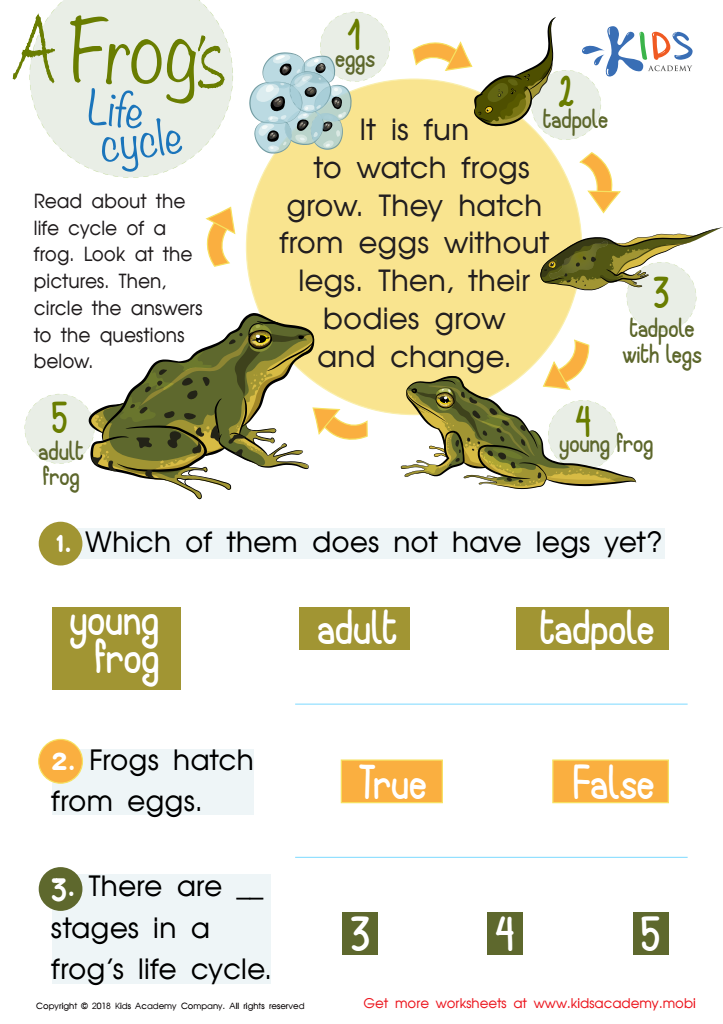
A Frog’s Life Cycle Worksheet
 Assign to My Students
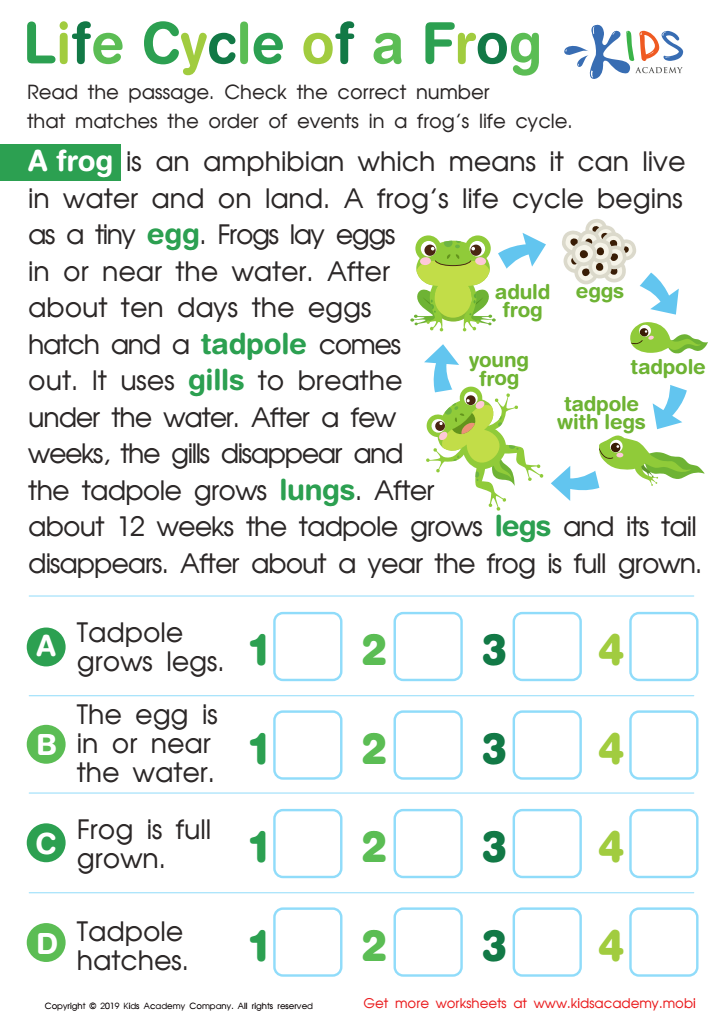
Life Cycle of a Frog Worksheet
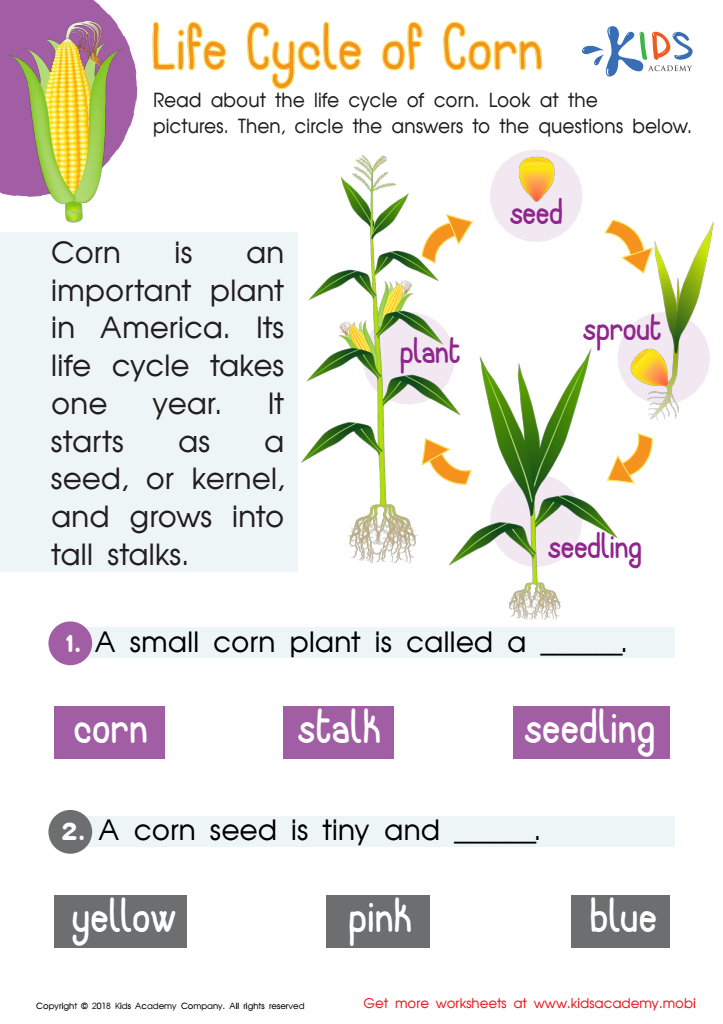
Life Cycle of Corn Worksheet




.jpg)


Understanding life cycles is important for children aged 5-8 because it lays the foundation for their knowledge of the natural world. When parents and teachers introduce life cycles, they help kids learn about how living things grow and change over time. For instance, observing the transformation of a caterpillar into a butterfly captures children's imaginations and shows them that change is a part of life. This understanding fosters curiosity and encourages them to ask questions about nature.
Additionally, learning about life cycles can teach children about responsibility and care. When they engage with plants or animals, like growing a seed or watching a tadpole develop, they learn the importance of nurturing and respecting all living creatures.
Moreover, life cycles are interconnected with various subjects, including science, math, and even storytelling. This knowledge enhances their critical thinking skills, as they begin to see patterns in natural processes. Overall, understanding life cycles can inspire a sense of wonder about the world, building a strong basis for lifelong learning and stewardship of the environment. Parents and teachers who prioritize this topic are nurturing not only academic growth but also environmental awareness and empathy in young learners.