Phonics recognition Easy Alphabet Worksheets for Ages 5-9
5 filtered results
-
From - To
Boost your child's reading skills with our Phonics Recognition Easy Alphabet Worksheets, designed specifically for ages 5-9. These engaging worksheets make learning phonics fun and interactive, helping children recognize letter sounds and improve their literacy skills. Each worksheet is crafted to reinforce alphabet familiarity through entertaining activities that foster phonemic awareness. Ideal for homeschooling or classroom settings, our resources support both visual and auditory learning styles. Watch as your child gains confidence in reading by practicing crucial phonics skills in an enjoyable way. Start building a strong foundation for your child's education today with our user-friendly printable worksheets!
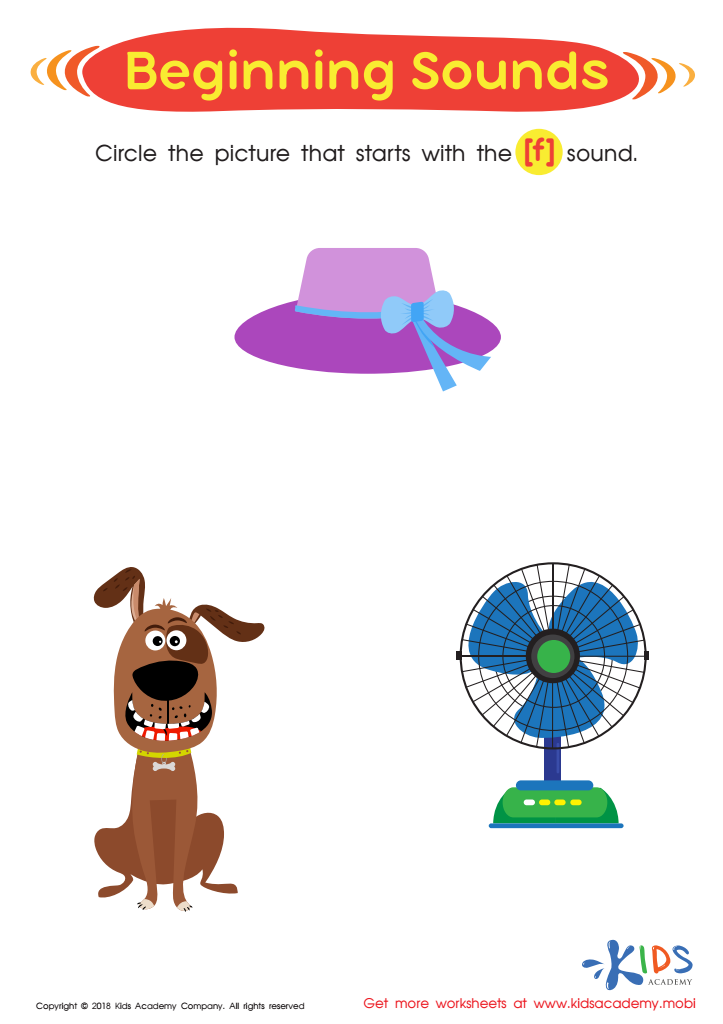
Beginning Sounds Assessment Printable
 Assign to My Students
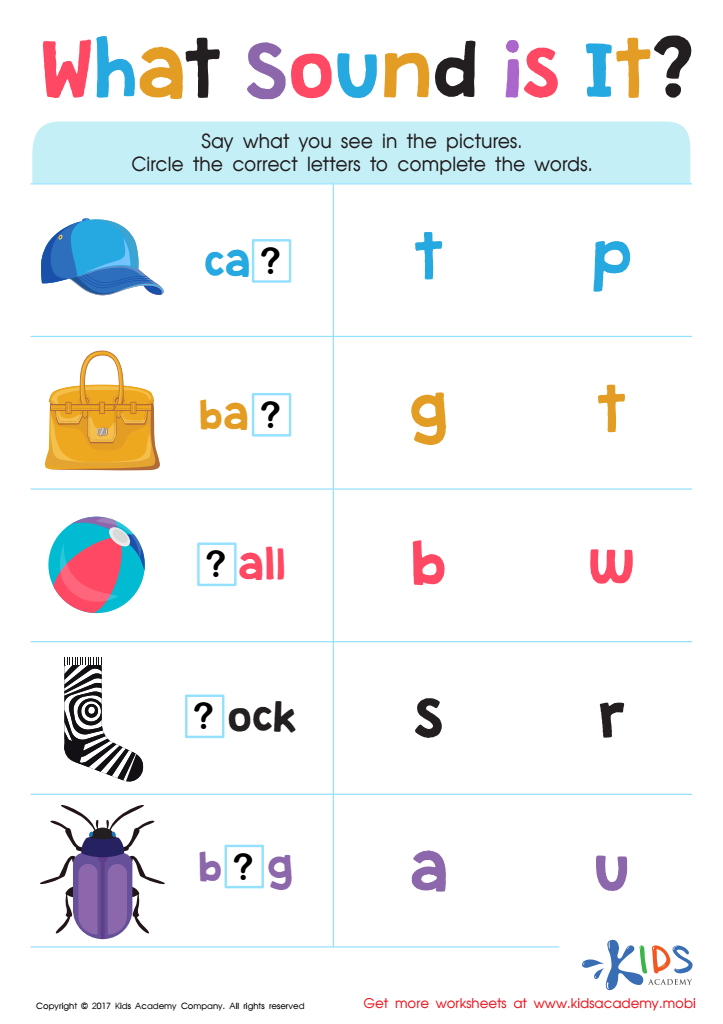
What Sound Is it? Worksheet
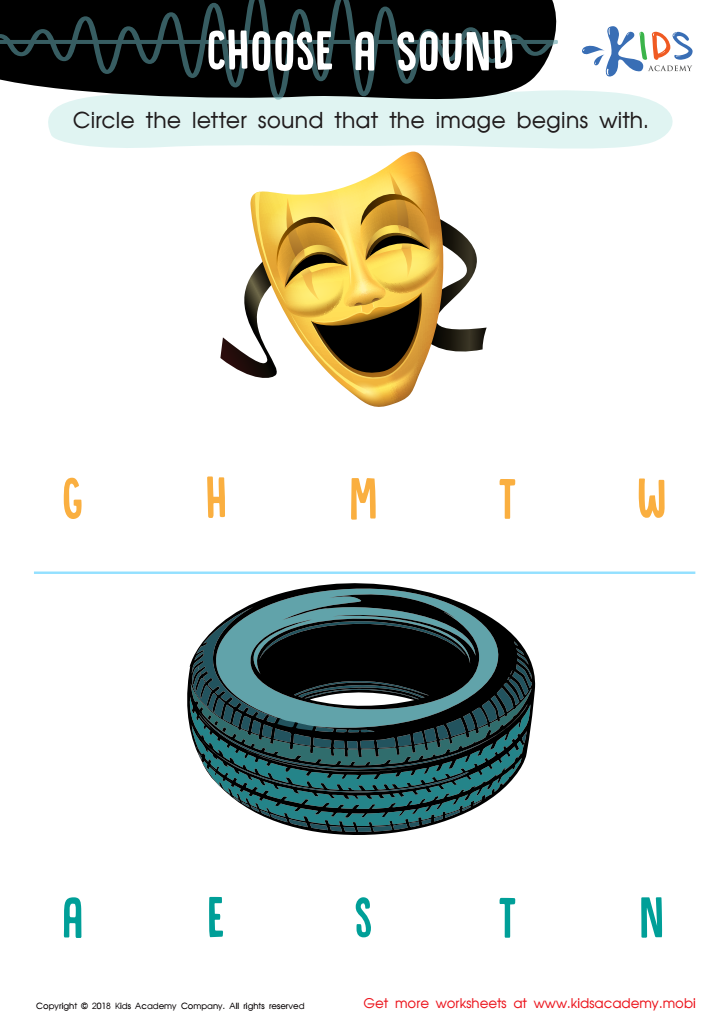
Choose a Sound Worksheet
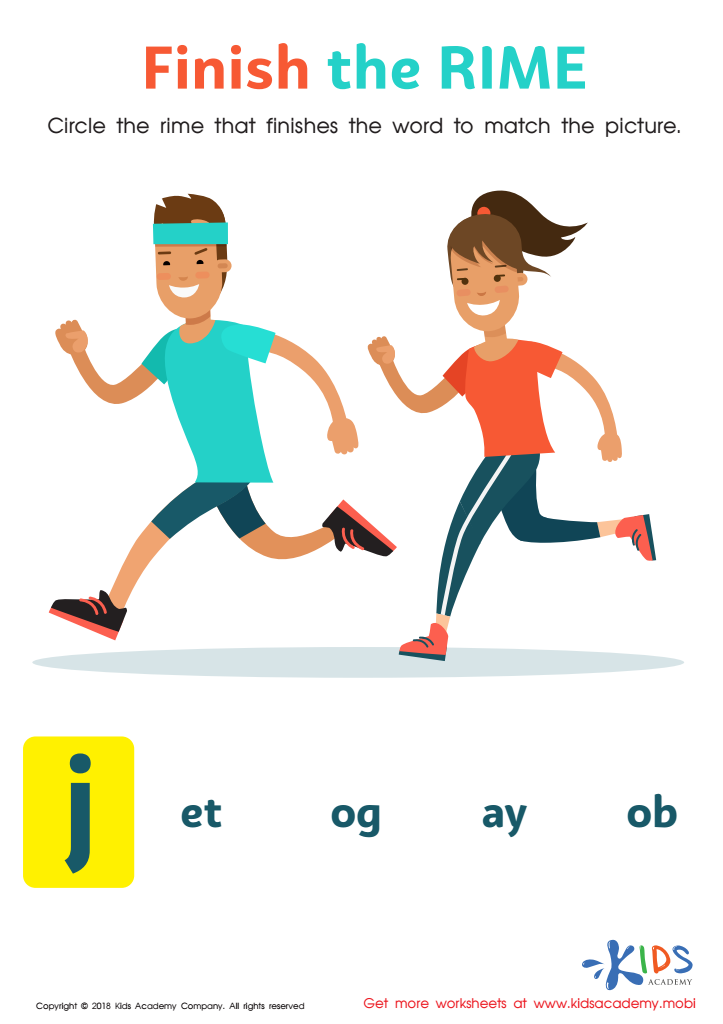
Finish the Rime Worksheet
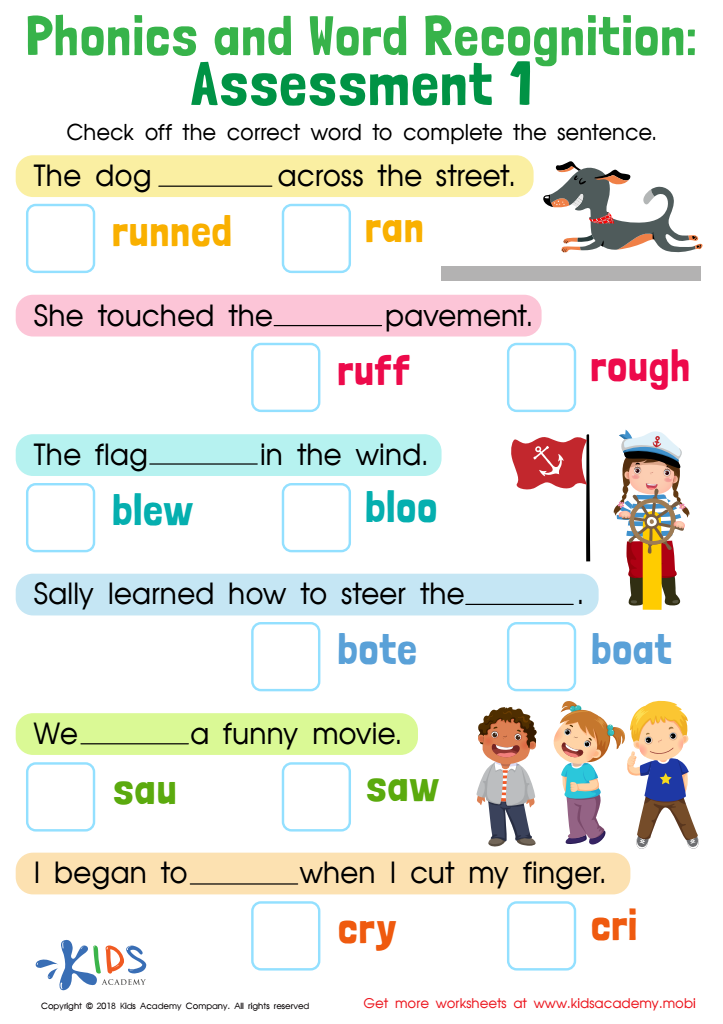
Phonics and Word Recognition: Assessment 1 Worksheet







Phonics recognition through resources like Easy Alphabet is essential for children ages 5-9 as it forms the foundation for successful reading and writing skills. At this developmental stage, children are mastering the basics of language, and phonics teaches them the relationship between letters and their sounds. This understanding allows young learners to decode words, which is critical for reading fluency and comprehension.
Parents and teachers should care about phonics recognition because it directly impacts a child's literacy development. Strong phonics skills lead to greater confidence in reading, enabling them to engage with a variety of texts. As they become more skilled readers, children not only improve their academic performance across subjects but also develop a lifelong love for reading.
Moreover, phonics helps identify and support kids who may struggle with reading difficulties. Early intervention through phonics-based programs can significantly reduce the risk of further challenges in literacy, setting up students for future success.
By prioritizing phonics recognition activities like Easy Alphabet, parents and teachers can promote essential communication skills, create a positive learning environment, and lay a strong foundation for children’s educational journeys. Ultimately, investing in phonics contributes to building proficient readers equipped for academic achievement and personal growth.