Understanding times tables Easy Basic Times Tables up to 12 Worksheets for Ages 5-9
3 filtered results
-
From - To
Discover the joy of learning times tables with our "Understanding Times Tables: Easy Basic Times Tables up to 12 Worksheets" designed for ages 5-9. These engaging worksheets provide a fun and interactive approach to mastering multiplication, enabling young learners to grasp essential math skills. Each worksheet is crafted to promote understanding and retention, featuring colorful visuals and clear instructions that make learning enjoyable. Perfect for home or classroom use, these resources will help children build confidence in math and improve their problem-solving skills. Equip your child with foundational knowledge in multiplication and watch their math abilities thrive with our accessible worksheets!
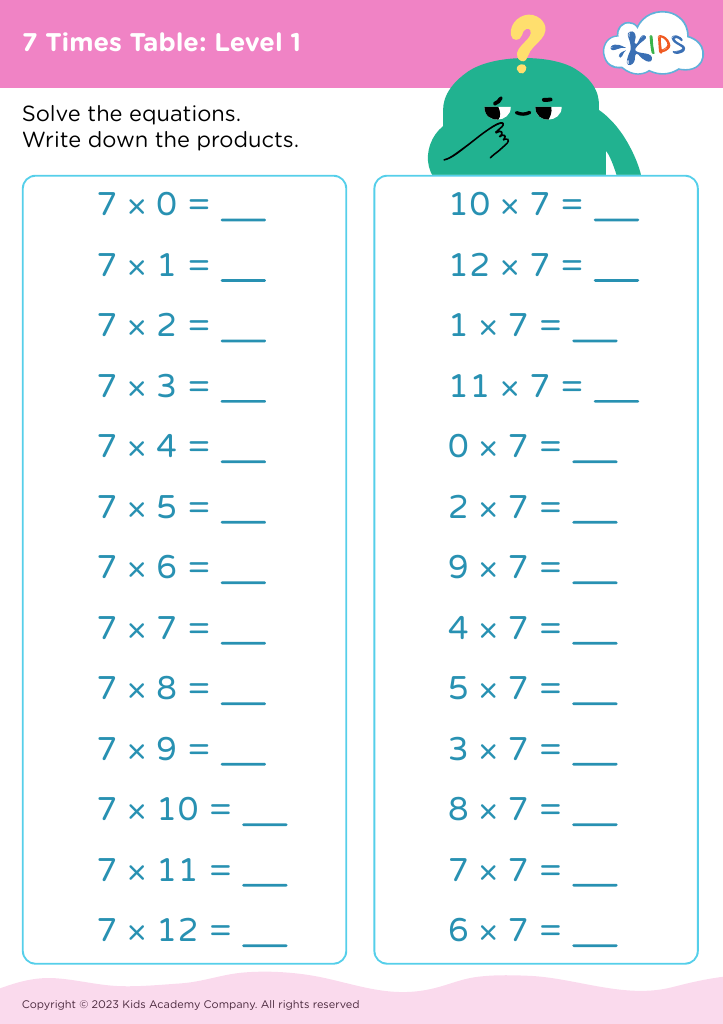
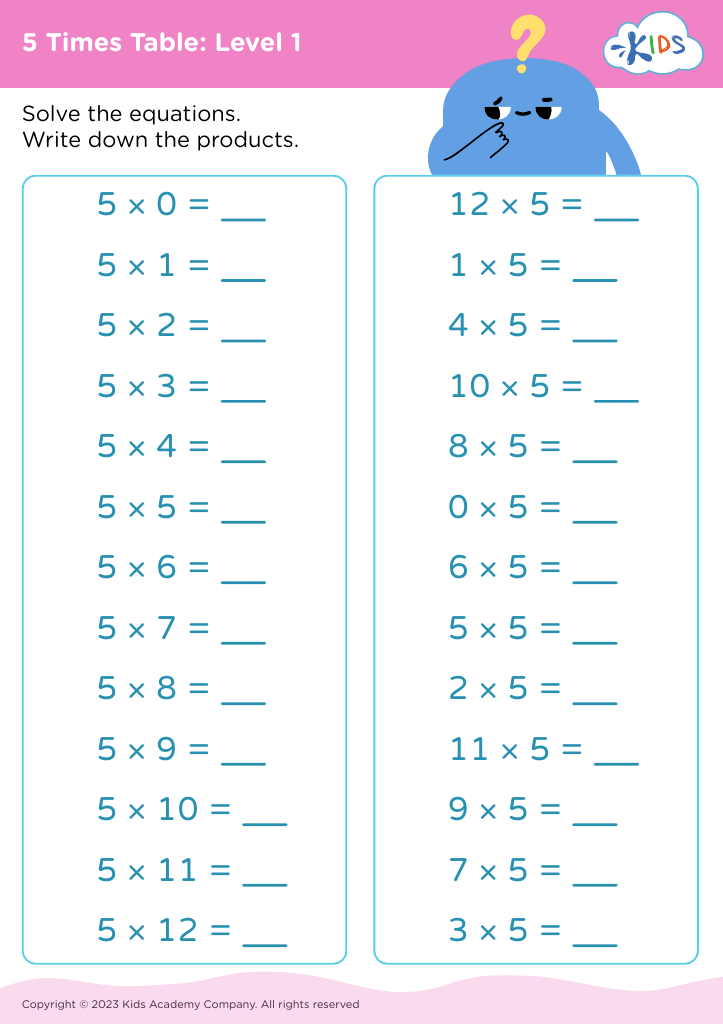
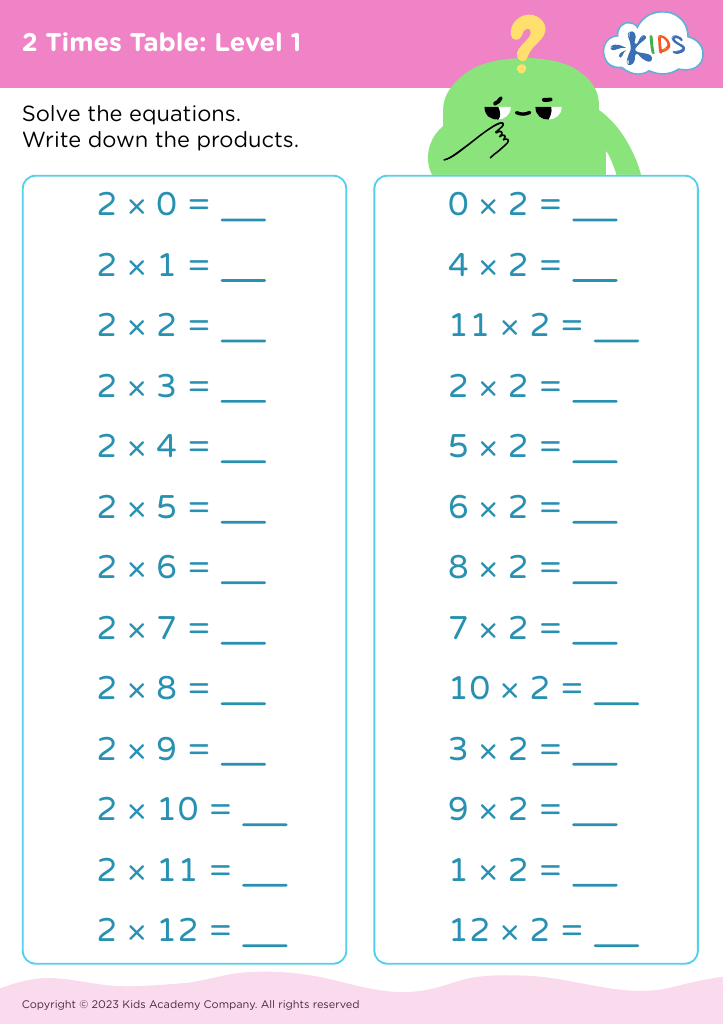


Understanding times tables is fundamental for children's mathematical development, particularly for ages 5-9, who are at a critical stage of learning. Mastering basic times tables up to 12 lays the groundwork for arithmetic fluency, enabling students to perform more complex operations like multiplication and division with confidence.
For parents and teachers, knowing the times tables supports cognitive development, enhances problem-solving skills, and fosters a positive attitude toward math. A strong grasp of multiplication aids in daily tasks such as budgeting, cooking, and shopping, providing practical applications that build life skills early on.
Furthermore, children who understand their times tables tend to perform better in school, leading to increased engagement and motivation. Repetitive practice also promotes memory retention, boosting overall academic performance. To encourage learning, parents and teachers can use engaging methods like games, songs, or visual aids, making the learning process enjoyable.
In summary, a solid understanding of basic times tables is crucial; it not only prepares children for future mathematical challenges but also instills confidence and nurturing an enduring interest in learning. Investing time and resources in teaching times tables will positively impact children’s educational journeys.








