Filters

54 filtered results

Clear all filters
Favorites
With answer key
Interactive

54 filtered results

Difficulty Level

Grade


Subject

    Check out this FREE Trial Lesson on Geometry for age 5-9!

    Making a Whole

    Favorites
    With answer key
    Interactive
    • 5-9
    • Geometry
    • Easy
    Piece it together Worksheet
    Piece it together Worksheet

    Piece it together Worksheet

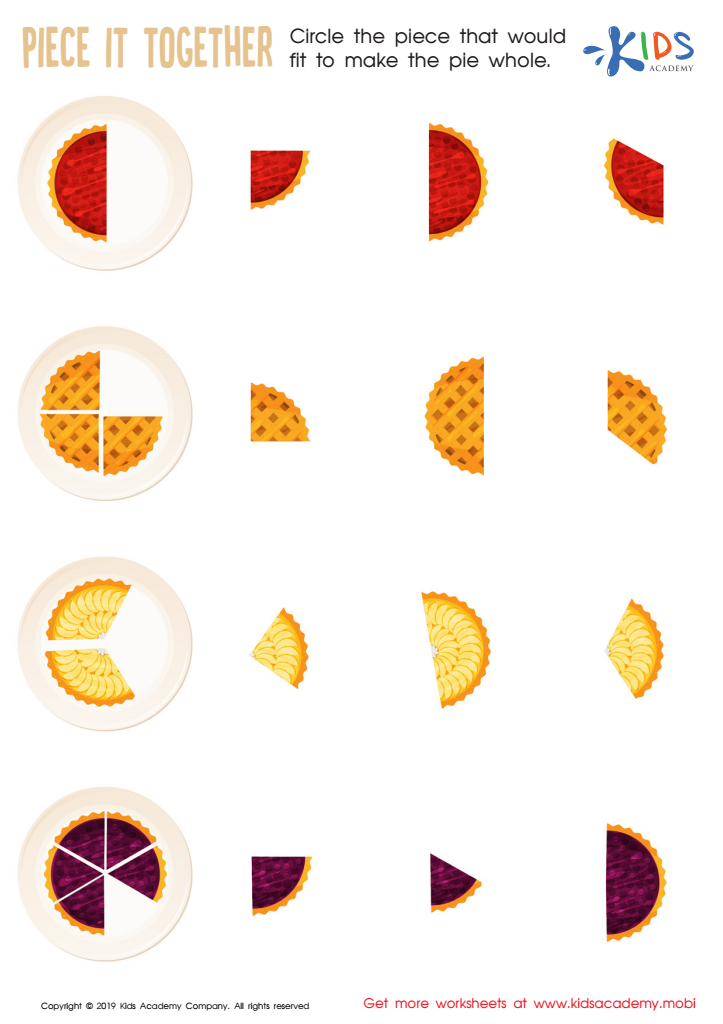
    Help your kids learn fractions! Even if they're not eager, teach them as they get older. Teachers will provide enough lessons and homework, but you can go a step further. Look at a worksheet with your kids and help them circle the piece that would make the pie whole.
    Piece it together Worksheet
    Worksheet
    What Is a Quadrilateral? Worksheet
    What Is a Quadrilateral? Worksheet

    What Is a Quadrilateral? Worksheet

    Does your kid know what a quadrilateral is? If not, this worksheet can help teach them. Explain that a quadrilateral is a shape with four sides and give examples, like a square or a rectangle. Then ask them to circle the quadrilaterals in the pictures. If they already know what a quadrilateral is, this task might be too easy.
    What Is a Quadrilateral? Worksheet
    Worksheet
    Find the First! Worksheet
    Find the First! Worksheet

    Find the First! Worksheet

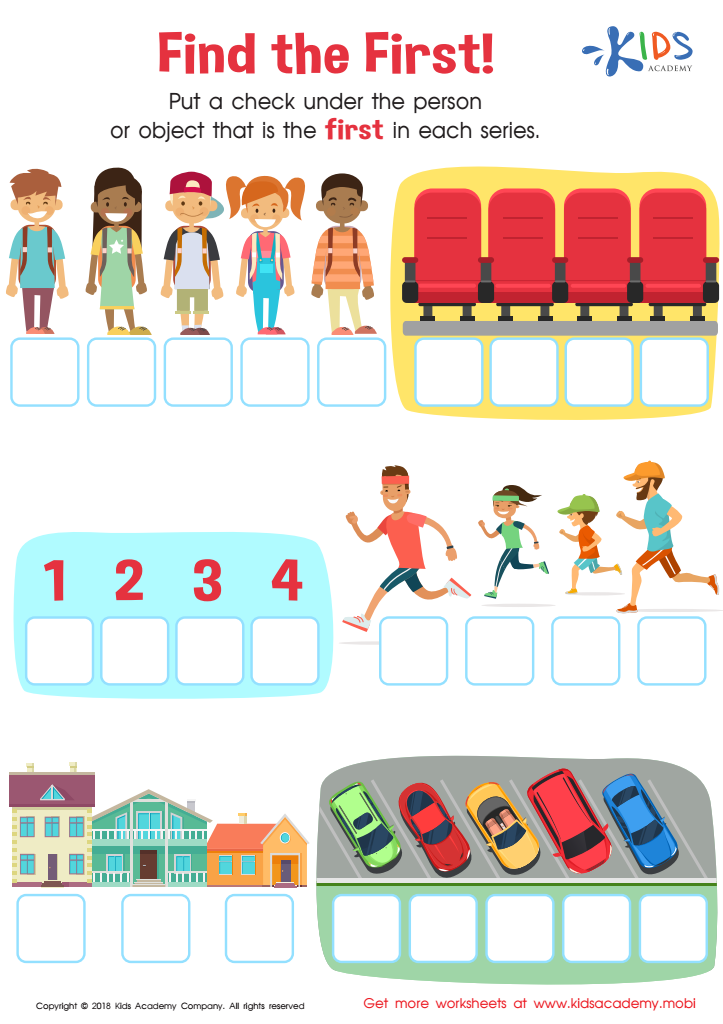
    Have your young students discuss what it means to be first in line, row, or a race. This free worksheet helps clarify their understanding of "first". View each group of people/objects and choose the first one. Follow up with hands-on activities like lining up students/toys or acting out a sequence of movements. Students can tell what happened first. Enjoy this printout for a fun math lesson!
    Find the First! Worksheet
    Worksheet
    Whole Shape from Halves, Thirds and Fourths Worksheet
    Whole Shape from Halves, Thirds and Fourths Worksheet

    Whole Shape from Halves, Thirds and Fourths Worksheet

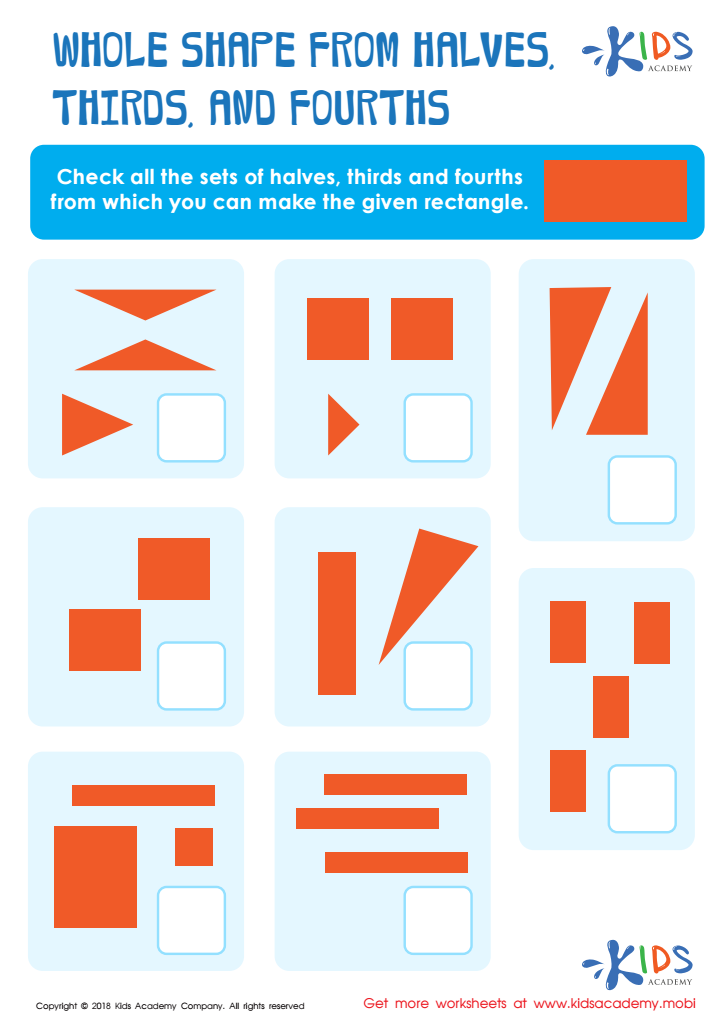
    Explain to your students that they can make a new shape by combining halves, thirds, and fourths of a shape. Show them the worksheet with the rectangle at the top and ask them to find which sets of halves, thirds, and fourths make it. Have them check all the correct sets.
    Whole Shape from Halves, Thirds and Fourths Worksheet
    Worksheet
    Construction Shapes Worksheet
    Construction Shapes Worksheet

    Construction Shapes Worksheet

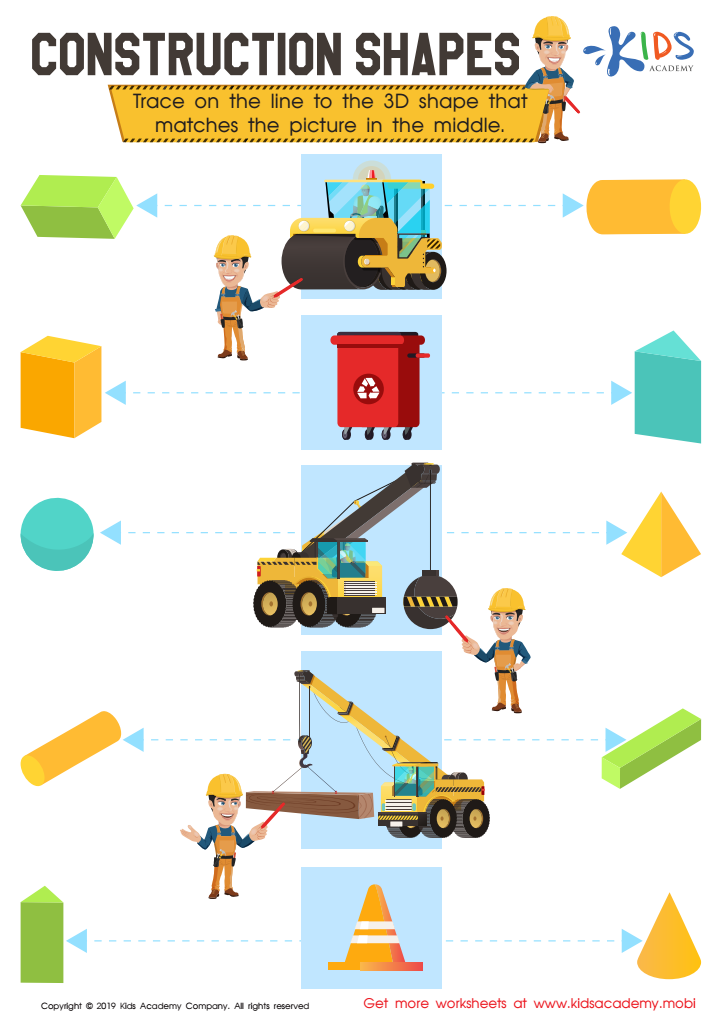
    Construction workers are professionals who build structures like buildings. In this worksheet, kids will learn about shapes with the help of workers and their equipment. Help them trace the lines to the 3D shape that matches the picture in the middle.
    Construction Shapes Worksheet
    Worksheet
    Connecting 3D Shapes with Their 2d Faces Worksheet

    Connecting 3D Shapes with Their 2d Faces Worksheet

    Connecting 3D Shapes with Their 2d Faces Worksheet

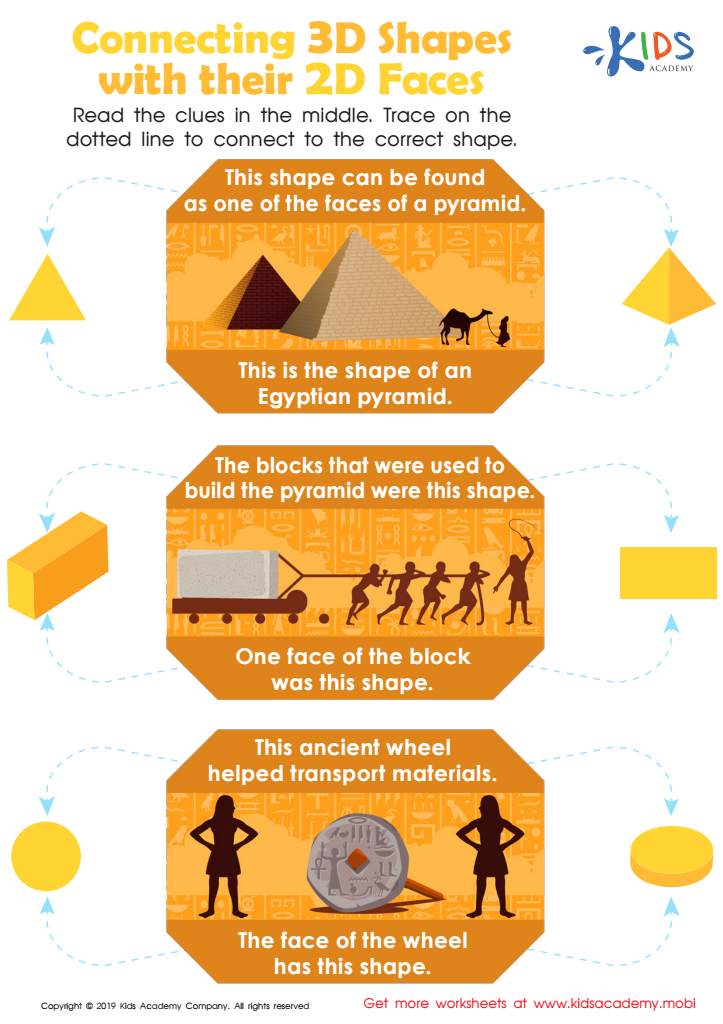
    Engage your kids' minds with colorful, fun exercises like this worksheet. Learning should be continuous, so take the time to do extra activities with your children. Show them the pictures, then read the clues and help them trace the lines to match the shapes.
    Connecting 3D Shapes with Their 2d Faces Worksheet

    Worksheet


    ... 2 3

    Parents and teachers should care about "Easy Geometry for Ages 5-9" because building foundational skills in geometry during early childhood is crucial for a child’s overall cognitive development and mathematical understanding. At this age, children are naturally curious and eager to learn, making it an ideal time to introduce geometric concepts such as shapes, spatial reasoning, and simple measurements. Engaging children with interactive activities related to geometry helps to enhance their problem-solving skills and critical thinking, which are essential for more complex math later on.

    Moreover, geometry helps in developing fine motor skills and hand-eye coordination through activities like drawing shapes or using building blocks. These early experiences can foster a love for math, reducing math anxiety as they grow older.

    Additionally, geometry is widely applied in everyday life—from architecture to art—making it relevant and relatable. Teaching children how to recognize and utilize geometric principles can prepare them for real-world applications and encourage spatial awareness, which is essential in many professions. In summary, investing time and resources into easy, engaging geometry materials not only supports academic success but also nurtures essential life skills in young learners.