Counting skills Easy Geometry Worksheets for Ages 5-9
3 filtered results
-
From - To
Introducing our "Counting Skills Easy Geometry Worksheets" tailored for kids ages 5-9! These engaging, printable activities help young learners master counting while exploring fundamental geometric concepts. Each worksheet combines fun visuals and interactive tasks designed to enhance number recognition, shape identification, and spatial reasoning. Perfect for classrooms or at-home practice, our resources align with educational standards and foster a love for math in early learners. Help your child develop crucial counting skills and geometric understanding with our expertly crafted materials, ensuring a solid foundation for future mathematical success. Download now and watch your child's confidence soar!
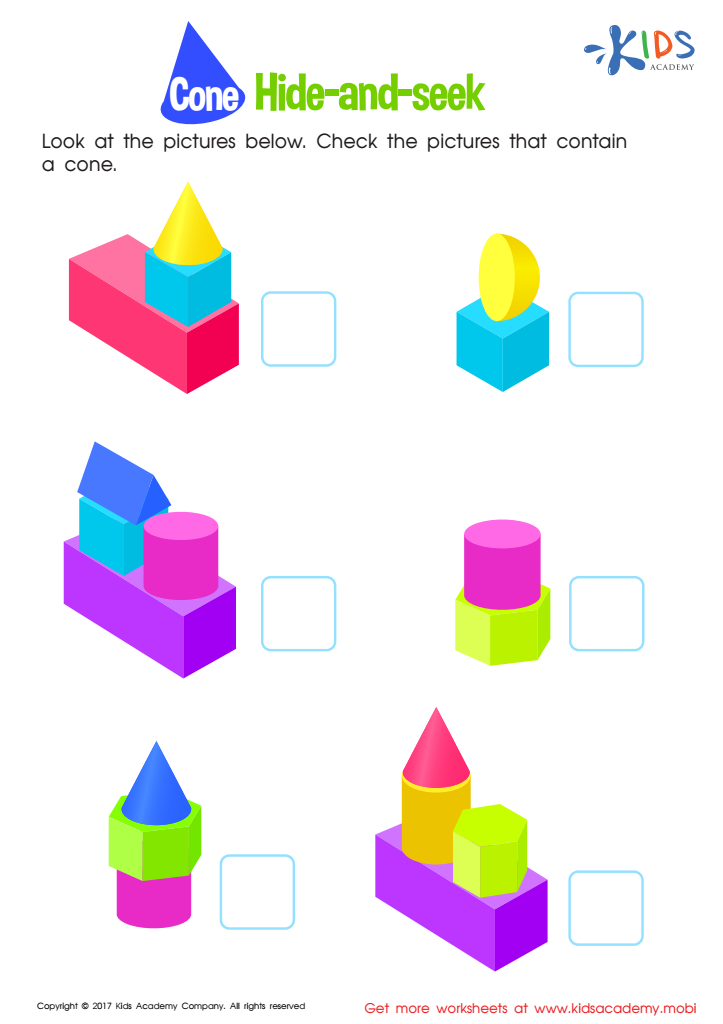
Cone Hide-and-Seek Worksheet
 Assign to My Students











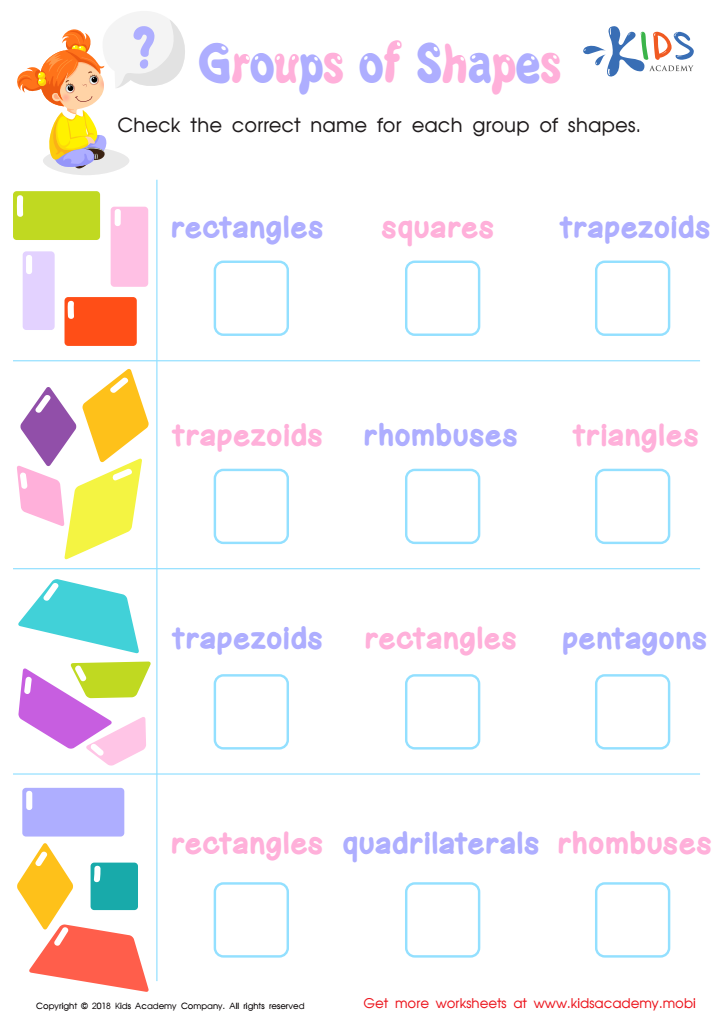
Groups of Shapes Worksheet
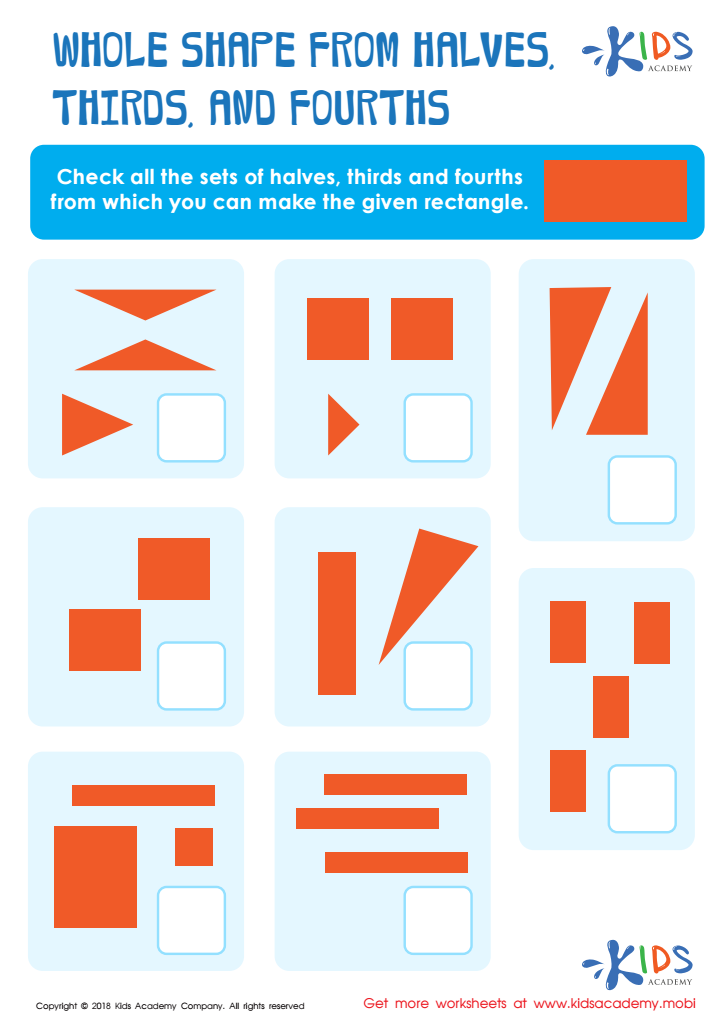
Whole Shape from Halves, Thirds and Fourths Worksheet








Counting skills and basic geometry play fundamental roles in the cognitive development of children aged 5-9. These skills form the building blocks for future academic success and everyday problem-solving abilities.
First, counting skills are essential for numerical literacy, enabling children to understand the concept of quantity, order, and number relationships. These skills are critical for more advanced mathematical operations such as addition and subtraction. Mastery of counting lays a solid foundation that supports learning in later grades and enhances logical thinking.
On the other hand, geometry introduces children to the world of shapes, sizes, and spatial reasoning. Understanding basic geometric concepts helps kids recognize and describe the physical world. Shapes and patterns found in geometry are not only present in math but also in art, nature, and daily life, making it easier for children to connect classroom learning with their environment.
The integration of counting and basic geometry enhances cognitive development by encouraging analytical thinking, pattern recognition, and problem-solving skills. These disciplines foster essential life skills like critical thinking and perseverance.
Investing in teaching these foundational concepts equips children with the tools they need to navigate both academic subjects and real-world challenges, making it crucial for parents and teachers to prioritize counting skills and introductory geometry during these formative years.








