Shape Recognition Easy Numbers Worksheets for Ages 5-9
3 filtered results
-
From - To
Discover our engaging "Shape Recognition Easy Numbers Worksheets" designed specifically for children aged 5-9! These worksheets provide a fun and interactive way for young learners to identify and explore different shapes while reinforcing their understanding of numbers. Tailored to enhance shape recognition skills, the worksheets include vibrant illustrations and age-appropriate activities that cater to various learning styles. They promote cognitive development and visual discrimination, ensuring that children build a strong foundation in math concepts. Perfect for classroom use or at-home learning, our worksheets make learning shapes and numbers an exciting adventure. Download today and inspire your child's mathematical journey!
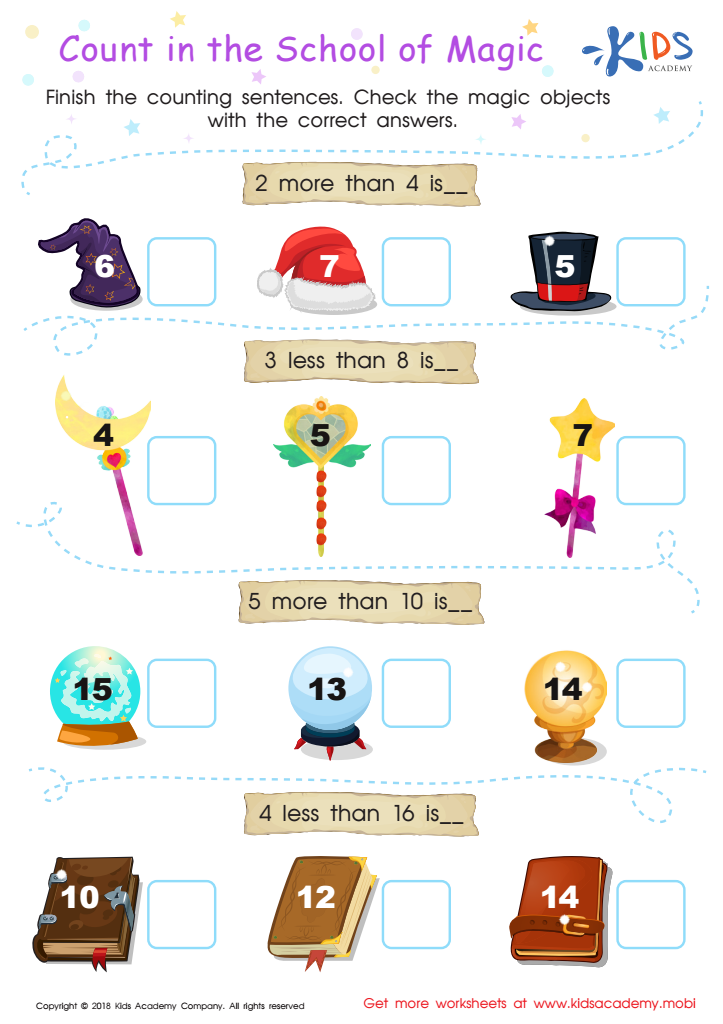
Count in the School of Magic Worksheet
 Assign to My Students
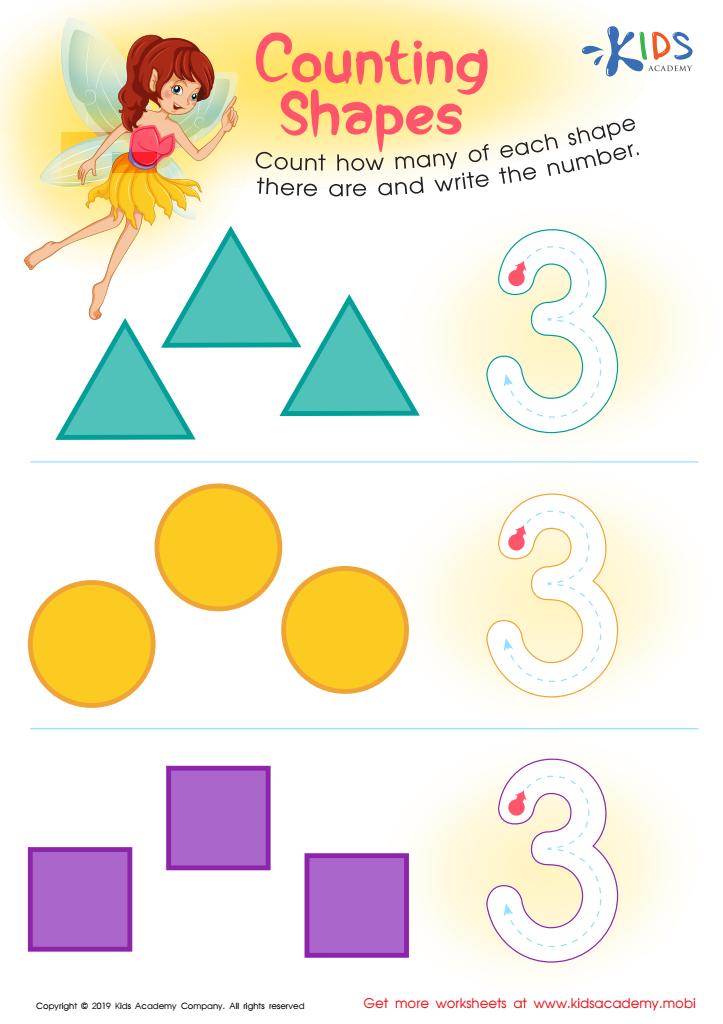
Counting Shapes Worksheet
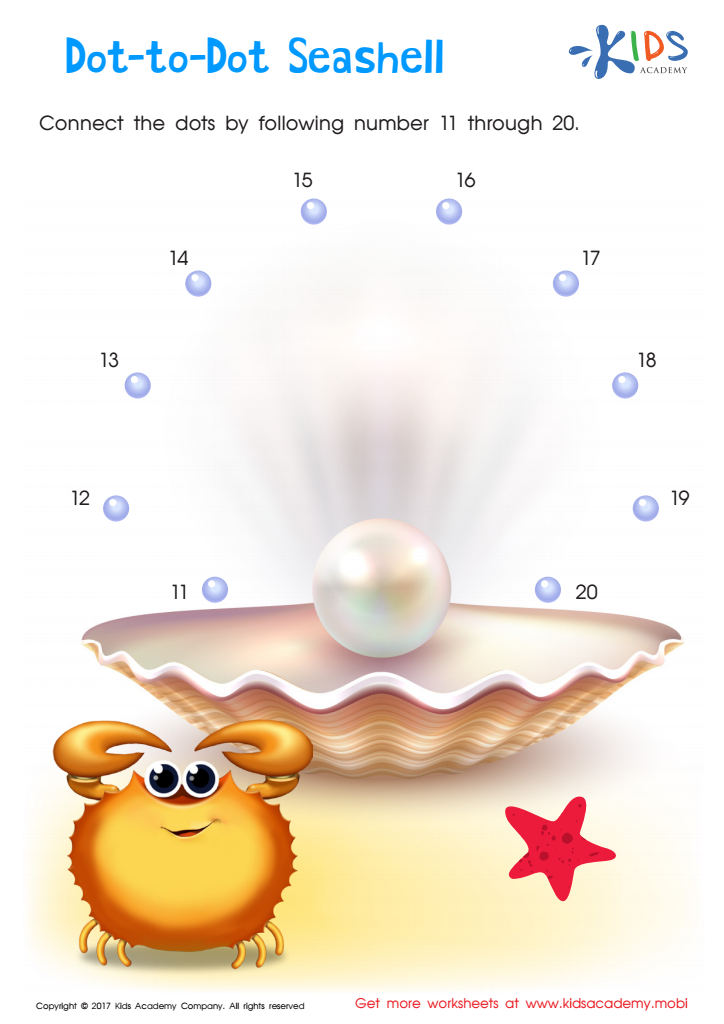
Ordering 11–20: Dot–to–dot Seashell Printable








Shape recognition and understanding numbers are foundational skills that play a crucial role in a child’s early education, particularly for ages 5-9. Parents and teachers should care about these skills because they are essential for developing logical thinking and problem-solving abilities. Recognizing shapes helps children understand the world around them, building spatial awareness critical for activities such as reading maps and working with construction toys.
Moreover, mastering geometric shapes often correlates with success in mathematics later on. It lays the groundwork for more complex concepts like symmetry, area, and volume. For numbers, early familiarity helps children quickly grasp counting, patterns, and basic arithmetic, which are essential for everyday life and future academic achievement.
Furthermore, activities that focus on shape and number recognition can foster creativity and critical thinking. These skills go hand-in-hand, as recognizing patterns and relationships in shapes and numbers encourages children to explore and engage with math and science concepts more deeply.
Engaging children with fun, hands-on activities involving shape recognition and numbers further enriches their learning experience. Therefore, prioritizing these skills supports holistic development, shapes their cognitive abilities, and provides a strong base for lifelong learning.








